
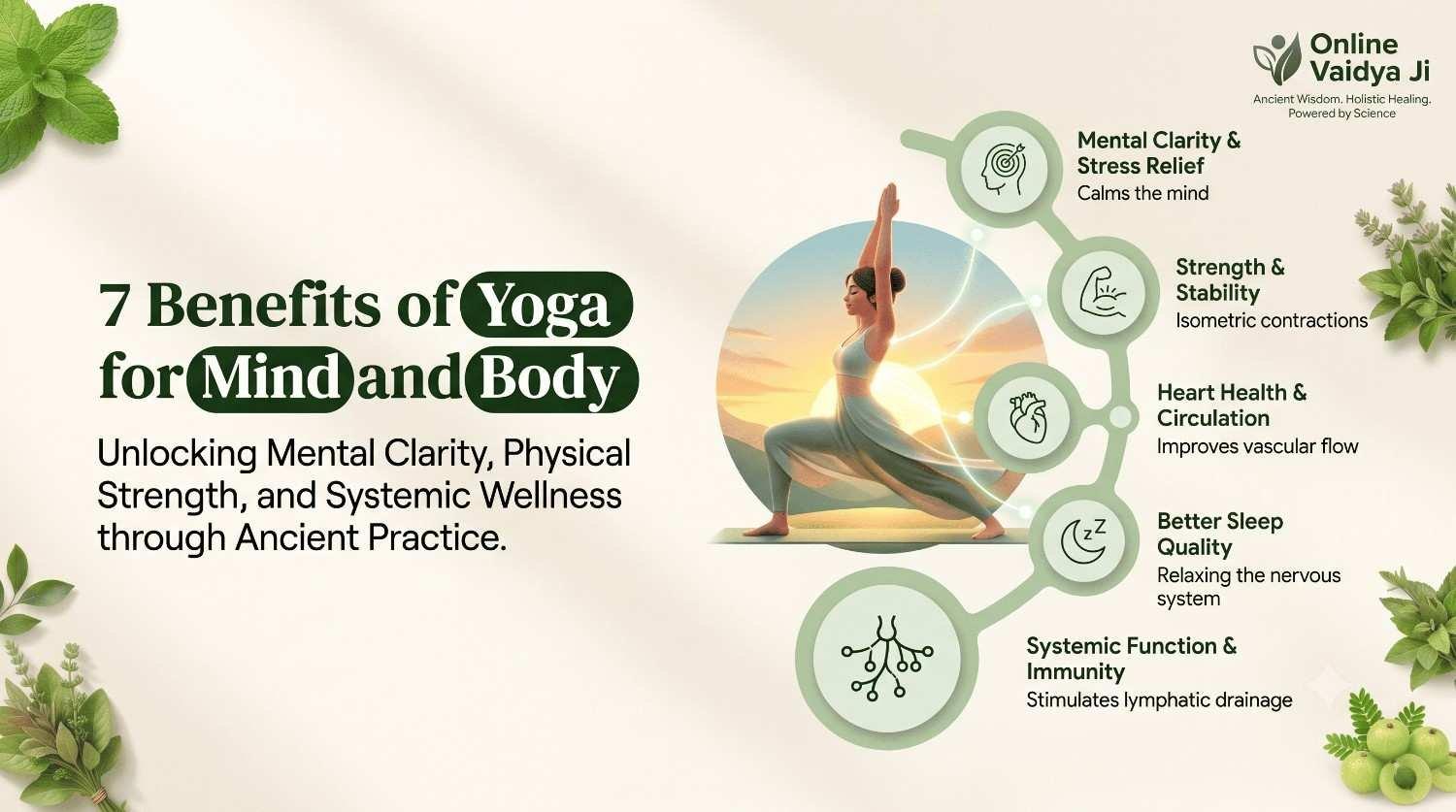
The benefits of yoga extend far beyond physical fitness, offering a holistic approach to mental, emotional, and systemic health. Originating thousands of years ago, yoga combines physical postures (asanas), controlled breathing practices (pranayama), and mindfulness meditation. Research continuously confirms that a regular yoga practice reduces stress, improves flexibility, strengthens core muscles, and enhances cardiovascular and metabolic function across all age groups.
Whether you are looking to manage chronic stress, relieve joint pain, or build long-term stamina, understanding the physical and mental advantages of yoga helps you build a practice tailored to your personal health goals.
1. Improved Flexibility and Joint Mobility
One of the most immediate physical benefits of yoga is enhanced flexibility and increased range of motion in joints. Slow movements and sustained stretches lengthen muscle tissue, reduce stiffness in connective tissue, and prevent injury.
Unlike traditional high-impact workouts, yoga safely releases muscle tension around the spine, hips, and shoulders without putting excessive stress on cartilage. Over time, consistent stretching lubricates joint sockets through enhanced synovial fluid circulation, making everyday functional movements easier and pain-free.

Key Mobility Gains:
- Hamstring and Hip Relief: Reduces tightness caused by prolonged daily sitting.
- Spinal Health: Maintains disc hydration and spinal alignment.
- Injury Prevention: Keeps tendons and ligaments pliable under strain.
2. Increased Muscle Strength and Core Tone
To explain the benefits of yoga on strength, one must look at isometric contractions—holding body positions against gravity. Yoga uses your own body weight to build functional strength evenly across all major muscle groups.
While conventional weightlifting often targets isolated muscles, yoga poses like Plank, Warrior II, and Downward-Facing Dog require whole-body engagement. This builds balanced muscle tone, strengthens stabilizing muscles surrounding joints, and enhances core stability without placing undue pressure on bone structures.
3. Stress Reduction and Emotional Balance
The primary mental benefits of yoga stem from its ability to regulate the central nervous system. By combining movement with conscious deep breathing, yoga shifts the body out of the sympathetic “fight-or-flight” state and into the parasympathetic “rest-and-digest” mode.
Clinical studies demonstrate that regular practice lowers blood cortisol levels, reduces anxiety, and calms racing thoughts. The conscious focus on breath anchors the mind in the present moment, improving emotional resilience and overall stress management.
Read more blog : Daily Yoga Routine for Stress and Better Sleep
4. Enhanced Heart Health and Circulation
Yoga supports cardiovascular wellness by improving circulation, lowering systemic inflammation, and managing resting blood pressure levels. Controlled breathing techniques increase oxygen saturation in the blood, allowing the heart to pump oxygenated blood more efficiently throughout the vascular system.
Cardiovascular Improvements:
- Lower Blood Pressure: Gentle, restorative flows help calm vascular tension in hypertensive individuals.
- Improved Circulation: Inversion poses encourage venous blood return from lower limbs back to the heart.
- Reduced Inflammation: Regular practice lowers inflammatory biomarkers linked to heart disease.
5. Better Sleep Quality and Restful Recovery
Yoga helps fight insomnia and poor sleep quality by relaxing the body and lowering brain wave activity prior to rest. Practicing gentle restorative poses or yoga nidra (guided relaxation) in the evening stimulates melatonin production and eases physical tension accumulated throughout the workday.
By reducing nighttime mental restlessness and easing physical discomfort, practitioners experience deeper, undisturbed sleep cycles and wake up feeling more refreshed.
6. Posture Correction and Back Pain Relief
Chronic lower back pain often stems from weak core muscles, poor sitting habits, and tight hip flexors. Yoga addresses the root causes of poor posture by strengthening the abdominal wall and back extensors while stretching tight chest and hip muscles.
Major health organizations recommend yoga as a first-line, non-pharmacological treatment for chronic low back pain. Consistently practicing alignment-focused poses restores the spine’s natural curvature and alleviates nerve compression caused by slouching.
7. Boosted Immunity and Metabolic Function
The physical movement and dynamic contraction of muscles in yoga stimulate the lymphatic system—a network responsible for flushing toxins and draining cellular waste. Because the lymphatic system relies on body movement rather than a central pump, yoga postures actively accelerate immune cell circulation.
Additionally, yoga improves metabolic health by enhancing insulin sensitivity, aiding digestion through gentle abdominal twists, and supporting weight management through conscious awareness and stress reduction.
Yoga vs. Conventional Cardio Workouts: Quick Comparison
To better understand how the physical and mental advantages of yoga compare to traditional cardiovascular exercises, consider the summary below:
| Feature | Yoga Practice | Conventional Cardio (Running/Cycling) |
| Primary Focus | Flexibility, core strength, mind-body balance | Endurance, caloric burn, cardiovascular strain |
| Impact on Joints | Low impact; protects cartilage and joints | Moderate to high impact on knees and ankles |
| Nervous System | Calms nervous system; reduces cortisol | Temporarily elevates stress hormones (cortisol) |
| Mental Component | High mindfulness, breath awareness, mediation | Low to moderate mental focus required |
| Recovery Needs | Low; can be practiced daily for active recovery | Moderate to high; requires rest days for muscle repair |
How to Start a Safe Daily Yoga Practice
Starting a yoga routine does not require advanced flexibility or specialized equipment. Following a structured progression ensures safety and long-term consistency:
- Choose the Right Style: Begin with gentle styles like Hatha or Restorative yoga if you are a beginner or dealing with stiffness. Choose Vinyasa or Power yoga for higher calorie burn.
- Focus on Proper Breathing: Align your movements with inhalation and exhalation rather than forcing deep physical stretches.
- Use Supportive Props: Use yoga blocks, straps, or bolsters to adapt difficult postures to your body’s current mobility.
- Maintain Consistency: A short 15-to-20-minute daily session yields far better physiological and mental results than a long session performed once a week.
This article is for general informational purposes only and is not a substitute for personal medical advice. Please consult a qualified doctor or healthcare specialist according to your specific health condition.

Frequently Asked Questions (FAQs)
What are the main benefits of yoga for beginners?
The main benefits of yoga for beginners include reduced muscle stiffness, improved posture, better stress management, and enhanced flexibility. Beginner-friendly sessions help establish foundational movement patterns without risking strain or joint injury.
Can practicing yoga help with weight loss?
Yes. While dynamic styles like Power and Vinyasa burn calories directly, restorative styles support weight loss indirectly by lowering cortisol (stress hormone) levels and promoting mindful eating habits that reduce stress-induced overeating.
How often should I practice yoga to see physical benefits?
Noticeable physical benefits of yoga—such as improved flexibility and reduced back tightness—typically appear within 3 to 4 weeks when practicing 3 to 5 times per week for at least 20 to 30 minutes per session.
Is yoga better than stretching alone?
Yes. Stretching only targets muscle lengthening, whereas yoga integrates muscle lengthening with active strength building, breath control, spatial awareness, and neurological relaxation for more durable, long-term health improvements.