
What Are the Best Home Remedies for Wart Removal?
The most practical Home Remedies for Wart Removal include salicylic acid, carefully used at-home freezing products, covering the wart, gentle filing, and good skin hygiene. These methods work gradually, so consistency is more important than trying aggressive remedies.
| Remedy | Best for | Evidence/Use |
| Salicylic acid | Small common warts | Strongest common at-home option |
| Duct tape | Small common warts | Evidence is mixed |
| At-home freezing | Small warts | Can be effective when used correctly |
| Warm-water soaking | Preparing the wart | Supports other treatments |
| Gentle filing | Removing dead surface skin | Use only with appropriate treatment |
| Bandage/occlusion | Protecting the wart | Helps reduce spread |
| Hand hygiene | Preventing spread | Important supportive care |
| Avoid picking | Preventing new warts | Highly recommended |
| Patience and monitoring | Mild, harmless warts | Many clear naturally |
1. Salicylic Acid
Salicylic acid is one of the most established wart removal home remedies for common warts. It gradually removes layers of the wart and is available in products such as liquids, gels, pads, and patches.
For a small wart, soak the area in warm water for about five minutes, dry it thoroughly, and apply the product exactly as directed on the package. Some products require daily use for several weeks.
Do not apply salicylic acid to your face unless a healthcare professional specifically recommends it.
2. Try an At-Home Freezing Product
Over-the-counter freezing products are another option for some small common warts. They work by freezing the wart tissue so it can gradually disappear.
Follow the product instructions carefully. Home freezing products are not equivalent to professional cryotherapy, which uses liquid nitrogen under medical supervision.
Stop if you develop significant pain, blistering, or other concerning irritation.
3. Cover the Wart With Duct Tape
Duct tape is one of the better-known home remedies for warts, although research results are mixed. The American Academy of Dermatology notes that some studies suggest it may help, while other evidence is less convincing.
If you want to try it, cover the wart completely and replace the tape as needed. Stop if the surrounding skin becomes very irritated.
4. Soak the Wart in Warm Water
Warm-water soaking is not a standalone cure, but it can be useful before applying salicylic acid. Soaking softens the outer layer of the wart and makes it easier to treat.
After soaking, dry the area completely before applying any wart-removal product.
5. Gently Remove Dead Skin
When using salicylic acid, dermatologists may recommend gently filing away softened dead skin every few days. A disposable emery board or pumice stone can be used specifically for the wart.
Never use the same file or pumice stone on healthy skin, because the virus can spread to other areas.
Avoid cutting, digging, or attempting to pull the wart out.
6. Keep the Wart Covered
Covering a wart with a clean bandage can protect it from friction and reduce the chance of touching or scratching it. Occlusion may also help soften the wart when used as part of an appropriate treatment plan.
Change the covering regularly and keep the surrounding skin clean and dry.
7. Practice Good Hand Hygiene
Warts are contagious and can spread through direct contact or by transferring the virus from one part of the body to another. Washing your hands after touching or treating a wart is therefore an important part of Home Remedies for Wart Removal.
Avoid sharing towels, nail tools, socks, shoes, or other personal items that contact the affected area.
8. Stop Picking, Scratching, or Shaving Over the Wart
Picking at a wart can irritate the skin and potentially spread the virus to nearby areas. Shaving directly over a wart can also create tiny breaks in the skin that make viral spread easier.
If you’re learning how to remove warts naturally, avoiding behaviors that spread the wart is just as important as choosing a treatment.
Keep the area protected and resist the temptation to scrape it aggressively.
9. Give Mild Warts Time to Clear
Sometimes the best approach is simply monitoring a small, harmless wart. Many warts eventually disappear without treatment, although natural clearance can take months or even years.
If the wart is not painful or bothersome, you can discuss whether watchful waiting is appropriate with a healthcare professional.
How to Remove Warts on Face Naturally
If you’re wondering how to remove warts on face naturally, be especially cautious. Facial skin is more sensitive, and treatments designed for hand or foot warts can cause irritation, burns, dark spots, or scarring.
The NHS and American Academy of Dermatology recommend professional evaluation for warts on the face rather than attempting routine at-home wart treatments.
Avoid applying undiluted apple cider vinegar, garlic, strong acids, or other DIY substances to facial warts. These remedies can damage surrounding skin and are not established treatments for facial warts.
A dermatologist can confirm whether the growth is actually a wart and recommend an appropriate treatment.
What About Natural Ingredients for Wart Removal?
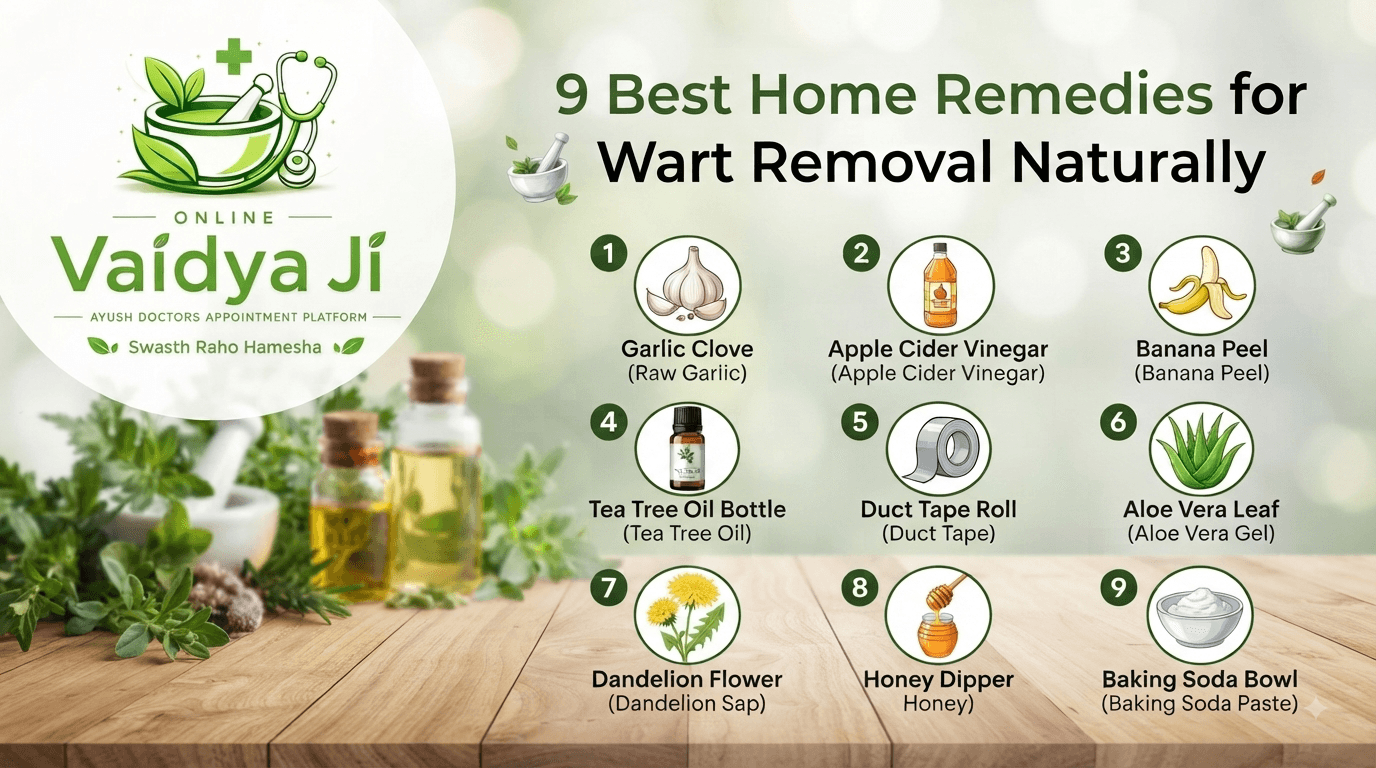
Many online articles recommend ingredients such as apple cider vinegar, garlic, banana peel, or tea tree oil. However, these should not automatically be considered safe or effective Home Remedies for Wart Removal.
There is not strong clinical evidence supporting most kitchen-based wart remedies, and irritating substances may damage healthy skin. For this reason, evidence-based wart treatments are generally preferable to aggressive DIY methods.
When Should You See a Dermatologist?
Home treatment is not appropriate for everyone. See a dermatologist if:
- The wart is on your face or genitals.
- It bleeds, burns, hurts, or changes appearance.
- You have many warts.
- You are unsure whether the growth is a wart.
- Home treatment has not worked.
- You have diabetes or a weakened immune system.
A dermatologist can confirm the diagnosis and choose treatments such as professional cryotherapy or other medical therapies when necessary.

Consult
While some common warts may gradually clear on their own and appropriate at-home care can help manage them, persistent, painful, spreading, or recurring warts may require personalized medical guidance. If you are dealing with a wart that is not improving, changing in appearance, bleeding, or appearing on the face or other sensitive areas, consulting a qualified healthcare professional can help determine the right treatment approach. Book an online consultation with our certified Ayurvedic experts to receive personalized guidance on skin care, diet, lifestyle habits, and supportive Ayurvedic practices based on your individual needs.
Frequently Asked Questions
1. What is the most effective home remedy for wart removal?
Salicylic acid is one of the most established at-home treatments for common warts. It works gradually by removing layers of wart tissue. Follow the product instructions carefully and avoid using it on facial or genital skin unless advised by a healthcare professional.
2. How to remove warts naturally?
If by “naturally” you mean without a medical procedure, options include allowing a harmless wart to clear naturally, keeping it covered, avoiding picking, and using evidence-based over-the-counter treatments such as salicylic acid. Most kitchen remedies do not have strong evidence behind them.
3. Can I remove a wart on my face at home?
Facial warts should not normally be treated with standard wart-removal products at home. Because facial skin can be easily damaged and other skin growths can resemble warts, consult a dermatologist for diagnosis and treatment.
4. How long do home remedies for warts take to work?
Wart treatments usually require patience. Salicylic-acid treatments may take several weeks, while untreated warts can take months or even years to disappear.