
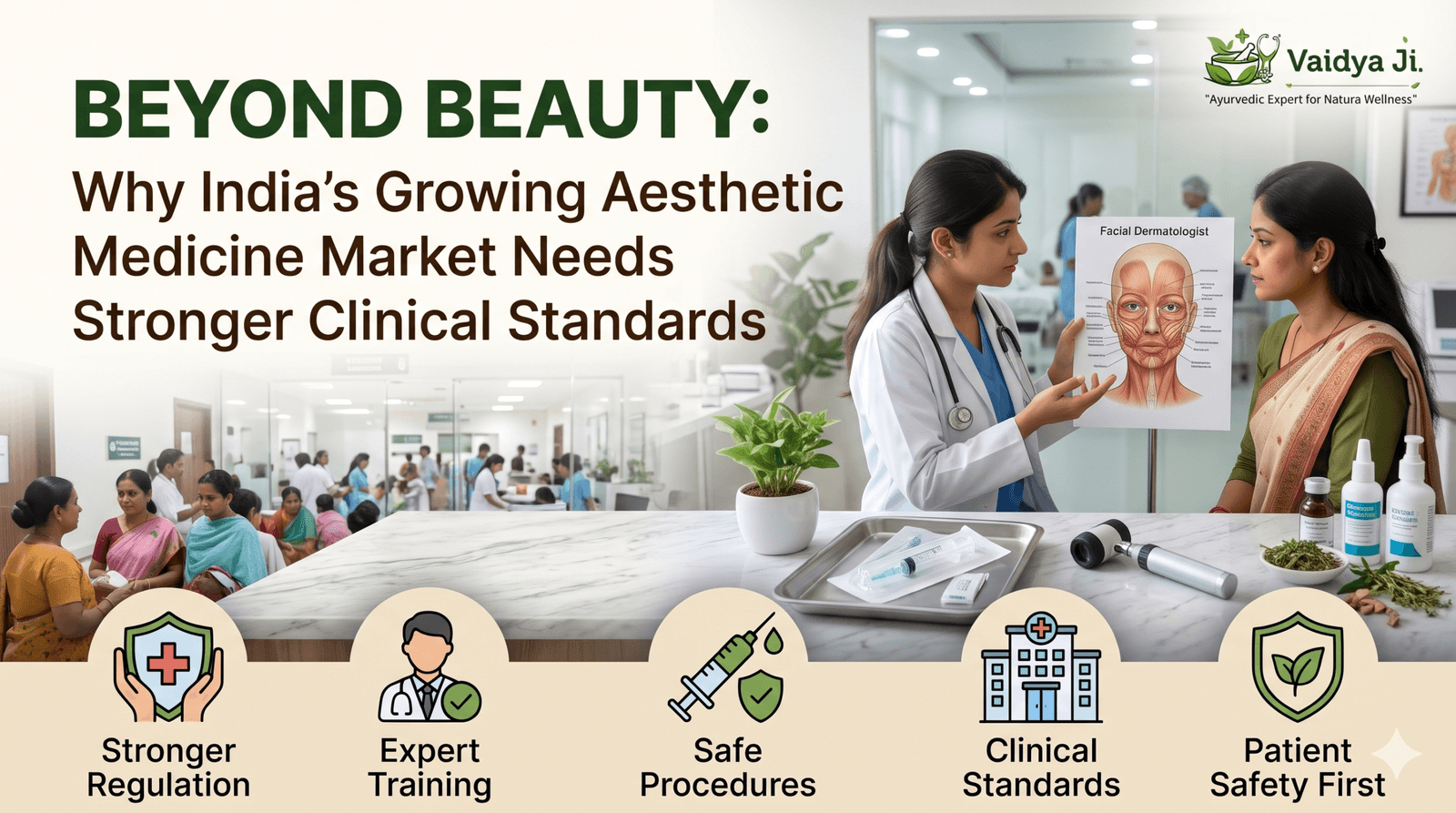
Innovative dermatology and aesthetic medicine practices that combine medical care with cosmetic treatments are becoming an increasingly important part of mainstream healthcare in India. From managing common skin concerns such as acne, pigmentation, and uneven skin tone to offering advanced laser treatments and skin rejuvenation procedures, dermatology continues to evolve with changing patient needs. Consulting a qualified Dermatologist in Hiranandani Estate can help individuals understand their skin concerns and explore suitable treatment options based on proper clinical evaluation. As awareness of skin health grows, more people are seeking professional dermatological care not only to improve their appearance but also to manage underlying skin conditions, maintain long-term skin health, and improve their overall quality of life.
There is a large number of aesthetic procedures being performed in India today. According to ISAPS, in 2024, India performed 1,290,000 aesthetic procedures (surgical & non-surgical), ranking 7th globally. This includes 677,040 surgical and 611,800 non-surgical procedures.
An increase in the number of procedures does not necessarily translate into better health care. Aesthetic treatments carry a lot of clinical responsibility. There are many different factors that one must take into account before providing treatment. How are you going to diagnose a patient? How are you going to treat a patient? What are the patient’s expectations? What are the potential complications? How are you going to manage the long-term effects of treatment?
A lot of enthusiasm exists amongst healthcare providers to capitalize on the change in the consumer’s expectations, and this shift will require the healthcare provider to move from merely counting the procedures to accurate diagnosis and treatment, detailed preoperative and pre-treatment counseling, and, most importantly, to ensure the safety and results of the treatment.
Similarly, there is immense potential in the domain of surgical aesthetic care that the specialist practitioner, such as a Plastic Surgeon in Delhi, can exploit. His work in aesthetic surgery involves detailed anatomical assessment, precise surgical planning, and effective postoperative care of his patients.
1. India’s Aesthetic Procedure Market Is Already Substantial
Non-surgical aesthetic procedures in India have seen a remarkable rise in 2024, with 611,800 procedures being conducted as per the ISAPS data for the year.
Hair removal accounted for 208,880 treatments, followed by Hyaluronic Acid treatments totaling 97,160, then Chemical Peels totaling 85,120, and lastly Botulinum Toxin procedures totaling 76,720.
Minimally invasive treatments form a large share of aesthetic treatments. Hair removal treatments account for approximately 208,880 procedures, followed by hyaluronic acid fillers for 97,160, chemical peels for 85,120, and botulinum toxin for 76,720.
Number of Surgical Aesthetic Procedures in India. 106,120 scar revisions, 97,160 liposuction, 67,760 rhinoplasties. ISAPS 2024 survey of procedures performed by Plastic Surgeons.
However, the above numbers are based on a survey of the plastic surgeons performing the procedures and thus do not reflect the total number of aesthetic treatments given across the country.
Again, note that commercial market estimates and clinical procedure statistics are generally two different sets of information about the healthcare sector.
It is also important to note that evaluating the aesthetic sector in India in terms of treatment quality, patient outcomes, and safety in the healthcare system, and not in terms of growing numbers of treatments, is important.
2. Dermatology Represents a Wider Healthcare Challenge
While there is increasing focus on the aesthetic medicine market, it is important to realize that there is an equally, if not greater, burden of medical skin disorders.
According to Global Burden of Disease 2017 estimates for India, skin and subcutaneous diseases account for 4.02% of total years lived with disability in the country.
Dermatitis and urticaria are also a significant portion of the skin and subcutaneous diseases, as revealed by Global Burden of Disease 2017 data for India.
Recent studies in four different locations across the country analyzed 6,169 patients who visited the clinics for dermatological conditions. Out of these, 26.1% were diagnosed with fungal infections of the skin, followed by 19.4% with autoimmune disorders and 18.4% with inflammatory skin diseases.
This data is based on a specific clinical population in a study rather than the entire country’s prevalence of a certain condition. However, the range of conditions that a dermatologist has to treat in their practice is quite vast.
The implication here is that for any number of reasons, a patient presenting with pigmentation, persistent acne, hair loss, or even just skin irritation could require medical evaluation prior to any aesthetic treatment.
An effective dermatology system needs to be able to make a distinction between patients with dermatological problems that need to be treated with a disease management approach and those with cosmetic problems for which there are aesthetic solutions.
3. Technology Is Expanding Treatment Options, but Diagnosis Remains Essential
Laser platforms, energy-based devices, injectables, and minimally invasive procedures are used for aesthetic treatments of unwanted hair, improving skin texture, treating scars, hyperpigmentation, and other signs of skin aging.
These modalities are increasingly used for unwanted hair, improving skin texture, scar correction, skin pigmentation, and correcting various signs of aging.
However, technology does not eliminate clinical risk.
Indian skin may pose difficulties in managing post-inflammatory hyperpigmentation and hence it is essential to plan the treatment in such a way that it does not lead to excessive inflammation and hence inappropriate energy release.
This includes consideration of the patient’s skin type, past medical history, current medications, and the diagnosis for which treatment is proposed.
Bear in mind that even though a procedure may improve your appearance, it will not cure your skin problem completely, and it may even come back.
The goal of the treatment for a skin disorder should be to select the appropriate intervention for the diagnosed condition as opposed to selecting a technology for the patient.
4. Plastic Surgery Growth Highlights the Importance of Patient Safety
Data states that there were an estimated 677,040 surgical aesthetic procedures performed in India in 2024.
Scar revision, liposuction, and rhinoplasty were some of the aesthetic operations featured in the reported cases from India.
Unlike routine skincare, a surgical intervention requires consideration of several factors such as the need for anesthesia, the need to prevent infection, preoperative assessment, and postoperative care of the patient.
Most recent studies published in Indian surgical journals stress the need for standardized safety protocols as the number of aesthetic surgery cases continues to rise.
This is even more important when a patient decides upon a treatment after reading about it on the Internet, or after seeing before-and-after pictures, or after being lured in by promises of quick, dramatic results, often with little or no understanding of the potential risks involved.
A patient’s best interests will be served by appropriate specialist qualifications of the practitioner, treatment at an accredited facility where required, informed consent for treatment, and proper follow-up of the patient.
A good result is also important, and this can only be achieved by using the safest process to carry out the treatment.
5. The Next Opportunity Is Evidence-Based, Patient-Centred Care
The International Society of Aesthetic Plastic Surgery (ISAPS) reported a total of more than 35 million aesthetic procedures across the world in 2025.
Sustainable growth in India’s aesthetic health care sector will require more than adopting techniques from around the world and increasing the number of treatments.
Healthcare providers must invest in clinical documentation, in monitoring of complications, and in educating patients adequately and truthfully.
They must be able to differentiate between a patient’s medical requirements and aesthetic desires. They must also be able to advise patients of alternative solutions, including no treatment at all and the use of non-invasive alternatives to surgery.
Patient satisfaction is important but needs to be measured against complication rate, post-operative functional result, long-term result and pre-treatment information given to patients as to what they can expect.
A more mature aesthetic healthcare sector will reflect transparent and multi-disciplinary practice, with realistic expectations of outcomes rather than promises of perfect results.
Conclusion
It is notable that while the number of dermatological and aesthetic medical treatments is rising, there are still a large number of serious medical skin disorders that need to be tackled in terms of public health.
Therefore, the future of the Dermatology and Aesthetic Medicine sector will depend on the correlation between the technological progress of procedures and diagnostic accuracy, sound clinical judgment, and patient safety.
As the number of interventions continues to grow, so too does the opportunity to ensure that aesthetic interventions and treatments are provided responsibly.
The next milestone for the sector will be to deliver quality aesthetic care in the form of informed decisions, safe treatment and satisfactory outcomes.