
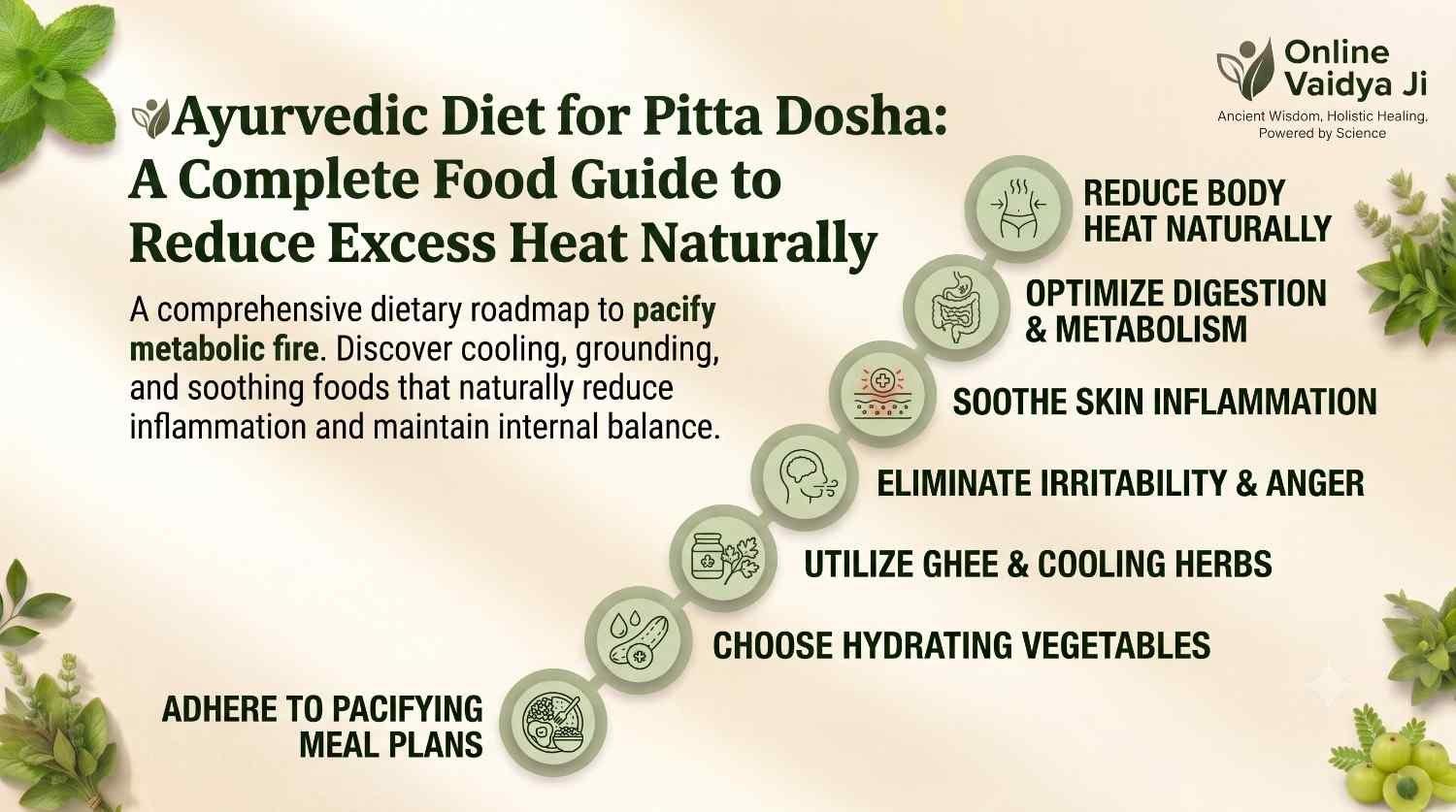
An ayurvedic diet for pitta dosha focuses on consuming cooling, hydrating, and soothing foods that pacify the metabolic fire (Agni) and balance excess body heat. In Ayurveda, Pitta governs digestion, metabolism, and transformation. When this bio-energy becomes imbalanced, individuals often experience inflammation, acid reflux, skin rashes, and irritability. By choosing foods with sweet, bitter, and astringent tastes while avoiding sharp, spicy, and acidic ingredients, you can naturally restore internal balance and sustain optimal metabolic health.
Understanding Pitta Dosha and Its Role in the Body
In Ayurvedic philosophy, pitta dosha represents the elements of fire and water. It controls digestion, body temperature, nutrient absorption, and mental clarity. A balanced Pitta state promotes strong digestion, vibrant skin, sharp concentration, and high energy.
However, factors like intense heat, high stress, excessive consumption of spicy or fried foods, and overworking can aggravate Pitta. When internal heat builds up faster than the body can release it, physical and emotional discomfort follows.
Common Pitta Symptoms
Recognizing early signs of aggravated heat is essential for preventing long-term digestive and metabolic issues. Common pitta symptoms include:
- Digestive Distress: Frequent heartburn, hyperacidity, stomach ulcers, and loose stools.
- Skin Inflammation: Redness, acne, eczema, rosacea, and increased sensitivity to sunlight.
- Temperature Sensitivity: Excessive sweating, body odor, and intolerance to warm weather.
- Emotional Signs: Irritability, impatience, anger, and excessive perfectionism.
How Pitta Aggravates: Causes of Excess Body Heat
Pitta accumulation rarely occurs overnight. It usually results from daily dietary habits, seasonal shifts, and environmental exposure.
Spicy & Acidic Foods + Summer Heat + Elevated Stress ──> Pitta Accumulation ──> Internal Inflammation & Acidity
Primary Factors That Increase Pitta:
- Dietary Triggers: Heavy consumption of chili, garlic, raw onions, fermented foods, vinegar, and deep-fried items.
- Lifestyle Triggers: Skipping meals, overexertion during intense midday sun, and lack of adequate sleep.
- Substance Use: Excessive intake of caffeine, alcohol, and refined sugars.
Read more blog : Vata, Pitta, Kapha: Simple Diet Charts for Each Dosha
How to Reduce Pitta Immediately: Quick Relief Strategies
If you are wondering how to reduce pitta immediately when experiencing sudden acidity, hot flashes, or intense skin flushing, these fast-acting Ayurvedic steps help cool down internal heat rapidly:
- Drink Fresh Coconut Water: Tender coconut water acts as a natural electrolyte that instantly quenches internal heat and cools the stomach lining.
- Consume Clarified Butter (A2 Cow Ghee): Swallowing one teaspoon of pure A2 cow ghee on an empty stomach neutralizes excess stomach acid.
- Sip Cooling Coriander Water: Soak coriander seeds in room-temperature water overnight, strain, and sip the infused water throughout the day.
- Apply Sandalwood Paste Externally: For skin heat or burning sensations, applying sandalwood paste blended with rose water provides immediate topical cooling.
Complete Food Guide: What to Eat and What to Avoid
Following a structured ayurvedic diet for pitta dosha requires favoring foods that are cooling, heavy, and grounding, while avoiding foods that are hot, light, and pungent.
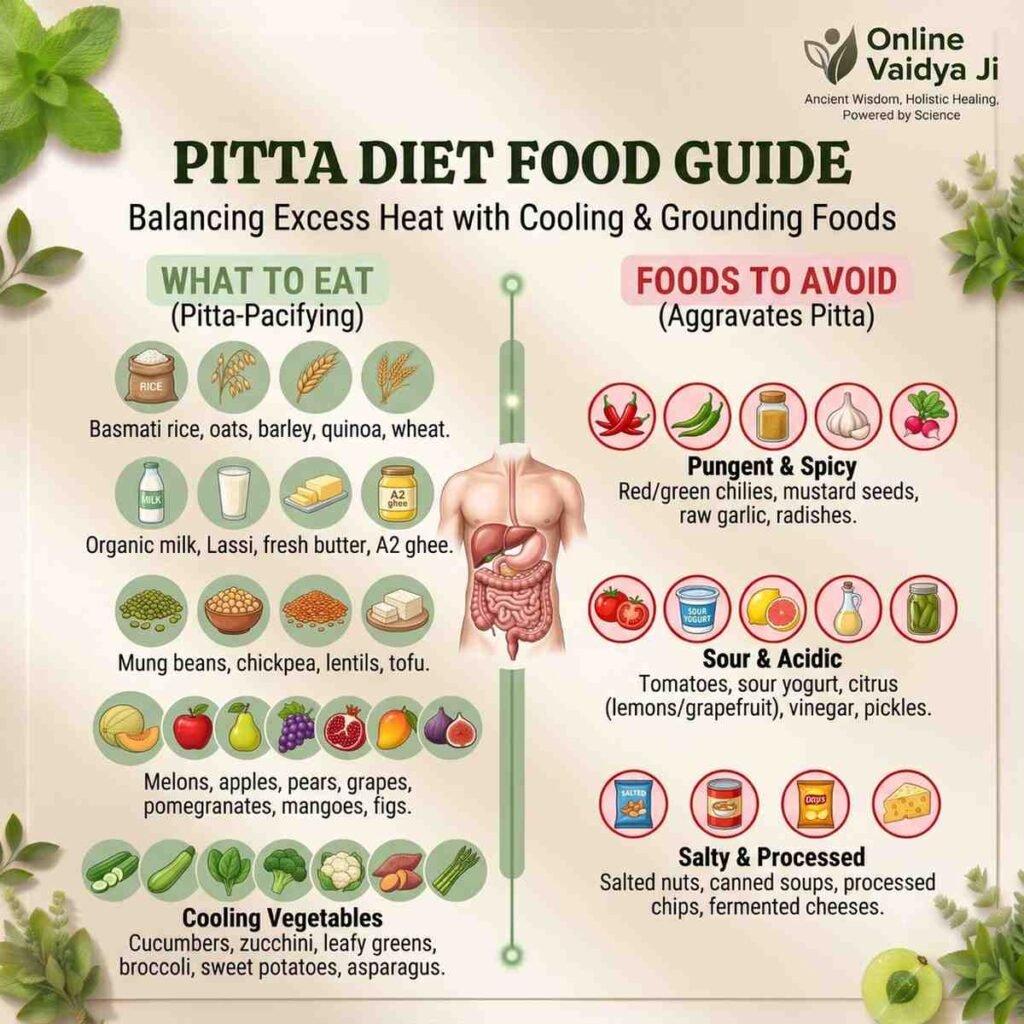
Recommended Food Groups (Pitta-Pacifying)
- Grains: Basmati rice, oats, barley, quinoa, and wheat.
- Dairy: Organic milk, sweet buttermilk (Lassi), fresh unsalted butter, and A2 ghee.
- Legumes: Mung beans (Moong dal), chickpea, lentils, and tofu.
- Sweet Fruits: Melons, sweet apples, pears, grapes, pomegranates, ripe mangoes, and figs.
- Cooling Vegetables: Cucumbers, zucchini, leafy greens, broccoli, cauliflower, sweet potatoes, and asparagus.
Foods to Limit or Avoid
- Pungent & Spicy: Red chilies, green chilies, mustard seeds, raw garlic, and radishes.
- Sour & Acidic: Tomatoes, sour yogurt, citrus fruits (lemons, grapefruit), vinegar, and pickles.
- Salty & Processed: Salted nuts, canned soups, processed chips, and fermented cheeses.
Pitta-Pacifying Diet vs. Pitta-Aggravating Diet: Food Comparison
To simplify meal planning, use this side-by-side comparison chart to make informed food selections:
| Food Category | Pitta-Pacifying (Favor These) | Pitta-Aggravating (Avoid or Limit) |
| Fruits | Sweet apples, coconut, pomegranates, melons | Sour berries, green grapes, citrus fruits, pineapple |
| Vegetables | Cucumber, zucchini, leafy greens, pumpkin | Tomatoes, raw onions, hot peppers, radishes |
| Grains | Basmati rice, oats, barley, quinoa | Rye, corn, millet, brown rice (in large quantities) |
| Dairy | A2 Cow ghee, fresh milk, unsalted butter | Sour cream, salted butter, aged cheese, sour yogurt |
| Oils | Coconut oil, sunflower oil, ghee | Mustard oil, sesame oil, peanut oil |
| Spices | Coriander, fennel, cardamom, mint, turmeric | Red chili, black pepper, cayenne, cloves, garlic |
Effective Home Remedies for Pitta Imbalance
Integrating simple, time-tested home remedies for pitta into your daily routine offers sustained relief from heat-related disorders without disrupting digestion.
1. Fennel and Cumin Seed Tea
Boil equal parts fennel seeds, cumin seeds, and coriander seeds in water for 5 minutes. Strain and sip warm or at room temperature after meals to enhance digestion and eliminate bloating.
2. Aloe Vera Juice
Drink 15–20 ml of pure, unsweetened aloe vera juice on an empty stomach in the morning. Aloe vera cools the gastrointestinal tract, cleanses the liver, and heals mucosal linings.
3. Moon-Milk Infusion
Warm a cup of organic milk with a pinch of cardamom, a thread of saffron, and half a teaspoon of ghee before bedtime. This soothing beverage calms the mind, pacifies Pitta, and encourages deep, restorative sleep.
Sample Daily Meal Plan for Pitta Balance
Adhering to a routine schedule prevents digestive fire from burning the body’s own tissues.
- Early Morning: 1 glass of room-temperature water or coconut water followed by 4–5 soaked and peeled almonds.
- Breakfast: Warm oatmeal prepared with milk, topped with sliced sweet apples and a sprinkle of cardamom.
- Lunch (Largest Meal): Steamed Basmati rice served with Moong dal, cooked zucchini, and a side of fresh cucumber salad topped with a teaspoon of ghee.
- Evening Snack: A cup of fresh pomegranate seeds or a glass of sweet mint buttermilk.
- Dinner (Light & Early): Steamed quinoa cooked with green leafy vegetables and a mild coriander seasoning.
This article is for general informational purposes only and is not a substitute for personal medical advice. Please consult a qualified doctor or healthcare specialist according to your specific health condition.

Frequently Asked Questions (FAQs)
What is the fastest way to balance pitta dosha?
The fastest way to lower elevated Pitta is by drinking fresh tender coconut water, taking one teaspoon of cow ghee, consuming aloe vera juice, and avoiding all spicy, oily, and sour foods. Resting in a cool environment also helps calm the mind and body.
Which fruits should I avoid on an ayurvedic diet for pitta dosha?
Avoid sour or unripe fruits like sour cherries, green grapes, grapefruit, lemons, sour oranges, and unripe tomatoes. These fruits contain high acid content that aggravates Pitta fire.
Is curd (yogurt) good for pitta dosha?
Fresh, sweet buttermilk (diluted yogurt blended with water and roasted cumin) is beneficial for Pitta. However, plain, commercially packaged, or sour curd should be avoided because its sour post-digestive effect increases body heat and acidity.
Can tea and coffee increase pitta symptoms?
Yes. Both tea and coffee contain caffeine and acidic compounds that stimulate the stomach lining and increase Pitta heat. Switch to cooling herbal infusions like peppermint, hibiscus, or fennel tea.