
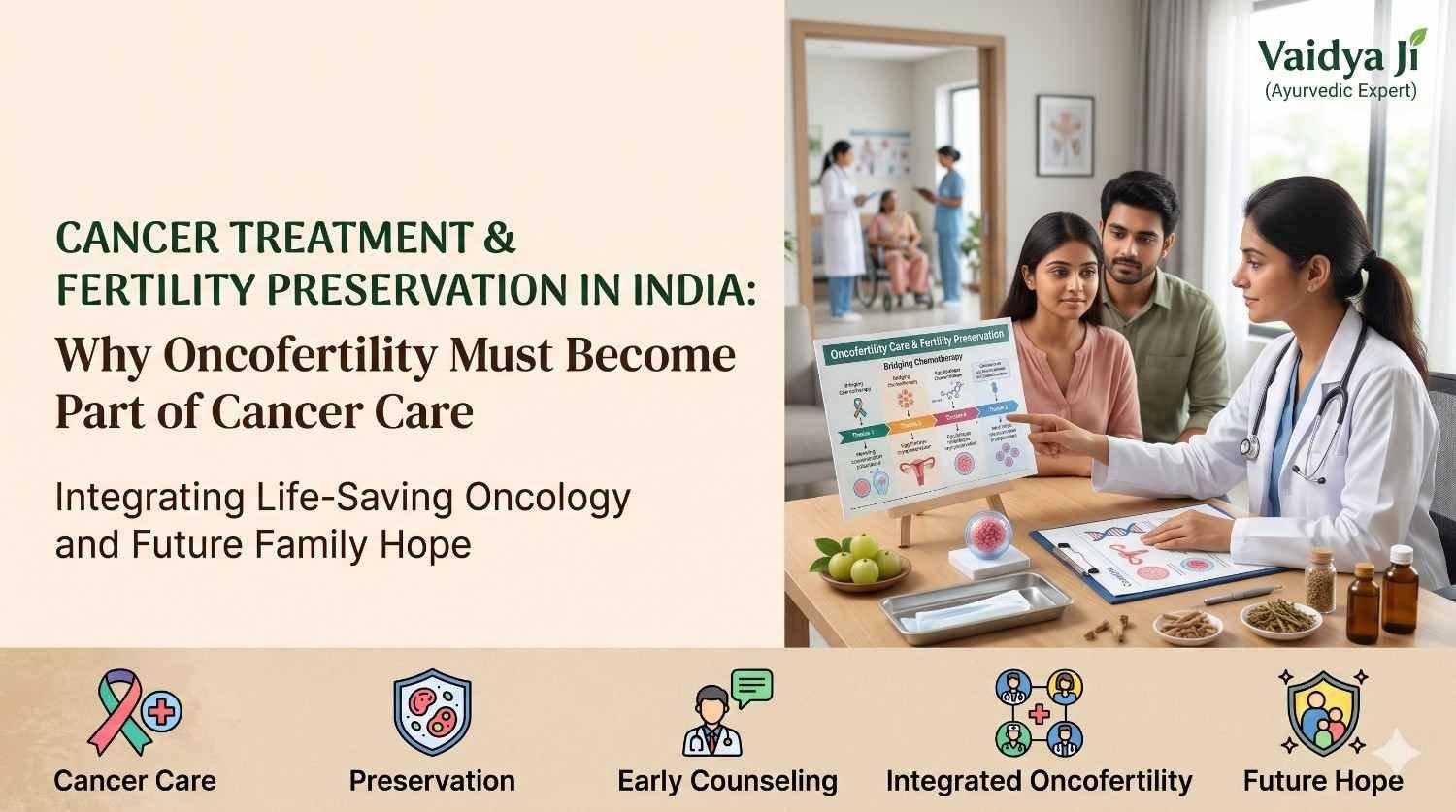
Cancer is increasingly being treated earlier and through specialized treatment. Often, however, much importance is placed on the treatment itself to cure the patient, and little is done to plan the patient’s long-term survivorship. The Surgical Oncologist evaluates and treats the cancer with the best surgical option but needs to integrate fertility counseling into overall cancer treatment to plan for the cancer survivor’s reproductive health.
Figures from the Indian Council of Medical Research’s National Cancer Registry Programme (ICMR-NCRP) reveal that there are approximately 1.57 million new cancer cases in India every year. This includes 238,908 new cases of Breast Cancer in women across the country.
These statistics translate to the extent of treatment required for cancer patients and, more importantly, how effectively cancer survivors’ reproductive health needs are being taken care of in India.
Cancer and its treatment can affect the body’s ability to reproduce. Oncofertility is a field of medicine that bridges oncology (cancer) and reproductive health to (i) identify potential reproductive toxicity of a patient’s treatment(s); (ii) describe possible fertility preservation options; and (iii) enable patients to make informed decisions regarding their reproductive health before undergoing cancer treatment with potential reproductive toxicity.
Fertility services to include Reproductive Assessment, Fertility Preservation Options and Counseling to aid a patient in making an informed decision regarding their options prior to Cancer Treatment are offered by IVF Centres in Mumbai as well. Timely co-ordination of an oncologist and a reproductive health specialist is crucial in such cases.
1. India’s Cancer Burden Makes Fertility Counselling Increasingly Relevant
India has a growing cancer burden for which a comprehensive survivorship plan is needed.
According to ICMR-NCRP, there were 1.46 million new cases of cancer in the country in 2022. Out of these, 749,251 new cases were in women. The most common cancer in women in the country is Breast Cancer, and ICMR-NCRP estimated 221,757 new cases of this cancer in 2022.
Breast cancer is one of the most common types of cancer in India, with 221,757 new cases in 2022.
While not all cancer patients are of reproductive age, most cancer treatments can potentially affect their fertility, and it is therefore important to consider their reproductive health when planning their cancer treatment.
These treatments can affect Reproductive Capacity in varying degrees depending on the treatment, dose, age, and individual circumstances. Some patients may experience temporary effects on their reproductive system, while others may have permanent infertility.
Some patients suffer from short-term effects on their reproductive system, and some patients suffer from permanent effects and are rendered infertile.
The biggest challenge for the health care system would be to inform patients adequately before starting treatment with potential harmful effects on their reproductive capacity.
2. Indian Research Reveals a Gap Between Awareness and Referral
Fertility preservation is not uniformly integrated into cancer care in many parts of the world, including India.
The same study estimated that only 19-24% of oncologists discussed issues related to fertility with more than 90% of their adolescent and young adult (AYA) cancer patients. This was, however, specific to the sex of the patient (Table 2).
Even fewer consistently referred patients for fertility preservation.
Twenty-five. 7% of the study participants were not aware of international guidelines for fertility preservation.
90% of participants in a survey of health care workers recognized the potential harm that cancer treatments could cause to a woman’s ovarian function, and 76% of the participants in the survey recognized that they only had partial knowledge of fertility preservation methods.
Note: The findings from the above clinician surveys are not based on any nationally representative patient data, but do indicate a massive gap between recognizing potential reproductive harm and actually providing fertility counseling on a structured basis.
Awareness of the problem is not enough, however. It needs to be translated into clinical action at the right time.
3. Fertility Preservation Options Are Becoming More Established
As reproductive medicine has developed, there are now several options available to women and girls who are concerned that treatment for a disease may affect their fertility.
A variety of methods for fertility preservation in female cancer patients are now available, including embryo, mature oocyte, and ovarian tissue cryopreservation, and these should be considered in appropriate patients as recommended in the updated 2025 ASCO Guideline.
Sperm cryopreservation allows for later storage and use by male patients before possibly fertility-damaging treatment can be done.
The same guideline states that patients should be informed of the reproductive risks of their cancer at the time of their diagnosis. Patients who are interested or left uncertain about fertility preservation should be referred to a reproductive specialist as soon as is feasible.
In women, eggs or embryos can be frozen before starting chemotherapy or other cancer treatments that could affect the ovaries.
Some female patients may also benefit from ovarian transposition or fertility-sparing cancer surgery depending on the type, stage, and treatment of their cancer.
Fertility preservation is not for every patient with cancer, though. Many factors need to be taken into account before fertility preservation can be offered to a patient.
The factors that influence whether fertility preservation can be offered to a particular patient are cancer type and stage, the speed with which treatment is required, as well as the patient’s age and current reproductive health.
It is very important to realize that even successful fertility preservation does not guarantee a future pregnancy or live birth.
4. Cancer Treatment and Fertility Planning Must Be Coordinated
The fact that cancer treatment can be delayed for fertility preservation is a major misconception that is often held by the public.
Modern Reproductive Medicine offers programs of ovarian stimulation that can start at almost any time of the menstrual cycle and allow for fertility preservation to start without delay of cancer treatment.
The time required for fertility preservation varies and should never be postponed without agreement of the treating oncologist.
The best model of care is joint planning between the treating cancer doctor, the fertility doctor and the patient.
Fertility risks as well as opportunities of fertility preservation can be evaluated in conjunction with the required cancer treatment.
For selected cases of gynaecological cancers, even fertility-sparing surgery can be considered when oncologically relevant.
Above all, priority must be given to effective cancer treatment with due consideration to the patient’s safety and well-being.
Fertility considerations need to be taken into account when planning cancer treatment without compromising cancer outcomes.
5. Financial and Knowledge Barriers Need Greater Attention
Access to fertility preservation methods remains a major issue in India.
A study to assess oncofertility awareness among oncologists and gynaecologists in India found financial burden and lack of patient awareness to be major problems.
73% – 86% of professionals in the survey identified financial burden of fertility preservation for patients as a major barrier, while 71% – 79.5% of them believed that patients were not aware enough of the possibilities offered by oncofertility.
Availability of oncofertility services in clinics does not translate into access to these services by patients.
Further, there are geographical barriers, lack of referral services, and financial uncertainty that affect access to information and fertility services for patients.
India’s Assisted Reproductive Technology (Regulation) Act, 2021 is in place to regulate services related to assisted reproductive technology. It will also include preservation of reproductive material for medical reasons.
However, the regulation of oncofertility can be complemented by cancer and infertility counseling, by transparent information to patients, and by coordination between all medical staff involved in cancer and fertility care.
To handle the already high burden of patients with cancer going for reproductive preservation, having standardized referral pathways for appropriate patients could help in explaining options better to them rather than dumping extra responsibility on them at the time of their cancer diagnosis.
6. India’s Next Oncology Milestone Should Include Survivorship
The future of cancer care in India needs to extend beyond the current focus on diagnosis and treatment and include long-term survival in full.
For appropriate patients, survivorship should include consideration of their reproductive health, sexual health, psychological health, and long-term quality of life.
A 20- or 30-year-old patient diagnosed with cancer may have to make decisions about family planning many years after the end of treatment for their cancer.
Waiting until the end of treatment to address issues related to fertility can mean missing out on opportunities to preserve them that were available earlier.
Clearly defined protocols to assess fertility risks, to counsel patients, to refer to specialists, and to document the steps taken must be established by healthcare systems.
Equally important is respect for the patient’s preferences. Some patients would like to have the option of fertility preservation, while others may have different reasons for not wanting to have fertility preservation.
A patient-centered approach would therefore acknowledge the differences between patients and treat fertility preservation as a matter for patients to decide upon, on an informed basis.
Conclusion
India has a growing cancer patient pool, and the development of cancer care is an evolving process.
Even with the advancement of surgical oncology, there are many challenges in the management of cancer patients, and significant referral and awareness gaps for fertility preservation exist even today.
The next phase of cancer care is to develop the field of oncology further and integrate the necessary fertility counseling in the appropriate treatment pathway, to work together as specialists, and to increase access to fertility preservation methods.
Measuring cancer care in India is not just about treating cancer and saving lives; there is much more to cancer care than just treating cancer and saving lives. It is also about treating the total health of the patient and preserving his/her long-term health, choices, and quality of life.