
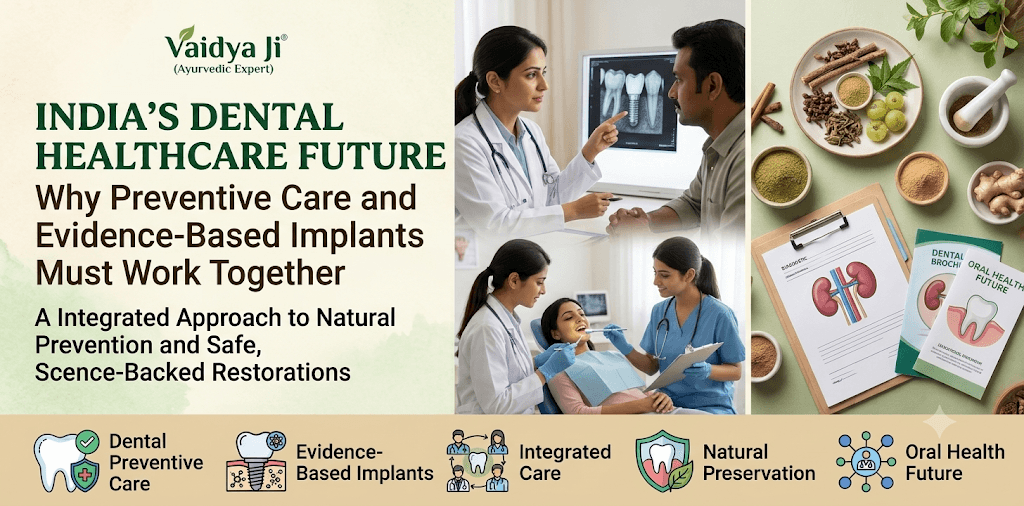
With growing access to dental care, including preventive dental care, state-of-the-art diagnostic tools, dental implants, and other tooth replacement options, a change is happening in the dental healthcare scene in India. As with any other health care facility, a Dental Clinic in Kondapur aims to provide complete dental care to its patients, including dental check-ups, dental cleaning, periodontal treatment, and dental fillings. While focusing on providing quality dental health care to those in need of treatment, the major challenge in the country is to prevent dental health problems and provide proper dental implants and other tooth replacement options to those in need of them.
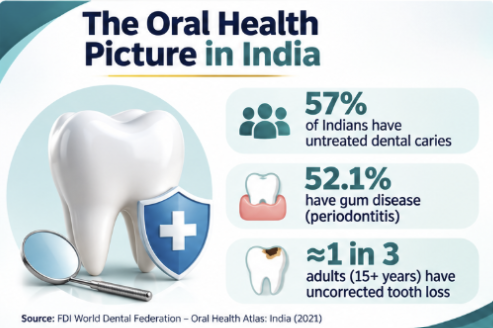
The World Health Organization’s India Oral Health Country Profile 2022 estimated that 28.8% of the population aged five years and above had untreated decay in permanent teeth in 2019. The prevalence of severe periodontal disease was 21.8% for individuals aged 15 years and above.
The data show a large number of people suffering from dental problems that can worsen if not treated on time. Dental problems can cause a lot of pain and can also lead to serious infections. Dental problems can also make eating difficult and in severe cases, can cause tooth loss.
According to WHO, the 5 major oral diseases could be creating a productivity loss of $7.25 billion in India in 2019. Hence, oral health is not merely about aesthetics or pain but about the overall health of an individual.
It is well established that Dental Implants in Noida are the preferred method for replacing missing teeth to restore the oral function of a patient. But dental implants are not an alternative to the rest of the oral health care of a patient. Instead, dental implants are a part of it.
1. India’s Oral Disease Burden Requires Earlier Intervention
The various oral diseases affect different age groups and therefore require different measures for prevention.
According to WHO’s 2019 estimates, 43.3% of children between the ages of 1 and 9 years with untreated decay in their primary teeth reside in India.
Among adults aged twenty and above, approximately 4% had experienced complete tooth loss or edentulism.
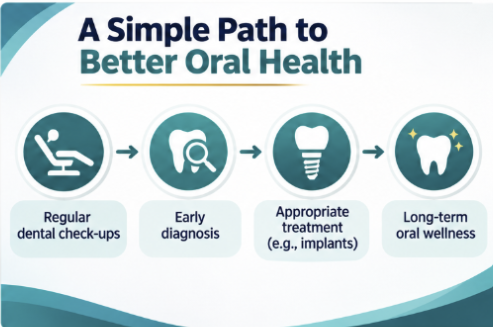
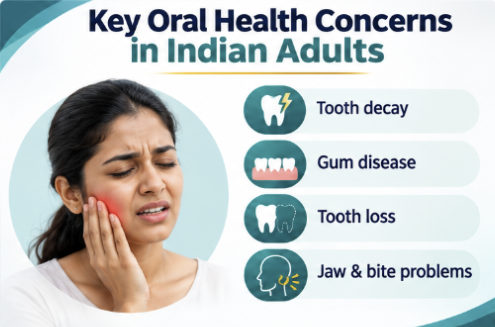
These estimates highlight the different oral health needs at different stages of life.
Decay in children can affect their eating, comfort & overall activities, while Untreated Periodontal Disease in adults can affect the supporting structures of the natural teeth.
Chewing efficiency, speech, and appearance can be affected by tooth loss.
Disease detection and treatment before tooth loss is the health care provider’s top priority.
Dental healthcare in India can be further strengthened by increasing emphasis on preventive dentistry assessment, oral health education, early restorative care and periodontal therapy, and also rehabilitation of dentate patients.
2. Tooth Preservation Should Remain the First Clinical Priority
With dental implantology gaining popularity to replace missing teeth, it is generally misunderstood that all damaged teeth have to be pulled out!
For patients who fall into the clinically suitable category, dental fillings, root canal treatment, periodontal therapy, and restorations can all be used to preserve natural teeth.
The decision to extract or treat a tooth depends on the extent of dental damage, the status of gums, the bone support, the patient’s dental symptoms, and the long-term dental treatment outcome for that patient.
An implant cannot exactly reproduce all the biological value of a natural tooth.
Preserving healthy tooth structure is of great value when clinically possible.
However, there are instances where a tooth may have to be extracted due to extreme decay and/or other structural damage that cannot be repaired.
In the case of very badly decayed teeth or even overfilled teeth that require extraction, these can be replaced with dental implants, fixed bridges, or even removable dentures.
Comprehensive assessment, discussion of options, their benefits and limitations, as well as the options’ maintenance requirements.
So save the natural teeth and use implants responsibly when they are needed to replace teeth.
3. Evidence-Based Implantology Is More Than Implant Placement
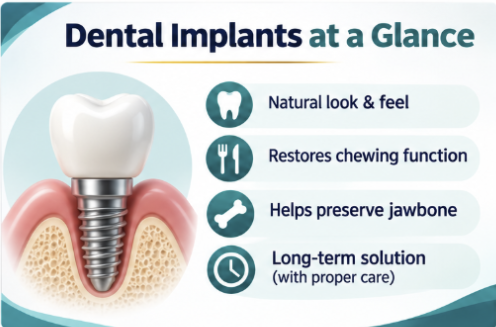
Dental implants are used in order to support dental replacements by means of artificial tooth roots, which are embedded into the jawbone.
They can be used to restore chewing function and to support crowns and/or bridges for patients with suitable dental and medical status.
However, successful implant care requires more than the implant placement itself.
Other factors to be considered by the clinician include the periodontal status of the patient, the volume of bone available in potential implant sites, the medical history of the patient, and their oral hygiene practices.
Imaging can be used to assess the dental structures and to plan the implant placement in the dental arch.
Patients should also be made aware of the necessary time to allow the implants to heal and of the number of dentist appointments required.
The Indian Society of Periodontology developed the Good Clinical Practice Recommendations for Peri-implant Care in 2024.
The Good Clinical Practice Recommendations for Peri-implant Care were developed with input from 28 subject experts. They deal with the maintenance of dental implants, peri-implant mucositis, and peri-implantitis.
Inflammation or destruction of the peri-implant tissues around dental implants.
These conditions need to be recognized early and managed appropriately in dental clinical practice. The guidance also sets out good practice for the maintenance of dental implants in dental practice.
Dental implant success can only be evaluated in the long term and not at the time of placement of dental implants.
4. Dental Implant Maintenance Deserves Greater Attention
Dental implants are often perceived to last a lifetime and even need no aftercare at all.
That assumption can create preventable complications.
The tissues surrounding an implant cannot get tooth decay but can get inflammation and even an infection.
The recommendations of the Indian Society of Periodontology in managing the patient with dental implants include plaque control, regular monitoring by a dentist, and proper maintenance.
An international consensus on the topic was also published in 2025 that outlines the known risk factors for peri-implant complications, including smoking, uncontrolled diabetes, previous periodontitis, and poor plaque control.
In short, patients need to be made aware of the dental implant treatment in order to avoid peri-implant disease.
Patients should be informed about the dental implant cleaning technique, the required follow-up visits and the symptoms that need to be reported to the dentist.
As mentioned earlier, implant treatment is a long-term clinical process that requires both dental professionals and patients to be committed to it.
5. Affordability and Access Remain Important Challenges
The dental healthcare burden in India is that of access to dental healthcare services.
The WHO Country profile reports that there are 271,744 dentists in India in 2019. This translates into two dentists per 10,000 population.
However, the number of dentists per country does not tell us about the distribution of dental services to various communities.
The US$64 million or so annual outpatient dental care expenditure for India for 2019, as shown in the WHO country profile, is therefore of relevance also in relation to dental healthcare financing models and to the prevalence of dental diseases.
This is modeled and therefore shows how the figures for dental healthcare expenditure can be considered in relation to the prevalence of dental disease.
Costs for diagnostic, restorative dental care, as well as dental tooth replacement, can influence patients’ treatment choices.
A small problem could turn into a bigger one if you delay treatment too long.
A Healthcare system therefore must encourage affordable preventive dental healthcare and transparent discussion of the needed dental treatment.
6. India’s Next Dental Healthcare Priority Is Coordinated Care
India’s dental healthcare future needs to be integrated with the connection of prevention, restorative dentistry, periodontics, and implantology with an appropriate clinical pathway.
All dental treatments must be recommended after appropriate assessment of the patient.
Preventive dental education may help in reducing the occurrence of dental problems, and early dental treatment can help in saving natural teeth.
For the patient who requires tooth replacement, the various options of dental prosthetics should be selected on the basis of the individual clinical requirements of the patient.
Technologies are best used to plan and communicate, and not replace a dental professional’s clinical judgment.
The assessment of oral health care outcomes should be done based on the parameters of oral function, patient comfort, treatment complications, and the ability to provide long-term care to maintain oral health.
Conclusion
India’s oral healthcare needs are much more than just the increasing range of modern restorative dental treatments.
The burden of untreated oral diseases such as decay, periodontal diseases, and tooth loss is estimated by the WHO.
Although dental implants can provide useful solutions for dental rehabilitation, the greatest opportunity for oral healthcare in India lies in preventing avoidable disease progression and in ensuring that the best possible evidence-based care is given to all patients for the duration of their lives.
Dental implants or other restorative solutions to replace missing teeth form a part of the dental health care system of a country. The real milestone for the dental health care of a country like India would be to ensure that the natural teeth of a patient are preserved and the patient is given appropriate and safe dental health care till the end of his/her life through an evidence-based approach.