

Benefits of drinking warm water include better digestion, improved circulation, gentle detoxification, relief from congestion, and support for morning metabolism. Warm water is easier on the stomach than cold water, helps the body absorb nutrients more efficiently, and is one of the simplest wellness habits you can adopt without changing your diet or routine.
This guide breaks down exactly how warm water affects the body, why so many people drink it first thing in the morning, and what the research and traditional wellness practices actually say about it.
What Is Warm Water Drinking?
Warm water drinking is the practice of consuming water heated to a comfortable, non-scalding temperature — generally between 40°C and 60°C (104°F to 140°F). The habit has roots in Ayurveda and traditional Chinese medicine, both of which associate warmth with easier digestion and internal balance.
Unlike cold water, which can momentarily tighten blood vessels and slow digestion, warm water is gentler on the digestive tract. This is one of the core reasons warm water drinking is discussed so widely in wellness circles today — the temperature itself changes how the body responds, even though water contains no calories or nutrients on its own.
Top Benefits of Drinking Hot Water
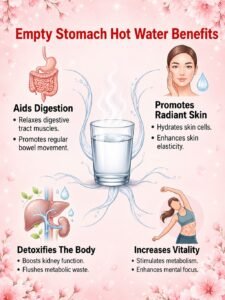
Supports Digestion
One of the most talked-about advantages of this habit is its effect on digestion. Warm water helps relax the muscles of the digestive tract, making it easier for food to move through the intestines. This can ease bloating and reduce the likelihood of constipation, especially when consumed after meals or first thing in the morning.
Improves Blood Circulation
Warm water acts as a mild vasodilator, meaning it helps blood vessels expand slightly. This supports smoother blood flow throughout the body, which can help deliver oxygen and nutrients more efficiently to muscles and organs.
Aids Gentle Detoxification
Among the most practical uses of warm water is its role in supporting the body’s natural detox pathways. It can promote sweating and more efficient kidney function, helping the body flush out waste more effectively than it might with cold water alone.
Eases Nasal Congestion and Sore Throat
Warm water helps loosen mucus in the nasal passages and throat, offering natural relief during colds or allergy flare-ups. Sipping warm water slowly can soothe throat irritation without the harshness of very hot beverages.
Supports Healthy Weight Management
While warm water isn’t a weight-loss solution on its own, it can support the process. Drinking a warm glass before meals may create a feeling of fullness, helping to naturally moderate portion sizes as part of a balanced routine.
Calms the Nervous System
There’s a reason warm water feels comforting — it has a mild relaxing effect on the body. Drinking it in the evening or during stressful moments can help ease tension and support better sleep quality.
Supports Joint Comfort
Staying hydrated with warm water may help maintain the fluid balance around joints, easing stiffness and supporting overall mobility, particularly for those who feel tightness in colder weather.
Benefits of Drinking Warm Water in the Morning
Drinking warm water in the morning helps kickstart digestion, rehydrate the body after hours of sleep, and gently wake up the metabolism before breakfast. After 7-8 hours without fluids, the body wakes up mildly dehydrated. A warm glass of water first thing helps restore hydration faster than cold water, while also preparing the digestive system for the day ahead.
Many people who practice this habit find it easier to have a regular, comfortable bowel movement, since warmth stimulates intestinal activity more effectively on an empty stomach. It’s also a low-effort way to build a consistent morning routine — no equipment, no cost, just a kettle and a few quiet minutes before the day begins.
Benefits of Drinking Warm Water for Skin
The benefits of drinking warm water for skin come primarily from improved hydration and circulation, which together support a clearer, more even complexion over time. Warm water encourages better blood flow to the skin’s surface, delivering nutrients that support elasticity and a natural glow.
Proper hydration also helps flush out toxins that can otherwise contribute to dullness or breakouts. While warm water is not a substitute for a proper skincare routine, consistent hydration — paired with warmth — is one of the simplest internal habits that supports visibly healthier skin over weeks of regular use.
Warm Water vs. Cold Water: Quick Comparison
| Factor | Warm Water | Cold Water |
| Digestion | Eases digestion, relaxes gut muscles | Can slow digestion temporarily |
| Absorption | Absorbed more readily by the body | Slightly slower absorption |
| Circulation | Supports vasodilation and blood flow | Can cause brief vessel constriction |
| Best Time | Morning, before/after meals, evening | During exercise, hot weather |
| Throat Comfort | Soothing for sore throat and congestion | Can aggravate throat sensitivity |
| Refreshment | Calming, gentle | Instantly refreshing, cooling |
How to Drink Warm Water Safely
- Keep the temperature comfortable — around 40–60°C — never scalding hot.
- Sip slowly rather than gulping to avoid discomfort.
- Start with a glass in the morning and after meals for best digestive benefits.
- Avoid drinking extremely hot water, which can irritate the mouth, throat, and esophagus over time.
- Balance warm water intake with regular room-temperature or cold water throughout the day.
Possible Side Effects to Keep in Mind
While warm water offers real advantages, moderation matters. Drinking water that’s too hot can irritate the throat and esophagus over repeated use. Some people may experience mild sweating or a temporary drop in alertness after a warm drink. Those with acid reflux should also monitor how their body responds, as warm water can occasionally relax the lower esophageal sphincter in sensitive individuals.
Conclusion
Warm water drinking reaches far beyond simple hydration. From easing digestion and supporting circulation to calming the nervous system and improving skin health, this small daily habit offers a surprising range of wellness support — all without added cost or complexity. Whether it’s a warm glass first thing in the morning or a soothing cup in the evening, building this habit into your routine is one of the easiest, most accessible steps toward better everyday wellness.

Disclaimer: This article is intended for general informational purposes only and does not constitute medical advice. Individual results may vary, and those with specific health conditions should consult a qualified healthcare professional before making changes to their hydration habits.
Frequently Asked Questions
What are the main benefits of drinking hot water daily?
Drinking hot water daily supports digestion, improves circulation, helps with gentle detoxification, and can ease nasal congestion. It’s also a simple way to stay consistently hydrated throughout the day.
Is it better to drink warm water in the morning or at night?
Both offer benefits. Morning warm water helps kickstart digestion and rehydrate the body after sleep, while warm water at night has a calming effect that can support better sleep quality.
Can drinking warm water improve skin health?
Yes. Warm water supports hydration and circulation, both of which contribute to a clearer, more even-toned complexion over time when combined with a healthy overall routine.
How hot should water be for maximum benefits?
Water between 40°C and 60°C (104°F–140°F) offers the benefits of warmth without the risk of irritation or burns associated with very hot water.