

The healthcare system of India is facing growing challenges in dealing with the growing incidence of diseases affecting the kidneys and the urinary system. Preventive screening in a Multispecialty hospital in Navi Mumbai is important to detect early diseases like Diabetes, Hypertension, Kidney stones, and UTIs. An integrated approach of all departments like Internal Medicine, Diagnostic Imaging, and other specialties in a Multispecialty hospital is required to deal with these conditions in the early stages of the disease.
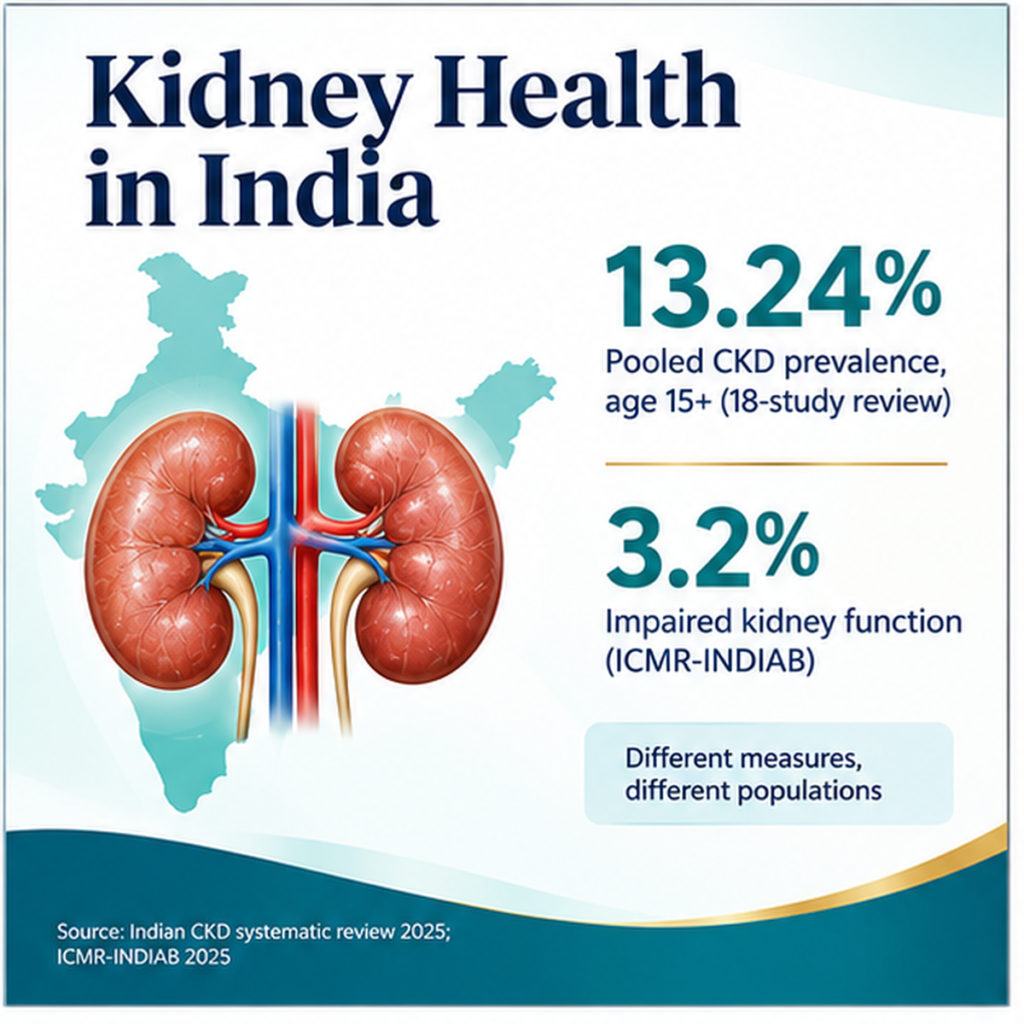
The prevalence of CKD in India has been estimated in a 2025 systematic review and meta-analysis of 18 community-based studies conducted in India. The pooled prevalence of CKD in various study populations was estimated to be 13.24% (men: 14.80%, women: 13.51%; rural: 15.34%, urban: 10.65%).
Another study, the ICMR-INDIAB study published in October 2025, assessed the prevalence of impaired kidney function in 25,408 participants. The weighted prevalence of impaired kidney function was found to be 3.2% at an estimated glomerular filtration rate (eGFR) < 60 mL/min/1.73 m². The above prevalence figures do not equate to the total prevalence of CKD.
What are the screening methods for prevention of complicated kidney and urinary problems in India before they require hospitalization or a complex treatment in a specialized multispecialty hospital?
Services of a Urologist in Bhubaneswar can be availed for treatment of conditions like kidney stones, prostate problems, Urinary Retention due to various reasons, and Urological Cancers. But it is required to take services of a Urologist in conjunction with primary care providers and Nephrologists and hospital-based facilities to treat patients at the appropriate time.
1. India’s Kidney Disease Burden Requires Earlier Detection
This is because Chronic kidney disease is an important contributor to illness and disability.
A 2025 Indian systematic review reported a pooled prevalence of CKD of 14.80% in men and 13.51% in women from the studies included in the review. The prevalence of CKD in rural settings was reported to be 15.34% as opposed to 10.65% in urban settings.
As compared with the urban populations, the rural populations had a higher CKD prevalence as estimated in the study, i.e., 15.34% as opposed to 10.65%.
However, considerable statistical variation exists amongst studies, which therefore should not be used to calculate the prevalence of CKD in India as a whole or even in rural as opposed to urban areas.
A recent study using GBD data evaluated the variation in CKD prevalence across the states of India in 2023.
Age-standardized prevalence of CKD at the state level ranged from 10,452/100,000 to 12,539/100,000 in 2023.
These figures further reinforce the need for health care planning at the state level.
CKD is often asymptomatic until end stage and therefore screening on a risk basis is very important for appropriate patients.
For appropriate patients, assessment of kidney function could include measurement of serum creatinine levels for estimation of GFR and urine albumin testing.
2. Diabetes and Hypertension Are Central to Kidney Health
The metabolic disease burden in India will also have implications for its kidney health.
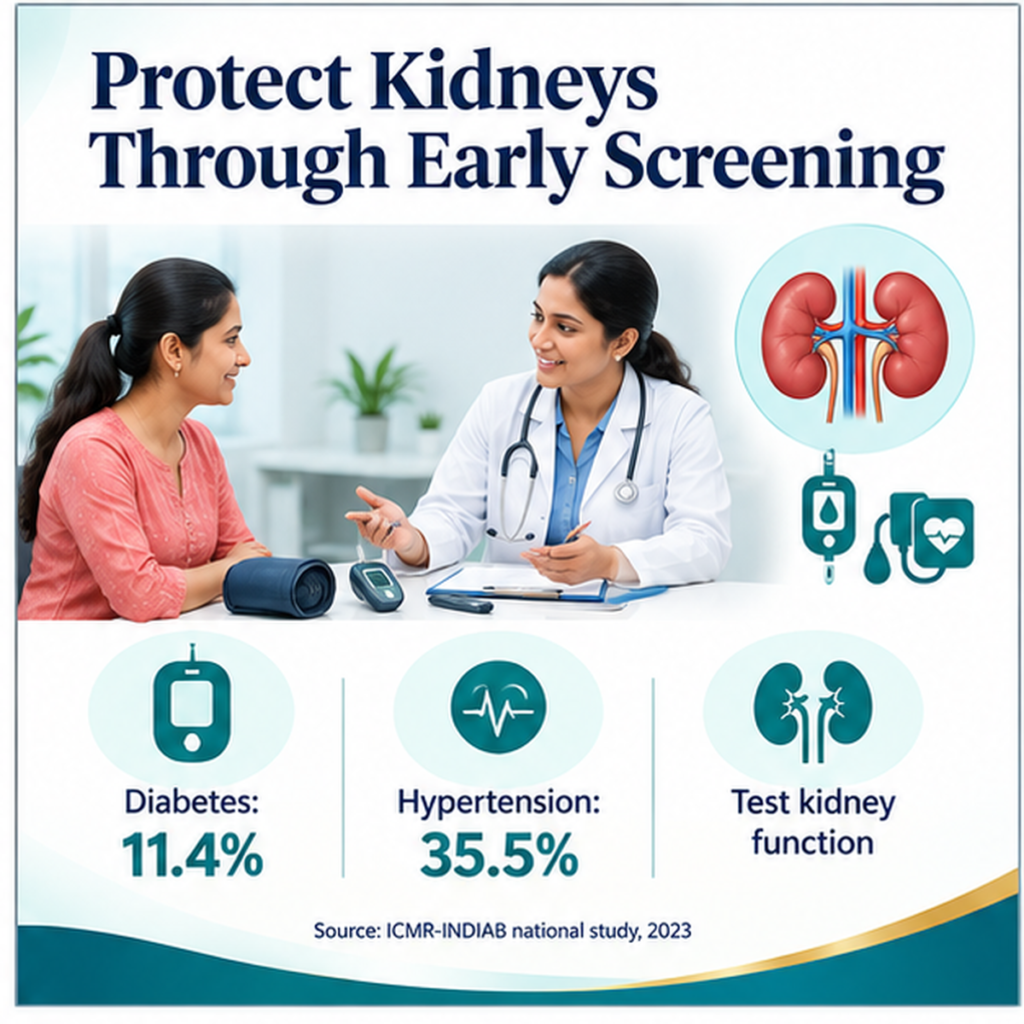
More recently, ICMR-INDIAB, a large, nationally representative cross-sectional study published in The Lancet Diabetes & Endocrinology in 2023, reported that 101 million adults in India had diabetes and 315 million had hypertension, with corresponding prevalence rates of 11.4% and 35.5%, respectively.
The prevalence of diabetes and hypertension as reported by the study was 11.4% and 35.5%, respectively.
Both diabetes and hypertension are risk factors for chronic kidney disease (CKD).
Persistently elevated blood glucose can cause damage to the structures that filter the blood, while uncontrolled blood pressure can cause progressive changes in the blood vessels of the kidneys.
Strengthening the link to diabetes and hypertension management can help in ensuring the care of kidneys as well.
In addition to monitoring patients with known kidney disease, individuals with diabetes and/or hypertension and specific risk factors should have blood and urine tested periodically, have their blood pressure checked, and be on appropriate treatment for their diabetes and hypertension.
The main objective is to identify kidney damage at an early stage before the kidney loses its function permanently.
3. Urinary Infections Need Better Diagnosis and Antimicrobial Stewardship
Urinary tract infections represent another significant clinical concern.
India’s ICMR Antimicrobial Resistance Surveillance Network reported 1,659 urinary tract infection cases from various healthcare facilities across the country that were part of the hospital surveillance program during 2024.
Of the UTI cases reported in the surveillance sites, 1,412 (85.1%) were catheter-associated UTI cases.
The catheter-associated UTI rate was 3.3 per 1,000 catheter-days.
The above surveillance figures need to be clearly differentiated from the national prevalence of UTI cases.
These data are of particular significance to highlight the need to prevent infections and to use catheters appropriately, as well as to use evidence-based antibacterial therapy where indicated.
All patients with symptoms of a urinary tract infection need to be clinically evaluated for infection versus stone/obstruction versus other causes of a urinary tract condition.
Urine cultures are important in complicated or recurrent cases of infection.
Use of unnecessary antibiotics and the subsequent development of resistance also must be prevented.
4. Urological Conditions Require Appropriate Specialist Assessment
Urology covers a range of conditions affecting the urinary tract and the male reproductive system.
Kidney stones, an enlarged prostate, incontinence, obstruction of the urinary system and urological cancers all require different diagnostic approaches and different treatment.
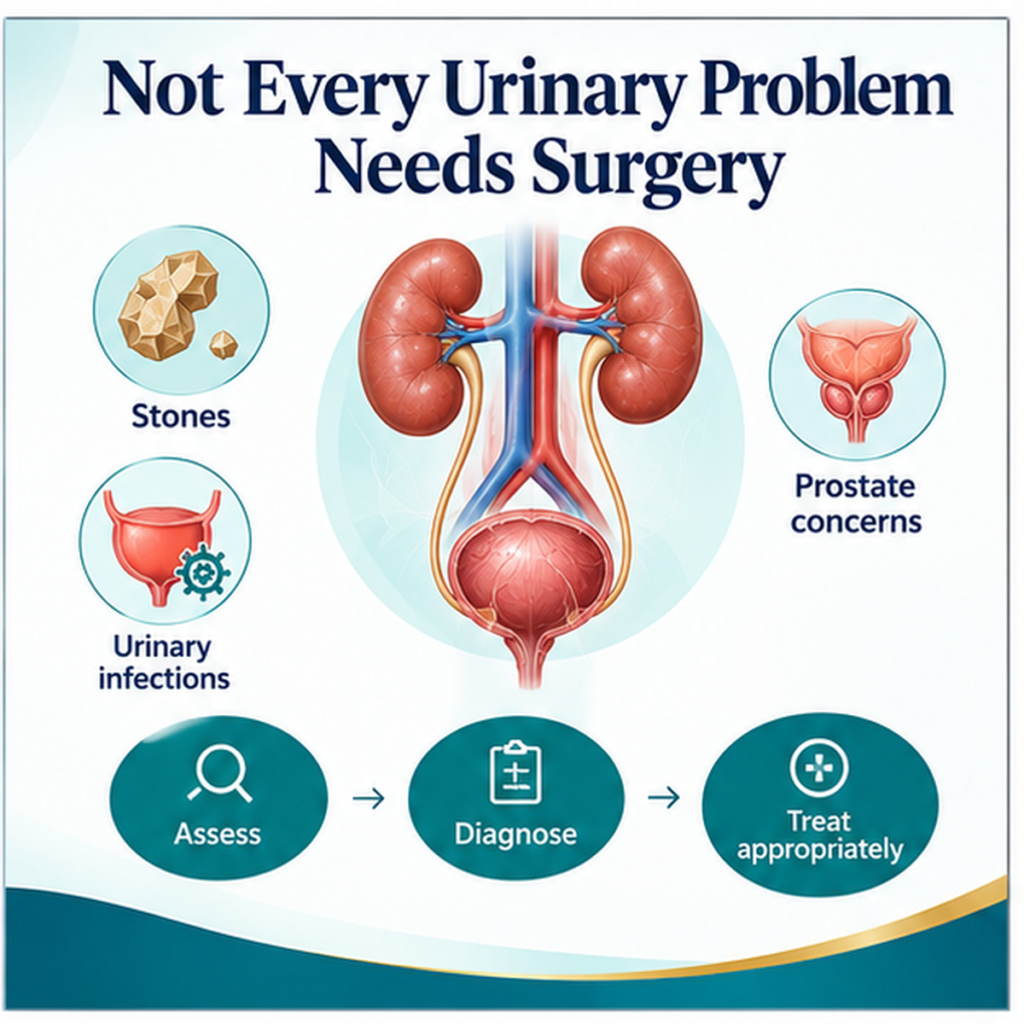
The treatment for kidney stones will depend on the size, location, symptoms, chance of infection, and the individual’s kidney function.
Some stones may pass on their own with proper observation and care, while others require intervention such as ureteroscopy and/or laser lithotripsy to break up the stone.
Similarly, benign prostatic hyperplasia (BPH) does not always need to be surgically cut out.
Treatment for BPH could be monitoring, medical treatment, or certain procedures to relieve symptoms as well as to prevent complications.
The approach should be diagnosis followed by choice of treatment rather than opting for the intervention itself.
5. Urological Cancer Adds Another Dimension to Healthcare Planning
Urological healthcare has to deal with cancer detection and treatment too.
ICMR’s National Cancer Registry Programme has projected about 47,068 new cases of prostate cancer among men in India for 2025. This is a modelled projection, and the actual number of cases may vary.
Please note that the above number is a modelled projection and hence may not be equal to the actual number of cases diagnosed in a year.
Apart from prostate cancer, urological oncology comprises many other cancers like kidney cancer, bladder cancer and testicular cancer.
The symptoms of cancerous and non-cancerous urological diseases can sometimes resemble each other.
The symptoms of these diseases can be similar to those of urinary disorders which are not life-threatening. Persistent blood in urine or other urinary changes which are unexplained need to be assessed by a specialist.
Imaging, Laboratory investigation, Cystoscopy and/ or Biopsy as appropriate after Specialist assessment.
Importantly, early diagnosis using appropriate diagnostic tools and a multidisciplinary approach is critical for management of patients with suspicious urinary tract symptoms.
6. India’s Next Priority Is Integrated Kidney and Urological Care
India’s future strategy for the care of kidney and urological diseases will involve preventive medicine, nephrology, urology, pathology, and imaging services.
Many kidney conditions need the attention of a nephrologist, but not all urinary symptoms indicate kidney disease, and many need the attention of a Urologist.
While not all kidney conditions are treated by a urologist, not all urinary symptoms indicate kidney disease and can be treated by a urologist.
Collaboration is required to deal with the delayed referrals and to make proper treatment decisions.
Healthcare systems should focus on patient education, appropriate investigations, and adequate follow-up of patients with chronic diseases, monitoring them for deterioration of renal function.
Monitoring of patients with chronic diseases for deterioration of kidney function and allowing for early intervention to prevent end-organ damage is also crucial.

It is important for patients suffering from urinary conditions to have timely specialist referral for proper diagnosis and treatment.
Conclusion
The health care challenges related to kidney and urological disorders in India are related to chronic diseases, infection prevention and management, access to specialists, and early diagnosis.
There is considerable evidence available today which underpins a health care strategy for the prevention of disease and the provision of appropriate specialist care as and when required.
The next milestone in the health care of the kidneys and urinary system in India will be to have adequate treatment available but, more importantly, adequate diagnosis at the right time and appropriate intervention to preserve kidney and urinary tract health in the long term.