
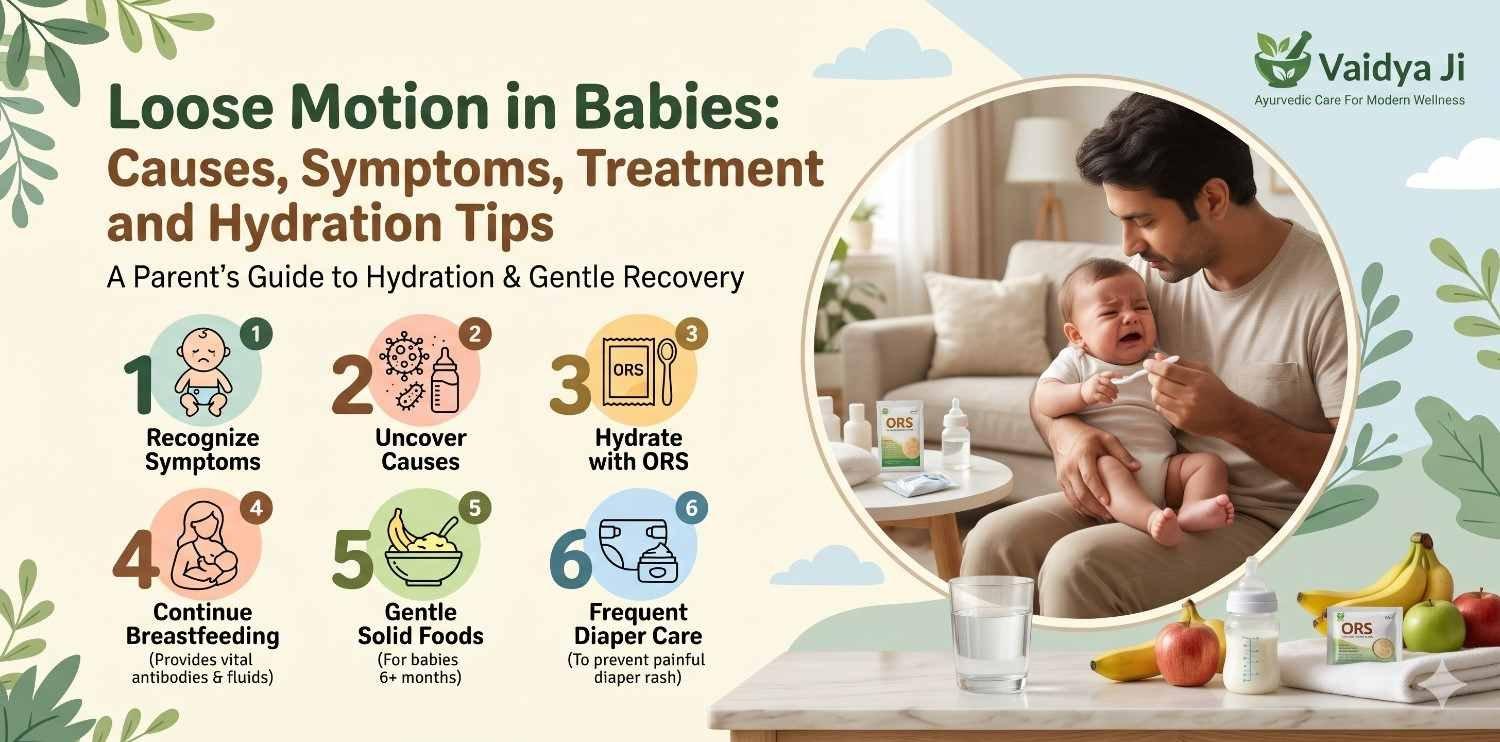
Noticing sudden watery stools in your baby’s diaper can quickly make any parent anxious. Loose motion in babies (infant diarrhoea) is a common condition, especially during the first two years of life as a child’s immune and digestive systems mature. While most episodes are mild and resolve within a few days, infants lose fluids and essential electrolytes much faster than older children or adults—making timely hydration the top priority.
Understanding what normal baby poop looks like versus true diarrhoea, recognizing common triggers, and knowing safe home care measures helps you manage loose motion in babies calmly and effectively.
Recognizing Loose Motion Symptoms in Infants
Breastfed babies naturally pass soft, seedy, yellowish stools several times a day, whereas formula-fed babies usually have slightly firmer, tan-coloured stools. True loose motion symptoms in infants involve a sudden change from your baby’s normal pattern:
- Frequent Watery Stools: Passing unusually watery, runny, or foul-smelling stools more frequently than normal.
- Mucus or Greenish Stools: Presence of slimy mucus streaks or frothy green stools caused by rapid gut transit.
- Abdominal Cramping and Fussiness: Tummy discomfort, gas, pulling legs toward the belly, or increased irritability.
- Mild Fever or Vomiting: Often seen when loose motions are triggered by a viral stomach infection.
- Diaper Rash: Frequent acidic watery stools can quickly irritate sensitive skin around the diaper area.
Watch Closely for Signs of Dehydration
Dehydration is the biggest risk during infant diarrhoea. Seek immediate medical care if you notice:
- Dry lips, tongue, or inside of the mouth
- Crying without tears
- Fewer than 4–6 wet diapers in 24 hours (or no wet diaper for 6 hours)
- Sunken eyes or a sunken soft spot (fontanelle) on top of the baby’s head
- Unusual drowsiness, lethargy, or extreme irritability
Common Baby Diarrhoea Causes
Identifying baby diarrhoea causes helps determine whether home hydration is sufficient or medical treatment is needed:
1. Viral Infections (Gastroenteritis)
Viruses such as rotavirus, norovirus, and adenovirus are the most frequent triggers of sudden watery diarrhoea in babies, often accompanied by mild fever or vomiting.
2. Bacterial or Parasitic Infections
Contaminated water, unsterilized feeding bottles, or spoiled food can introduce bacteria like E. coli or Salmonella, causing more severe diarrhoea sometimes accompanied by fever or blood in stool.
3. Antibiotic Side Effects
If your baby is taking antibiotics for an ear or throat infection, the medicine can temporarily disrupt healthy gut bacteria and cause loose stools.
4. Food Sensitivity or Dietary Changes
Introducing new solid foods too quickly, excess fruit juice, or cow’s milk protein intolerance can trigger temporary digestive upset.
5. Teething Myth vs. Reality
While swallowing excess drool during teething may make stools slightly looser, teething itself does not cause true watery diarrhoea—always look for an underlying infection or dietary trigger.
Safe Treatment for Loose Motion in Babies
The cornerstone of treatment for loose motion in babies is preventing dehydration and supporting gut recovery rather than stopping stools abruptly:
- Give WHO-Recommended ORS (Oral Rehydration Solution): After every watery stool, offer small, frequent sips of age-appropriate ORS using a clean spoon, dropper, or syringe as advised by your paediatrician.
- Continue Breastfeeding or Formula Feeds: Never stop breast milk or regular formula during diarrhoea—breast milk provides vital antibodies, fluids, and nutrients that speed up gut healing.
- Zinc Supplementation (If Prescribed): Paediatricians frequently prescribe a 10–14 day course of zinc drops or syrup, which reduces the duration and severity of diarrhoea and prevents recurrence.
- Gentle Foods for Babies on Solids (6+ Months): Offer easily digestible, binding foods such as mashed banana, rice-moong dal khichdi, curd (dahi), steamed apple puree, or plain rice kanji.
- Strict Warning Against Self-Medication: Never give over-the-counter anti-diarrhoeal medicines, adult tablets, or leftover antibiotics to an infant, as they can cause dangerous intestinal complications.
| Age Group | Feeding & Hydration Approach | What to Avoid |
| Under 6 Months | Frequent breastfeeds or formula + paediatrician-recommended ORS | Plain water in large amounts, fruit juices, herbal concoctions |
| 6 – 12 Months | Continued milk feeds + ORS + mashed banana, soft khichdi, curd, rice water | Sugary drinks, packaged juices, high-fibre raw veggies, fried foods |
Essential Hydration and Diaper Care Tips
- Offer Small Sips Frequently: If your baby is vomiting alongside loose motion, give 1–2 teaspoons of ORS every 5–10 minutes rather than a large amount at once.
- Sterilize Feeding Gear Strictly: Wash and sterilize bottles, nipples, bowls, and spoons thoroughly, and always use boiled, cooled water for preparing formula or ORS.
- Protect Against Diaper Rash: Change wet or soiled diapers promptly, clean gently with lukewarm water and soft cotton instead of scented wipes, and apply a thick layer of zinc oxide barrier cream.
- Practice Strict Hand Hygiene: Wash hands with soap before preparing baby feeds and after every diaper change to stop infection spread within the household.
Read more blog : Blue Baby Syndrome: Causes, Symptoms, Diagnosis and Treatment in Infants
When to Visit a Doctor Immediately
Contact your paediatrician right away if:
- Your baby is under 3 months old and develops watery diarrhoea
- There is blood, pus, or black/tarry colour in the stool
- Loose motion continues beyond 24–48 hours without improvement
- Your baby has a high fever, persistent vomiting, or refuses all fluids and feeds
- Any signs of dehydration appear
Conclusion
Although loose motion in babies can be stressful to manage, prompt hydration with ORS, continued breastfeeding or gentle solid feeds, and strict hygiene help most infants recover smoothly within a few days. Staying alert to early dehydration signs and consulting your paediatrician before giving any medicine ensures safe, fast recovery for your little one.
Frequently Asked Questions (FAQs)
- Can I give ORS to a 3-month-old baby for loose motion?
Yes, WHO-recommended ORS can be given to infants under 6 months alongside continued breastfeeding or formula, but always confirm the exact volume per loose stool with your paediatrician.
- Should I stop breastfeeding when my baby has diarrhoea?
No, you should continue breastfeeding on demand—and even more frequently if needed—because breast milk hydrates your baby and supplies immune-boosting antibodies that help heal the gut lining.
- What foods help stop loose motion in babies over 6 months?
Soft, binding, gut-friendly foods such as ripe mashed banana, plain curd (dahi), well-cooked rice and moong dal khichdi, steamed apple puree, and plain rice water help firm up stools gently.
- How many days does loose motion last in babies?
Mild viral loose motion in babies typically lasts 2 to 5 days and resolves with proper hydration and zinc supplementation, though you should consult a doctor if it persists beyond 48 hours or worsens.