
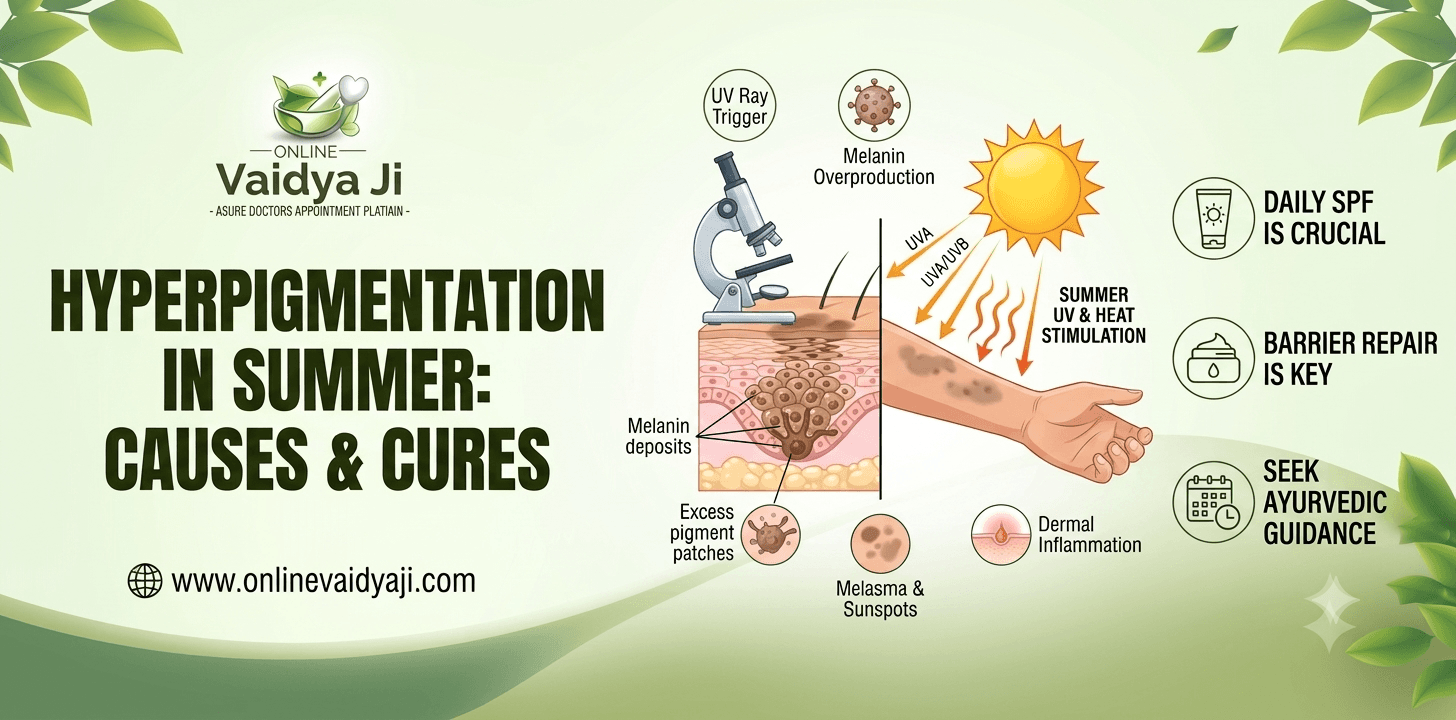
Hyperpigmentation is a dermatological condition where excess melanin—the natural pigment responsible for skin color—is produced in specific areas, creating uneven dark spots. Summer accelerates this process because solar Ultraviolet (UV) rays, visible light, and environmental heat directly stimulate skin pigment cells (melanocytes).
[Sunlight & Intense Heat] —> Triggers Melanocyte Activity —> Overproduction of Melanin —> Dark Spots & Uneven Tone
Melanin acts as your skin’s defense mechanism against cell damage. When ultraviolet radiation strikes unprotected skin, melanocytes produce surplus pigment to shield cellular DNA. In summer, elevated UV index levels, increased humidity, and elevated thermal heat combine to cause rapid pigment synthesis, resulting in melasma, post-inflammatory hyperpigmentation (PIH), and sunspots.
Common Types of Summertime Discoloration
- Melasma: Symmetrical, blotchy patches typically occurring on the forehead, cheeks, nose, and upper lip, frequently driven by hormonal fluctuations combined with heat and sun.
- Sunspots (Solar Lentigines): Flat, oval brown spots caused by direct, cumulative UV exposure over time.
- Post-Inflammatory Hyperpigmentation (PIH): Darkened marks left behind after skin inflammation, acne breakouts, or heat-induced rash flare-ups.
How to Prevent Pigmentation in Summer
Prevention is far more effective than trying to reverse deep discoloration after it forms. To understand how to prevent pigmentation in summer, you must build a comprehensive shield against photodamage.
1. Broad-Spectrum & Visible Light Protection
Standard UV filters block UVA and UVB rays, but visible light (specifically high-energy visible/blue light) also triggers stubborn discoloration, especially in darker skin phototypes.
- Use broad-spectrum sunscreen with SPF 30 or higher.
- Choose formulas containing Tinted Iron Oxides, which are clinically proven to block visible light and prevent melasma relapses.
- Reapply sunscreen every two hours when outdoors, sweating, or swimming.
2. Physical & Environmental Barriers
- Wear broad-brimmed hats (at least 3-inch brim) to shade the face, neck, and ears.
- Wear UV-blocking sunglasses to stop squinting, which can trigger periocular pigmentation.
- Seek shade during peak UV hours (10:00 AM to 4:00 PM).
Daily Summer Skincare Routine for Pigmentation
Learning how to reduce hyperpigmentation on face tissues during warmer months requires adapting your daily skincare routine. Summer heat increases sebum production, meaning heavy winter creams should be replaced with light, active-rich formulations.
Morning (AM) Regimen: Protect and Shield
- Gentle Cleanser: Cleanse with a mild, pH-balanced foaming or gel cleanser to remove overnight oil without stripping the moisture barrier.
- Antioxidant Serum: Apply a Vitamin C (L-ascorbic acid or 3-O-Ethyl Ascorbic Acid) serum. Antioxidants neutralize free radicals generated by morning UV rays and inhibit the tyrosinase enzyme responsible for melanin production.
- Lightweight Hydrator: Layer a light gel-cream moisturizer rich in hyaluronic acid or ceramides to preserve barrier function.
- Tinted Mineral Sunscreen: Finish with a generous layer of broad-spectrum SPF 50 containing zinc oxide and iron oxides.
Evening (PM) Regimen: Repair and Fade
- Double Cleanse: Use an oil-based cleanser followed by a gentle gel wash to thoroughly remove stubborn sunscreen, sweat, and environmental pollutants.
- Pigment-Inhibiting Actives: Apply targeted active ingredients such as Azelaic Acid (10–15%), Niacinamide (4–5%), Alpha Arbutin, or Kojic Acid. These ingredients slow down pigment production without sensitizing skin to daytime sun exposure.
- Barrier Repair Moisturizer: Lock in hydration with a ceramide-rich moisturizer to support cell turnover and repair daytime stress.
Key Ingredients to Treat and Reduce Hyperpigmentation
Selecting the right active ingredients is vital for effective summer skincare for pigmentation. Here is how leading dermatological ingredients perform during warmer months:
| Ingredient | Primary Function | Summer Usage Guidance |
| Vitamin C | Antioxidant defense, tyrosinase inhibition | Excellent for daily morning use under SPF. |
| Azelaic Acid | Calms inflammation, selectively targets hyperactive melanocytes | Safe for summer use; ideal for sensitive skin and melasma. |
| Niacinamide (Vitamin B3) | Blocks transfer of pigment to skin cells, reduces redness | Use morning or evening; enhances skin barrier strength. |
| Alpha Arbutin | Hydroquinone derivative that safely lightens dark spots | Gentle for summer use; apply twice daily before heavy creams. |
| AHAs (Mandelic/Lactic Acid) | Exfoliates surface dead cells to clear existing pigment | Use strictly at night 1–2 times weekly; mandelic acid is least photosensitizing. |
Caution on Retinoids and Strong Acids: High-potency retinoids, glycolic acid, and aggressive chemical peels increase photosensitivity. If used in summer, apply them sparingly at night and maintain strict daytime sun protection.
Read More Blog : How to Use Glycerine for Skin: Benefits, Uses & Precautions
Natural Home Remedies and Lifestyle Modifications
In addition to topically applied active formulations, natural supportive care and lifestyle adjustments help maintain skin balance during hot seasons:
- Aloe Vera Gel: Contains aloin, a natural depigmenting compound that soothes sunburn-induced inflammation and cools hot skin after outdoor activity.
- Green Tea Extract: Packed with polyphenols that calm UV-induced inflammation and reduce oxidative damage.
- Dietary Antioxidants: Consume foods rich in Lycopene (cooked tomatoes), Vitamin E (nuts and seeds), and Flavonoids (berries and green tea) to strengthen internal photoprotection.
- Avoid Fragrances in Direct Sun: Perfumes and heavily fragranced skincare products contain essential oils (like bergamot) that cause berloque dermatitis—a severe hyperpigmentation reaction triggered when exposed to UV light.
When to Consult a Dermatologist
While mild sun-induced darkening can be managed with over-the-counter care, seek professional medical guidance if you experience:
- Rapidly spreading, irregular, or painful dark patches.
- Dark spots that change in color, size, shape, or begin bleeding/itching.
- Stubborn melasma that does not improve after 8–12 weeks of consistent skincare and sun safety.
- Need for clinical interventions, such as professional low-fluence Q-switched lasers, superficial chemical peels, or prescription-strength topical formulations.

Conclusion
Managing hyperpigmentation in summer is entirely achievable when you understand how UV exposure, heat, and melanin interact. By combining broad-spectrum tinted sunscreens, antioxidant defense with Vitamin C, targeted night active ingredients like Azelaic Acid, and smart sun habits, you can protect your complexion and maintain an even, healthy glow all summer long.
Frequently Asked Questions (FAQs)
Why does hyperpigmentation get worse in the summer?
Hyperpigmentation worsens in summer because elevated ultraviolet (UVA/UVB) levels, visible light, and high ambient temperatures directly stimulate melanocytes (pigment-producing cells) to create excess melanin as a defense mechanism against photo-damage.
How can I reduce hyperpigmentation on my face during hot weather?
To reduce facial hyperpigmentation in hot weather, apply a Vitamin C antioxidant serum every morning, follow with a broad-spectrum tinted SPF 30+ sunscreen, use targeted ingredients like Azelaic Acid or Niacinamide at night, and avoid direct peak-hour sunlight.
Is Vitamin C safe to use on skin during summer?
Yes, Vitamin C is safe and highly recommended for summer use. When applied under sunscreen in the morning, it neutralizes environmental free radicals caused by UV rays, boosts sun protection efficiency, and prevents dark spot formation.
Can hyperpigmentation from sun damage be completely cured?
Sun-induced hyperpigmentation can be significantly faded and managed with consistent photoprotection and active topical treatments. However, because melanocytes retain a “memory” of photo-damage, dark spots can return if unprotected sun exposure occurs again.