
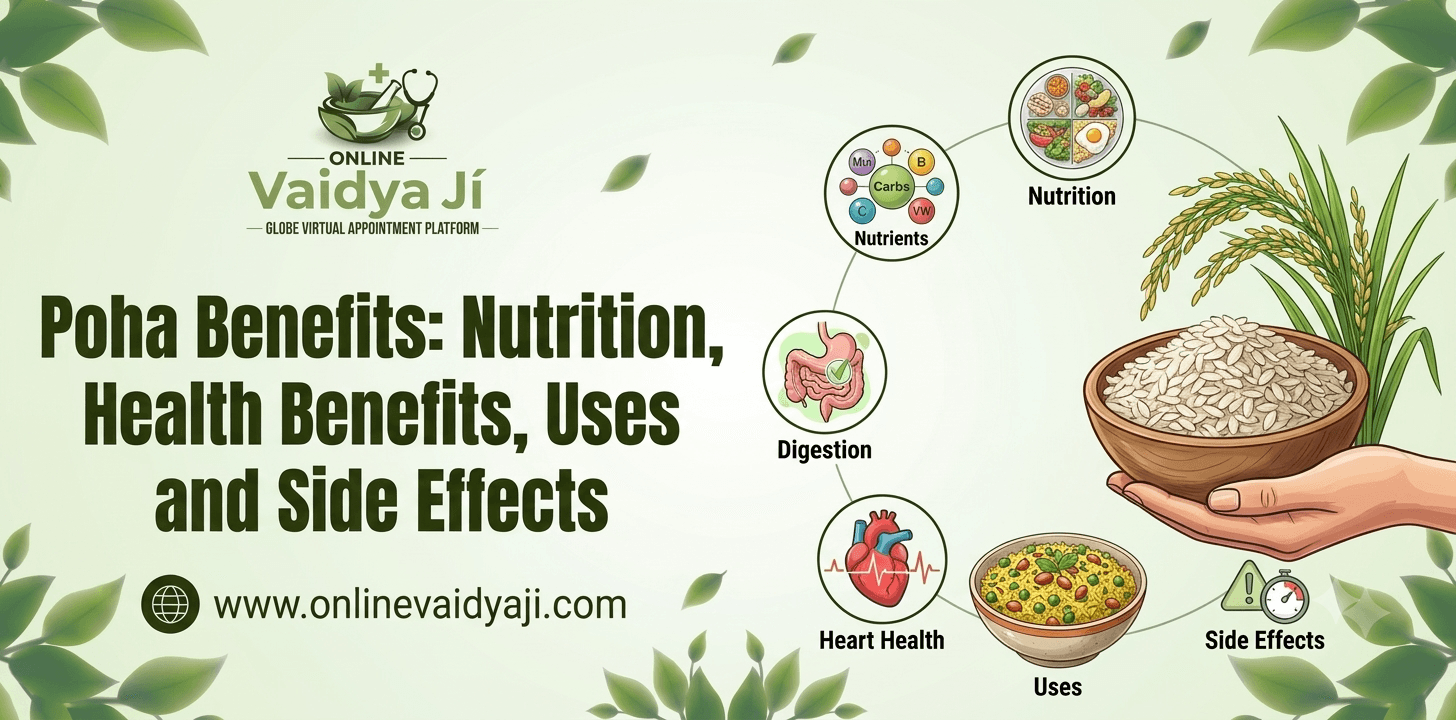
Yes, poha is a healthy, light, and easily digestible carbohydrate-rich food that supports steady energy, gut comfort, and iron intake—especially when cooked with vegetables, peanuts, and minimal oil. Made from parboiled and flattened rice flakes, poha offers poha benefits like gentle digestion and quick morning fuel without feeling overly heavy.
Whether you know it as chura, aval, atukulu, or poha, flattened rice has been a staple across Indian kitchens for generations. Because the grains are parboiled, rolled flat, and dried before reaching your pantry, they soften quickly and cook in minutes.
Poha Nutritional Value and Poha Calories
Dry poha contains roughly 333–354 kcal per 100g, while a typical cooked 150g–200g serving generally provides around 180–280 kcal depending on oil, peanuts, and vegetables. Understanding poha nutritional value and poha calories helps you judge how it fits into your daily diet.
Raw rice flakes are concentrated because moisture has been removed during processing. Once rinsed and cooked, the flakes absorb water and expand, lowering the calorie density per bite compared to heavy fried snacks or stuffed parathas.
| Nutrient (Dry Poha, per 100g) | Approximate Value | Role in the Body |
| Energy (Poha Calories) | ~333–354 kcal | Primary fuel for daily movement and brain activity |
| Carbohydrates | ~76–77 g | Main source of digestible starch and energy |
| Protein | ~6.7–7.4 g | Supports tissue repair; pairs well with legumes or curd |
| Dietary Fibre | ~3.5–6.7 g (varies by type) | Supports bowel regularity and satiety |
| Total Fat | ~0.5–1.1 g | Very low in dry flakes; rises based on cooking oil or nuts |
| Iron | ~1.2–4.5 mg (higher if fortified) | Carries oxygen in red blood cells; adds to flattened rice benefits |
Iron levels vary noticeably depending on processing and fortification. Unfortified rice flakes contain modest iron, whereas government-fortified or +F labeled poha provides substantially more iron per serving.
Key Poha Benefits and Flattened Rice Benefits for Health
The main poha benefits include easy digestibility, accessible carbohydrates for energy, low fat content, and support for iron and gut health when paired with whole foods. While poha is not a cure-all, flattened rice benefits everyday meals when balanced with protein and micronutrients.
1. Steady Energy and Brain Fuel
Carbohydrates are your body’s preferred source of quick energy. Because poha is already parboiled and flattened, your digestive enzymes break it down smoothly, making it a dependable breakfast or pre-workout meal when you need accessible energy without sluggishness.
2. Gentle Digestion for Sensitive Stomachs
The rolling and pressing process partially breaks down the grain structure, which is why many people find poha easier on the stomach than heavy or greasy breakfasts. Adding resistant starch—formed when cooked starch cools slightly—can also support beneficial gut bacteria when eaten in moderation.
3. Support for Iron Intake
Compared to plain white rice, flattened rice benefits iron intake modestly, and iron-fortified poha offers a much stronger boost for people at risk of low iron levels. Squeezing fresh lemon juice over your bowl adds vitamin C, which helps your body absorb non-heme iron from plant foods more effectively.
4. Naturally Low in Fat and Gluten-Free
Plain flattened rice contains virtually no cholesterol and very little fat, making a vegetable-heavy preparation a lighter swap than deep-fried snacks. Pure rice flakes are also naturally gluten-free, though anyone with celiac disease or strict gluten sensitivity should check packaging for cross-contamination.
How Poha Compares With Other Breakfast Staples
Poha is lighter and quicker to cook than many traditional breakfasts, though it has less protein and fiber per calorie than oats or lentil-based dishes. Comparing poha calories and macros side by side makes it easier to build a balanced plate.
| Breakfast Option (Cooked) | Calories (Approx.) | Protein Profile | Best For |
| Poha (with veggies & light oil) | ~180–250 kcal per ~150–200g bowl | Low-to-moderate | Light, fast breakfast; gentle digestion |
| Oats (cooked) | ~71–110 kcal per 100–150g | Moderate (higher fiber) | High soluble fiber and longer fullness |
| Idli (2 medium pieces) | ~130–160 kcal | Moderate (fermented rice-lentil) | Steamed, fermented option with balanced carbs/protein |
| Stuffed Paratha (1–2 medium) | ~220–400+ kcal | Moderate (varies with filling) | Higher-calorie meal when extra energy is needed |
Because poha is predominantly carbohydrate, adding roasted peanuts, green peas, sprouts, paneer, or a side of curd turns a light carb bowl into a more filling meal with better protein and fiber balance.
Is Poha Healthy? Practical Ways to Use It
Yes, poha is healthy when you control oil, skip heavy deep-fried toppings like sev, and pair it with vegetables and protein. Asking is poha healthy really comes down to portion size and what goes into the pan alongside the flakes.
- Choose the right flake thickness: Thick (mota) poha holds its shape best for Kanda Poha or vegetable poha, while thin (patla) poha works well for dry chivda or curd-based bowls.
- Load up on vegetables and herbs: Toss in onions, peas, carrots, tomatoes, curry leaves, turmeric, and fresh coriander to increase vitamins, antioxidants, and volume.
- Add a protein or healthy fat anchor: Mix in a handful of peanuts, roasted chana, or pair your bowl with yogurt to slow digestion and keep you full longer.
- Mind blood sugar and weight goals: Poha can fit weight-management or blood-sugar-conscious diets in measured portions, especially when paired with fiber and protein rather than eaten as a large plate of plain carbs.
Potential Side Effects and Precautions
Poha is safe for most people in normal meal portions, though overeating large servings or adding excess oil can cause bloating, blood sugar spikes, or unwanted weight gain. Keep these simple precautions in mind:
- Digestive discomfort: Eating very large portions quickly—or combining poha with heavy, oily, or overly spicy mix-ins—can trigger bloating or fullness.
- Blood sugar management: Because poha is high in refined starch, people with diabetes or insulin resistance should watch portion sizes and pair it with protein, fiber, and healthy fat rather than eating it alone.
- Medication and special life stages: If you take prescription medications or have specific health conditions, check with a healthcare professional if you plan major dietary changes.
Conclusion
Poha benefits everyday meals by offering a light, quick-to-cook, and easy-to-digest base that fits smoothly into a balanced diet when prepared mindfully. Understanding poha nutritional value and keeping poha calories in check helps you enjoy flattened rice benefits—such as gentle digestion, convenient energy, and support for iron intake—without weighing down your meal.
Ultimately, is poha healthy depends on how you build the bowl: stick to moderate portions, use minimal oil, skip heavy deep-fried toppings, and pair it with vegetables and protein like peanuts, sprouts, peas, or curd. Whether you make a classic breakfast bowl or a quick daytime snack, thoughtful preparation lets poha support steady energy and comfortable digestion as part of a varied routine.
Frequently Asked Questions About Poha
Is poha good for weight loss?
Poha can support weight loss when eaten in moderate portions with minimal oil and plenty of vegetables. Keeping poha calories in check means avoiding heavy sev or excess frying oil and pairing it with protein so you stay satisfied until your next meal.
Which poha is healthier: white, red, or brown?
All three share similar core poha nutritional value as flattened rice, but red and brown poha are made from less-milled rice that retains slightly more bran, fiber, and micronutrients. White poha is often softer and gentler if you want a very light, easily digestible meal.
Can you eat poha every day?
Many people eat poha several times a week or daily as part of a varied diet. To keep daily meals well-rounded, rotate your toppings, watch oil quantities, and include other whole grains, legumes, fruits, and vegetables across the rest of your day.
What is the best time to eat poha?
Breakfast or a daytime meal is ideal for most people because poha provides quick, digestible energy when your activity levels are higher. If you eat it later in the day, keep the portion modest and include vegetables or protein for steady fullness.