
Dealing with stubborn whiteheads can be frustrating, especially when they pop up right on your nose, chin, or forehead. Unlike blackheads, which feature an open pore and darken due to oxidation, whiteheads form when dead skin cells, excess oil, and bacteria get trapped beneath completely closed pores. Fortunately, achieving a clear and radiant complexion doesn’t require harsh chemical treatments or expensive dermatological visits. Nature provides a wealth of gentle, highly effective solutions.
In this comprehensive guide, explore actionable remedies for whiteheads backed by modern skincare best practices, alongside expert insights on how to remove whiteheads safely without causing skin damage or scarring.
What Are Whiteheads and Why Do They Form?
Whiteheads are a mild form of acne (known as closed comedones) caused by excess sebum production, dead skin cell accumulation, and trapped bacteria beneath the surface of closed pores.
Understanding the root cause of whiteheads helps you treat them effectively at the source rather than just managing surface blemishes. When your sebaceous glands produce too much oil, it mixes with shedding dead skin cells and clogs your pores. Because the pore opening remains sealed, the trapped debris stays white or flesh-colored, creating a tiny, raised bump. Hormonal fluctuations, genetics, stress, and improper skincare routines are common triggers that accelerate this process.
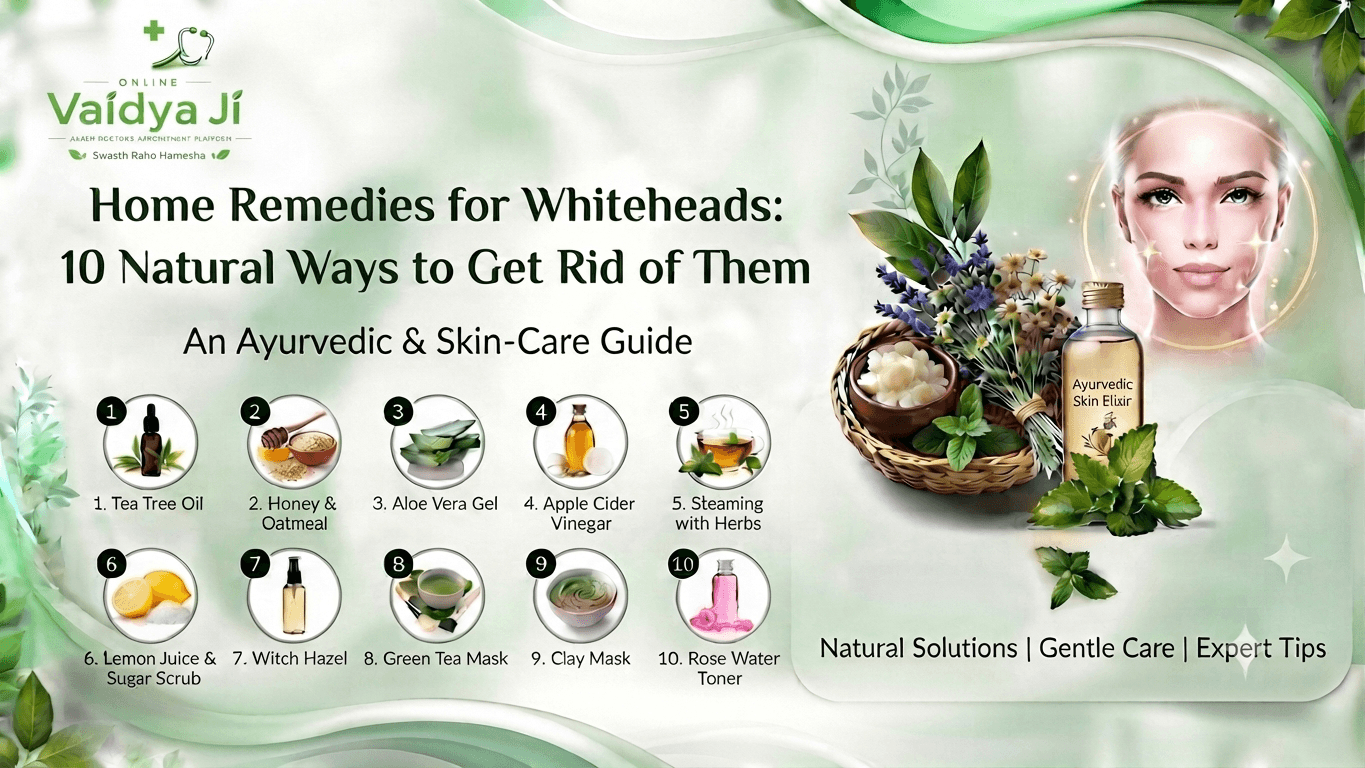
Top 10 Best Home Remedies for Whiteheads
If you want to know how to remove white heads from face using safe ingredients straight from your kitchen pantry, these 10 natural remedies offer a gentle approach to deep exfoliation and oil regulation.
1. Steam Treatment
Facial steaming is one of the easiest and most relaxing ways to open up your pores and loosen trapped debris.
-
How to use: Boil a pot of water, pour it into a clean bowl, and carefully drape a towel over your head to trap the steam. Keep your face about 8 to 10 inches away from the water for 5 to 7 minutes. Follow up with a gentle, hydrating cleanser.
2. Tea Tree Oil Spot Treatment
Renowned for its powerful natural antimicrobial and anti-inflammatory properties, tea tree oil helps reduce the specific bacteria that contribute to clogged pores and breakouts.
-
How to use: Dilute a few drops of pure tea tree oil with a carrier oil like jojoba, argan, or coconut oil. Dab it onto the affected areas using a clean cotton swab once a day.
3. Honey and Cinnamon Mask
Raw honey acts as a natural humectant with potent antibacterial properties, while cinnamon helps stimulate local blood circulation and combat microbes.
-
How to use: Mix two tablespoons of raw honey with one teaspoon of organic cinnamon powder to form a paste. Apply it to your face, leave it on for 10 to 15 minutes, and rinse thoroughly with lukewarm water.
4. Oatmeal and Yogurt Scrub
Oatmeal gently exfoliates dead skin cells without causing micro-tears, and yogurt contains natural lactic acid, which helps dissolve pore-clogging debris gently.
-
How to use: Combine equal parts ground oatmeal and plain, unflavored yogurt. Massage the mixture softly onto your face in circular motions for a few minutes before rinsing off with cool water.
5. Apple Cider Vinegar (ACV) Toner
Apple cider vinegar contains natural malic and acetic acids that help balance your skin’s natural pH levels while providing mild surface exfoliation.
-
How to use: Dilute one part raw apple cider vinegar with three parts distilled water. Apply it to your skin using a cotton ball as a gentle toner, leave it for a few minutes, and rinse thoroughly.
6. Lemon Juice and Sugar Exfoliator
Lemon juice acts as a natural astringent rich in Vitamin C, while fine sugar granules provide physical exfoliation to lift away dead skin cells.
-
How to use: Mix a tablespoon of fine sugar with a few drops of fresh lemon juice. Gently scrub your skin for 1 to 2 minutes, then wash it off with cool water. (Note: Avoid sun exposure immediately after applying citrus to the skin.)
7. Aloe Vera Gel Soothing Mask
Aloe vera is celebrated for its calming, hydrating, and healing properties, making it exceptional for reducing redness while regulating skin sebum production.
-
How to use: Scoop fresh gel directly from an aloe vera leaf or use pure, commercial-grade gel. Massage it into your skin and leave it overnight for a smooth, refreshed morning glow.
8. Green Tea Compress
Green tea is packed with powerful antioxidants called catechins that help reduce excess oil production and soothe skin inflammation.
-
How to use: Brew a cup of green tea and allow it to cool completely. Dip a clean cotton pad into the tea and press it gently onto areas prone to whiteheads, such as your nose and forehead.
9. Baking Soda Paste
Baking soda acts as a fine exfoliant that buffs away dead skin cells, though it should be used sparingly to avoid stripping the skin’s moisture barrier.
-
How to use: Mix one tablespoon of baking soda with a little water to form a smooth paste. Gently massage onto the skin for less than a minute, then rinse immediately with lukewarm water.
10. Clay Mask Treatment
Bentonite or kaolin clay acts like a natural magnet, drawing out excess sebum, impurities, and toxins from deep within your pores.
-
How to use: Mix clay powder with water or pure rose water to create an even paste. Apply an even layer across your face, let it dry for 10 to 15 minutes, and rinse off thoroughly with warm water.
Read More Blog : Natural Remedies
How to Apply the Best Home Remedies for Whiteheads on Your Nose Safely
To remove whiteheads from your nose safely, avoid aggressive squeezing or picking; instead, rely on gentle chemical exfoliants, steam, or clay masks to clear pores without causing permanent scarring.
The nose is a primary hotspot for whiteheads due to a high concentration of active sebaceous glands. Many individuals make the critical mistake of aggressively squeezing or popping them, which can push bacteria deeper into the follicle wall, cause micro-tears, and lead to permanent scarring, broken capillaries, or hyperpigmentation.
Step-by-Step Safe Nose Care Routine:
-
Cleanse: Wash your face thoroughly with a mild, non-comedogenic cleanser to eliminate surface sweat and dirt.
-
Soak: Use a warm, damp washcloth or steam your face for 5 minutes to soften the hardened sebum plug inside the pore.
-
Exfoliate: Apply a mild natural scrub or a chemical exfoliant containing salicylic acid to loosen dead cells.
-
Extract (If strictly necessary): If a whitehead has fully surfaced and is ready to release, wrap your fingers in clean tissues and press very gently on either side. Never use your bare fingernails or sharp metal tools improperly.
-
Tone and Hydrate: Finish with a soothing toner like rose water and apply a lightweight, oil-free moisturizer to restore balance.
Natural Remedies vs. Over-the-Counter Treatments
| Feature | Natural Home Remedies | Over-the-Counter (OTC) Treatments |
| Main Ingredients | Honey, tea tree oil, oatmeal, aloe vera | Salicylic acid, benzoyl peroxide, retinoids |
| Gentleness | Generally gentle, low risk of harsh irritation | Can cause initial dryness, peeling, or redness |
| Speed of Results | Gradual improvement observed over weeks | Faster targeted action against active acne |
| Cost | Highly affordable, accessible pantry items | Varies from moderate to expensive |
| Best For | Mild breakouts, maintenance, and sensitive skin | Persistent, stubborn, or widespread acne |
Prevention Tips for Clear, Spot-Free Skin
Maintaining clear skin is significantly easier than treating breakouts after they manifest. Follow these daily habits to keep your pores clear and unblocked:
-
Wash twice daily: Cleanse your face every morning and night to remove accumulated sweat, environmental pollutants, and excess oil.
-
Choose non-comedogenic products: Ensure your daily makeup, sunscreen, and lotions are explicitly labeled “non-comedogenic” (meaning they won’t clog pores).
-
Never sleep in makeup: Makeup traps sebum, dust, and dead skin cells overnight, creating an ideal breeding ground for whiteheads.
-
Stay hydrated and eat balanced foods: Drinking plenty of water helps flush out bodily toxins and supports overall skin elasticity and health.
Conclusion
Achieving a clear, radiant complexion does not require harsh chemical treatments or expensive dermatological procedures. By incorporating these natural best home remedies for whiteheads—such as soothing tea tree oil, exfoliating oatmeal, and clarifying clay masks—into your regular skincare routine, you can gently dissolve pore-clogging debris and reduce excess oil production safely.
Remember that consistency and patience are key when learning how to remove whiteheads naturally, as nourishing remedies work gradually to restore your skin’s natural balance without causing irritation or scarring. Pair these treatments with a disciplined daily skincare routine, proper hydration, and non-comedogenic products to maintain a healthy, spot-free glow for the long term.
Frequently Asked Questions (FAQs)
Can I pop my whiteheads at home?
It is strongly advised against popping whiteheads. Squeezing them can rupture the delicate follicle wall, spreading bacteria deeper into surrounding tissue and causing severe inflammation, dark spots, or permanent scars. Opt for gentle exfoliation or professional extraction instead.
How long does it take for home remedies to work on whiteheads?
Natural remedies rely on gentle, nourishing ingredients and consistent application. You can typically expect to see visible improvements in your skin texture and overall clarity within 2 to 4 weeks of regular care.
Are home remedies safe for sensitive skin?
While natural remedies are generally milder than synthetic chemicals, some active ingredients like lemon juice, baking soda, or undiluted essential oils can irritate sensitive skin types. Always perform a patch test on your inner arm 24 hours before applying any new remedy to your face.
What is the difference between whiteheads and blackheads?
Both are common types of non-inflammatory acne caused by clogged pores. The key structural difference is exposure to air: blackheads feature an open pore, causing the trapped sebum and dead skin cells to oxidize and turn dark. Whiteheads feature closed pores, which keeps the trapped material protected from air, remaining white or flesh-colored.