
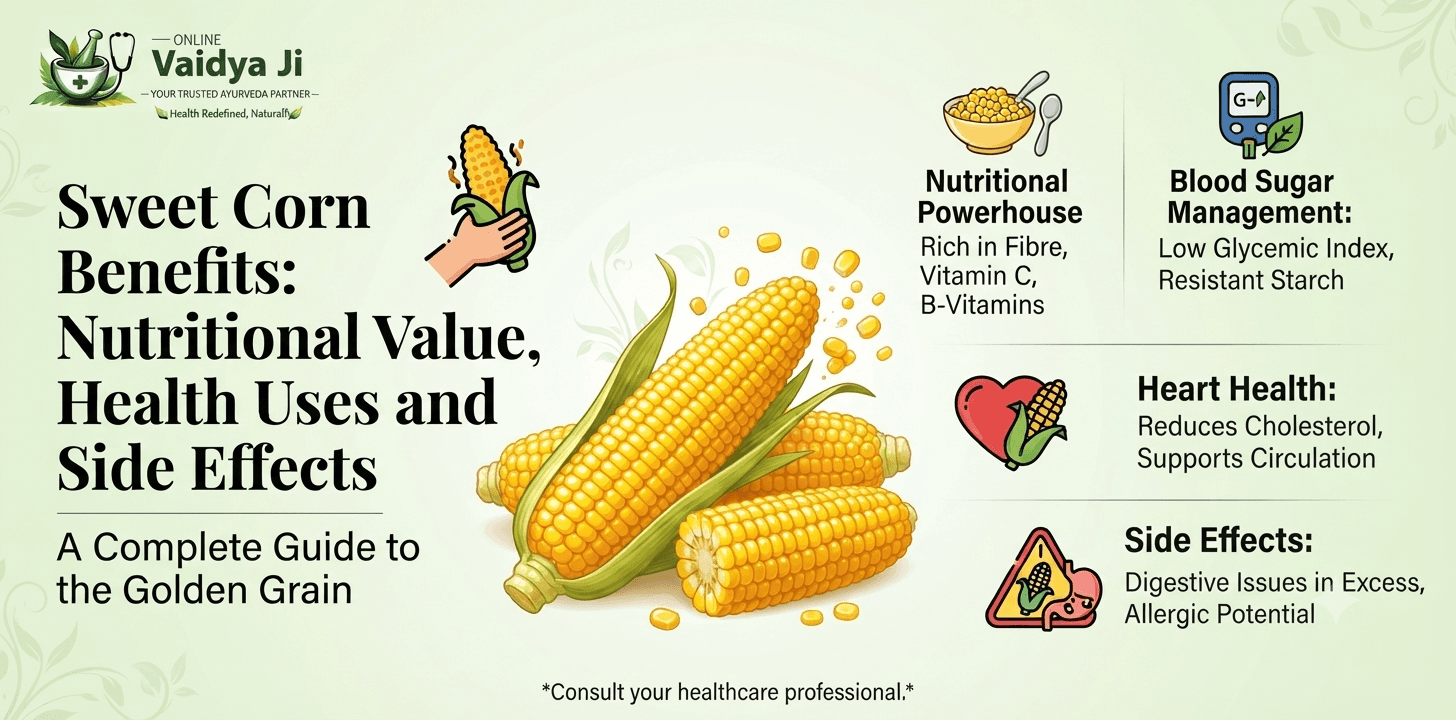
A steaming bowl of boiled sweet corn seasoned with a squeeze of lemon and a dash of chaat masala is the ultimate comfort snack. Beyond its delightful taste, sweet corn—scientifically known as Zea mays var. saccharata—is packed with essential vitamins, minerals, and bioactive compounds. Whether you enjoy it roasted on charcoal or incorporated into wholesome salads, understanding the sweet corn benefits and side effects helps you make the most of this nutritious food in your daily diet.
Nutritional Value of Sweet Corn
What makes sweet corn a valuable part of a balanced diet? It boasts a rich nutrient profile that provides energy, supports metabolic function, and delivers vital micronutrients.
The approximate nutrient breakdown of sweet corn includes:
- Water: ~76%
- Carbohydrates: ~18.7%
- Proteins: ~3.27%
- Dietary Fibre: ~2%
- Fats: ~1.35%
- Sugars: ~6.26%
Additionally, sweet corn contains essential minerals like potassium, magnesium, phosphorus, iron, and zinc, along with B-complex vitamins (thiamine, niacin, folate, and pantothenic acid) and vitamin C.
Read More Blog : How to Reduce Freckles on Face: Causes, Remedies & Prevention
Properties of Sweet Corn
Sweet corn contains powerful bioactive compounds that impart several health-promoting properties:
- Antioxidant Action: Neutralizes harmful free radicals in the body, helping protect cells from oxidative stress.
- Metabolic Support: Helps regulate carbohydrate, lipid, and protein metabolism.
- Cardiovascular Health: May assist in supporting healthy cholesterol levels and improving circulation.
- Cellular Health: Contributes to the production of red blood cells and supports nerve function.
Potential Uses of Sweet Corn for Overall Health
Integrating this golden vegetable into your meals offers numerous health advantages. Let’s explore the primary advantages of eating sweet corn backed by nutritional science.
1. Managing Blood Sugar Levels
Sweet corn contains resistant starch, a type of carbohydrate that is digested slowly. This slow breakdown helps prevent rapid blood sugar spikes after meals, making it a supportive dietary choice for individuals managing type 2 diabetes when consumed in controlled portions.
2. Supporting Healthy Digestion
The dietary fibre and resistant starch present in sweet corn act as prebiotics. They promote the growth of beneficial gut bacteria, improve stool bulk, and support smooth bowel movements, thereby easing common digestive discomforts.
3. Aiding Weight Management
Whole grains and fibre-rich foods help promote satiety and reduce overall calorie intake. By replacing refined carbohydrates with fibre-rich sweet corn, you can better manage your appetite and support healthy weight loss goals.
4. Nourishing Skin and Anti-Aging
Sweet corn contains antioxidants such as ferulic acid, which helps combat oxidative damage associated with skin aging and environmental stressors. Corn starch is also traditionally used in soothing topical applications for minor skin irritations and rashes.
5. Combating Anaemia
As a natural source of iron, folate, and B-complex vitamins, sweet corn supports the formation of red blood cells and hemoglobin, helping prevent nutritional deficiencies that lead to fatigue and anaemia.
Sweet Corn Uses in Everyday Cooking
Thanks to its natural sweetness and versatility, sweet corn uses extend far beyond a simple street-side snack. You can enjoy it in multiple forms:
- Boiled or Steamed: Tossed with herbs, butter, or lemon juice for a quick snack.
- Roasted: Charred over open flames for a smoky, traditional flavor.
- Salads and Soups: Added to green salads, cream soups, and noodle dishes for added texture and nutrition.
- Pizza and Pasta Toppings: Used to enhance color, fiber content, and subtle sweetness in baked dishes.
Side Effects of Sweet Corn
While it is safe for most people when consumed in moderation, being aware of potential sweet corn side effects ensures safe consumption:
- Allergic Reactions: Individuals with a known corn allergy may experience adverse reactions such as skin rashes, itching, or digestive upset.
- Digestive Discomfort: Overeating sweet corn due to its high fiber and carbohydrate content can sometimes lead to bloating, gas, or stomach cramps in sensitive individuals.
Read More Blog : 10 Best Ayurvedic Herbs for Hair Growth: Benefits, Uses & How to Use Them
Precautions and Storage Tips
- Check for Freshness: Always consume fresh, high-quality sweet corn. Avoid spoiled or moldy ears of corn, as contaminated food can cause food poisoning or severe gastrointestinal issues.
- Portion Control: Enjoy sweet corn as part of a balanced diet rather than relying on it exclusively, keeping overall carbohydrate intake in check.
Sweet Corn vs. Regular Field Corn: Quick Comparison
| Feature | Sweet Corn | Regular Field Corn |
| Harvest Time | Harvested early (milk stage) while kernels are soft and tender. | Harvested fully mature and dry. |
| Sugar Content | High sugar content, giving it a naturally sweet taste. | Low sugar content, high starch content. |
| Primary Uses | Eaten fresh, boiled, roasted, frozen, or canned as a vegetable. | Used for animal feed, cornmeal, ethanol production, and processed starches. |
Conclusion
Sweet corn is far more than just a delicious snack; it is a nutrient-dense powerhouse loaded with essential vitamins, minerals, antioxidants, and dietary fiber. From supporting healthy digestion and stable blood sugar levels to promoting eye health and providing sustainable energy, incorporating this golden vegetable into your daily meals offers incredible health advantages. However, like any food, mindful portion control is key to reaping its rewards while minimizing any potential sweet corn benefits and side effects. By enjoying fresh, high-quality sweet corn as part of a balanced, wholesome diet, you can easily elevate your nutritional intake and support your long-term wellness journey.
Frequently Asked Questions (FAQs)
What are the main sweet corn benefits?
Sweet corn is rich in dietary fiber, antioxidants, and B-complex vitamins. Regular consumption supports healthy digestion, aids in blood sugar management, promotes eye health, and helps maintain optimal energy levels.
Can sweet corn help with weight loss?
Yes. Sweet corn is rich in dietary fiber and resistant starch, which increase satiety, reduce overeating, and help prevent excess fat accumulation when included in a balanced diet.
Are there any side effects of sweet corn?
Sweet corn is generally safe in moderate amounts. However, excessive consumption can cause bloating or gas due to its high fiber content. Individuals allergic to corn should avoid it completely.
Is sweet corn good for diabetics?
In moderation, sweet corn can be part of a diabetic-friendly diet because its resistant starch digests slowly, preventing sudden spikes in blood sugar levels.
Does sweet corn contain gluten?
No, sweet corn is naturally 100% gluten-free, making it a safe, nutrient-dense grain alternative for individuals with celiac disease or gluten sensitivities.