
Vata, Pitta, Kapha: Simple Diet Charts for Each Dosha
29 July 2026 · By Ankur Kumar
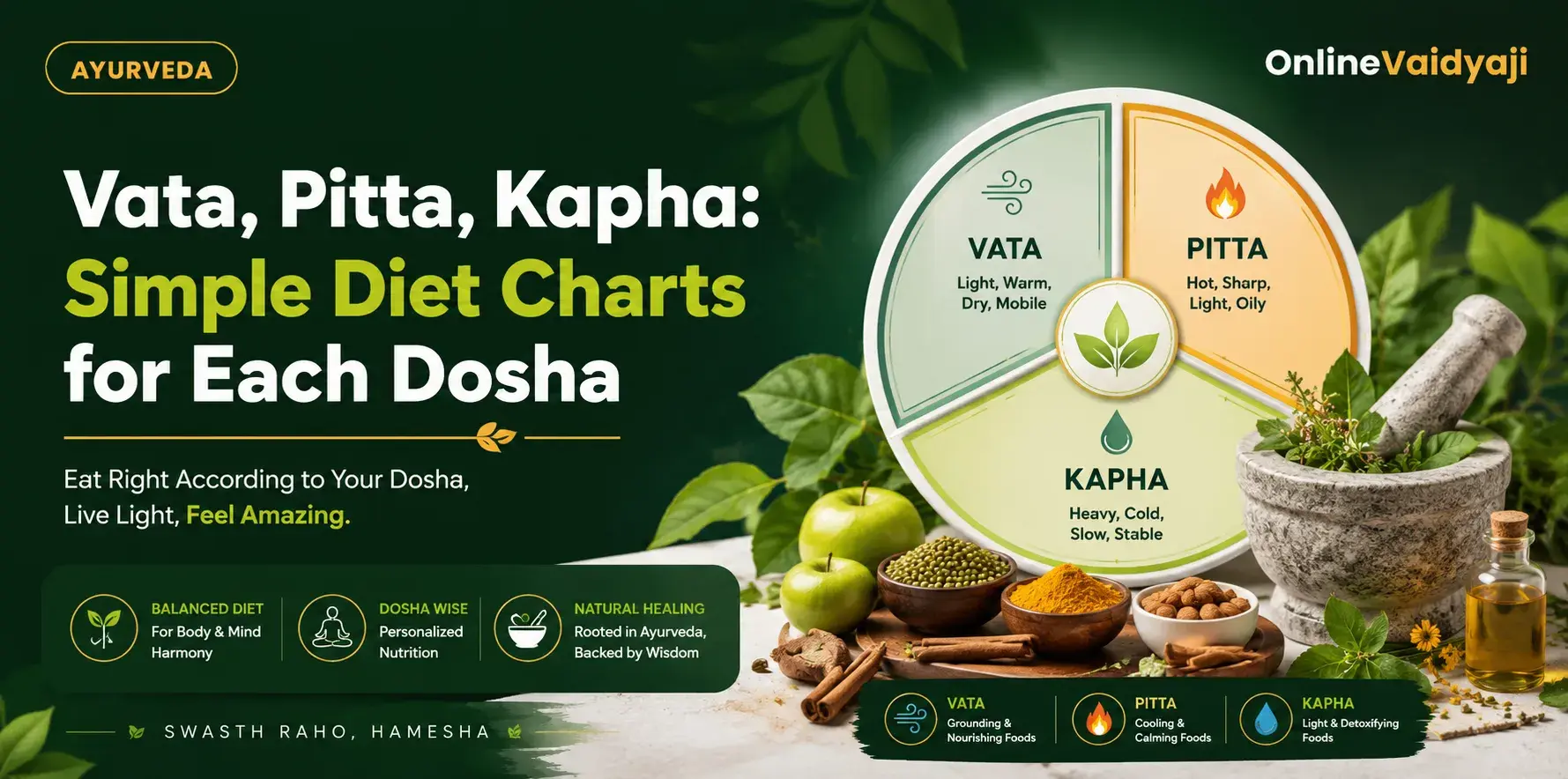
Once you know your dominant dosha, the natural next question is: what should I actually eat? Ayurvedic diet guidance isn’t about restrictive rules — it’s about choosing foods and eating patterns that keep your specific constitution in balance. Here’s a practical, simplified starting point for each dosha.
Vata Diet Guidance
Vata types benefit from warm, moist, grounding foods eaten at consistent times, since irregular eating aggravates Vata quickly.
- Favor: cooked grains, warm soups, ghee, root vegetables, warm milk with spices.
- Limit: raw salads, cold drinks, excess dry snacks like crackers or popcorn.
- Eating rhythm: regular mealtimes matter more for Vata than for any other dosha.
Pitta Diet Guidance
Pitta types do best with cooling, moderately light foods, since excess heat and spice can aggravate Pitta’s already strong internal “fire.”
- Favor: cucumber, leafy greens, coconut, sweet fruits, cooling herbs like coriander and mint.
- Limit: excess spicy, fried, or sour foods, and excessive caffeine or alcohol.
- Eating rhythm: avoid skipping meals, since Pitta types often experience strong hunger and irritability when meals are delayed.
Kapha Diet Guidance
Kapha types benefit from light, warm, stimulating foods, since heavy or oily food can worsen Kapha’s tendency toward sluggishness.
- Favor: light cooked vegetables, legumes, warming spices like ginger and black pepper, herbal teas.
- Limit: dairy, fried foods, excess sweets, and heavy, cold or processed meals.
- Eating rhythm: lighter breakfasts and dinners work better than large meals at every sitting.
Why a Generic Chart Only Gets You So Far
These are useful starting guidelines, but most people are a combination of two doshas, and current imbalances (vikriti) can temporarily shift what your body needs regardless of your base constitution. A doctor consultation turns a generic chart into a plan that actually accounts for your current health, season, and any existing conditions.
Frequently Asked Questions
What if I have a combination dosha, like Vata-Pitta? Combination types generally follow the guidance for whichever dosha is currently more aggravated, which is best identified with a doctor’s input rather than guessed.
Do these diet rules change with the seasons? Yes — Ayurveda recommends seasonal adjustments (ritucharya), since certain doshas naturally aggravate more in specific seasons regardless of your base constitution.
Can I follow this diet if I have a medical condition like diabetes? Always share existing medical conditions with your doctor before adopting a new diet plan, since some general dosha guidance may need adjustment.
How strict do I need to be with the “limit” foods? These are guidelines to reduce, not eliminate entirely. Occasional exceptions are generally fine; the goal is a shifted overall pattern, not rigid restriction.
This article is for general education and does not replace personalized medical advice. Please consult a certified AYUSH doctor for guidance specific to your health condition.
Want a diet plan built around your specific dosha and current health? Book an online consultation with a certified Ayurvedic doctor on OnlineVaidyaji.