
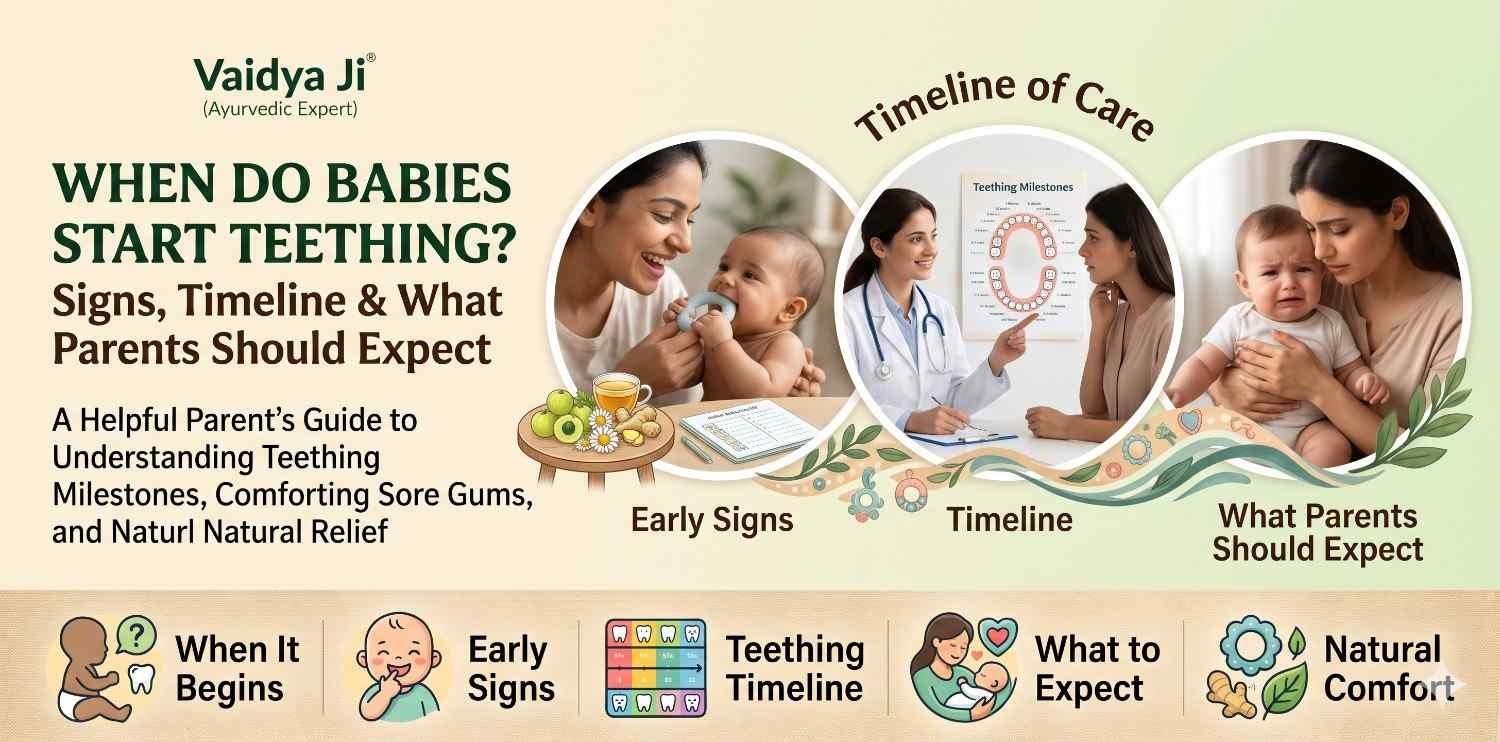
Every new parent eagerly looks forward to that first tiny white tooth peeking through their baby’s gums—along with the inevitable questions about drooling, crankiness, and sleepless nights. If you are wondering when do babies start teething, most infants begin showing their first signs around 6 months of age, though anywhere between 4 and 10 months is completely normal.
Understanding the typical baby teething age, recognizing early discomfort cues, and knowing what to expect at each stage helps you soothe your little one calmly and avoid unnecessary worry.
Typical Baby Teething Age: What Is Normal?
While 6 months is the average milestone, every baby follows their own genetic clock:
- Early Teethers (3 to 4 Months): Some babies sprout their first tooth as early as 3 or 4 months (and rarely, a baby is even born with a natal tooth).
- Average Teethers (6 to 7 Months): Most infants cut their bottom front teeth between 6 and 7 months.
- Late Teethers (10 to 12+ Months): A few healthy babies do not get their first tooth until closer to their first birthday. If no teeth appear by 15 to 18 months, a routine check-up with a paediatric dentist is recommended.
Read more blog : Blue Baby Syndrome: Causes, Symptoms, Diagnosis and Treatment in Infants
Common Signs of Teething in Babies
Before a tooth actually breaks through the gumline, pressure beneath the surface triggers noticeable signs of teething in babies:
- Excessive Drooling: Increased saliva production often begins weeks before a tooth emerges, sometimes causing a mild drool rash around the chin and neck.
- Constant Chewing and Gnawing: Babies instinctively press fingers, toys, clothes, or spoons against their gums to relieve counter-pressure.
- Swollen, Tender Gums: You may see a small, red, slightly puffy bump on the gum where the tooth is pushing upward.
- Fussiness and Irritability: Sore gums can make babies crankier than usual, especially in the evenings when they are tired.
- Disrupted Sleep or Temporary Appetite Dip: Gum tenderness can wake babies briefly at night or make sucking on a bottle or breast uncomfortable for a few days.
- Ear Pulling or Cheek Rubbing: Pain from erupting molars or canines can radiate along shared nerve pathways toward the cheeks and ears.
Important Note for Parents: Teething may cause a very slight rise in body temperature, but it does not cause high fever (100.4°F / 38°C or above), severe diarrhoea, or vomiting. If your baby has these symptoms, consult a paediatrician to rule out an infection.
Complete Baby Teething Timeline (6 to 33 Months)
Primary (baby) teeth usually emerge in pairs, starting from the front and moving backward. Here is a general baby teething timeline showing when all 20 baby teeth typically appear:
| Tooth Type | Position | Typical Eruption Age |
| Lower Central Incisors | Bottom front (2 teeth) | 6 – 10 months |
| Upper Central Incisors | Top front (2 teeth) | 8 – 12 months |
| Upper Lateral Incisors | Beside top front (2 teeth) | 9 – 13 months |
| Lower Lateral Incisors | Beside bottom front (2 teeth) | 10 – 16 months |
| First Molars | Back chewing teeth (4 teeth) | 13 – 19 months |
| Canines (Cuspids) | Pointed teeth between incisors & molars (4 teeth) | 16 – 23 months |
| Second Molars | Very back teeth (4 teeth) | 23 – 33 months |
By age 3, most toddlers have their full set of 20 primary teeth in place.
Safe Ways to Soothe a Teething Baby
When sore gums make your little one uncomfortable, simple, drug-free measures work best:
- Gentle Gum Massage: Wash your hands thoroughly and gently rub your baby’s gums with a clean finger for one to two minutes.
- Chilled (Not Frozen) Teething Rings: Offer a solid, BPA-free silicone teether cooled in the refrigerator. Avoid freezing teethers solid, as extreme cold can bruise delicate gums.
- Cold, Damp Washcloth: Chill a clean, wet cotton washcloth in the fridge for 15–20 minutes and let your baby chew on it under supervision.
- Chilled Fruit Feeders (For Babies 6+ Months): If your baby has started solids, placing cold mashed banana or steamed apple inside a mesh feeder provides soothing relief.
- Keep the Chin Dry: Gently pat away excess drool with a soft cloth and apply a baby-safe barrier cream to prevent drool rash.
- What to Avoid: Skip over-the-counter benzocaine or lidocaine teething gels, homeopathic teething tablets, and amber teething necklaces, as paediatricians warn against choking hazards and medication side effects in infants.
Early Dental Care Tips Once Teeth Appear
Caring for baby teeth right from day one protects future adult teeth:
- Start Brushing Immediately: As soon as the first tooth erupts, brush twice daily using a soft-bristled infant toothbrush and a tiny smear (grain-of-rice size) of fluoride toothpaste.
- Avoid Bedtime Bottles with Milk or Juice: Letting milk pool around teeth overnight causes early childhood tooth decay.
- Schedule the First Dental Visit: Book your baby’s first dental check-up by their first birthday or within 6 months of the first tooth appearing.
Conclusion
Knowing when do babies start teething takes the guesswork out of those drool-filled, fussy months. While every baby hits this milestone on their own timeline, recognizing early gum cues and using safe, chilled soothing methods keeps your little one comfortable until their bright new smile shines through.
Frequently Asked Questions (FAQs)
- Can a baby start teething at 3 months?
Yes, while the average baby teething age is around 6 months, some babies begin drooling and showing early teething signs at 3 to 4 months, even if the tooth takes several weeks to break through the gums.
- Does teething cause fever and loose motions?
No, teething does not cause high fever or true diarrhoea. Mild crankiness or slightly looser stools from swallowing extra saliva can occur, but fever above 100.4°F (38°C) warrants a doctor’s visit.
- Which teeth hurt the most during teething?
First molars (around 13–19 months) and canines often cause more discomfort than front incisors because molars have wider, flatter surfaces pushing through the gums.
- When should I start brushing my baby’s teeth?
You should begin brushing as soon as the very first tooth pokes through the gumline, using a baby toothbrush with a rice-grain smear of fluoride toothpaste twice a day.