
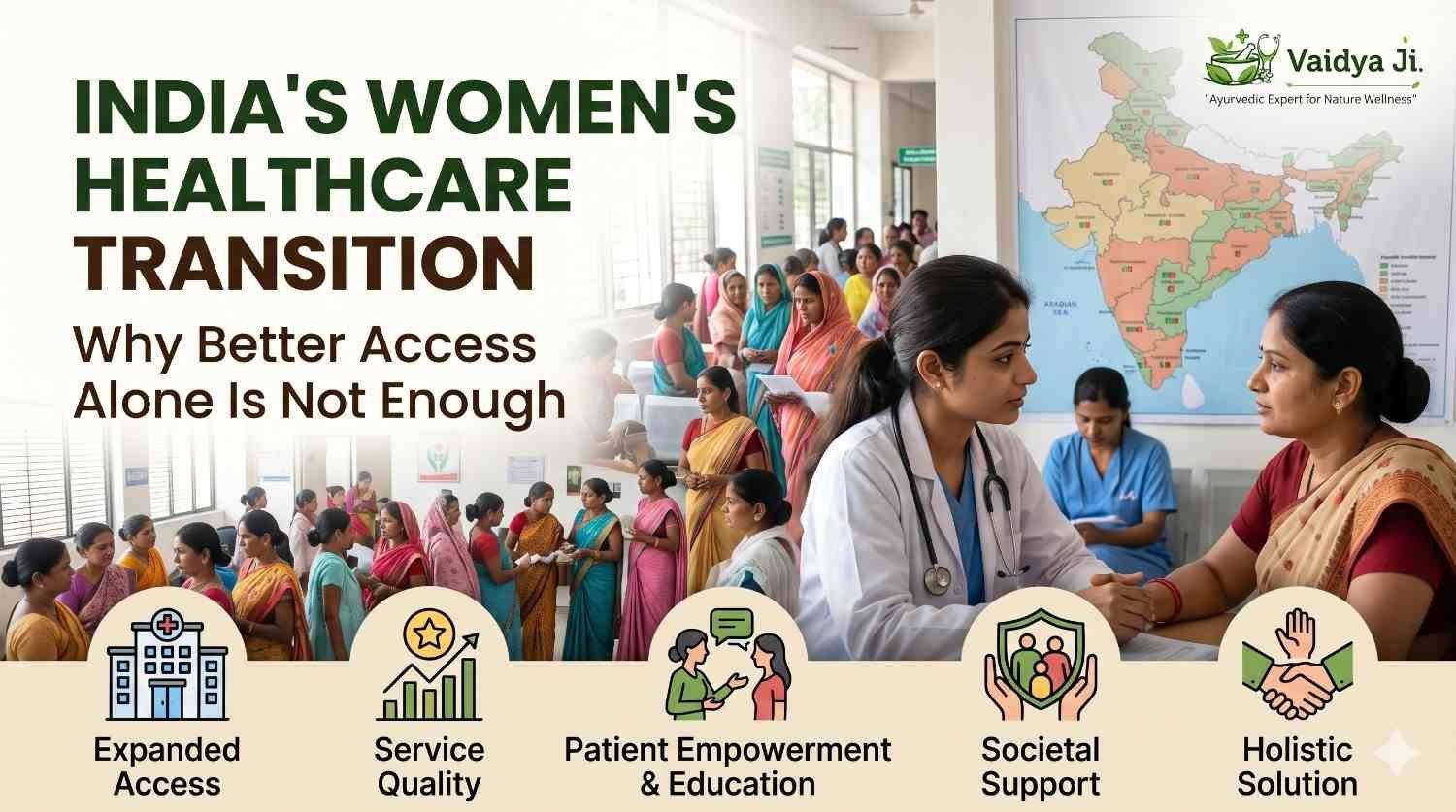
While significant progress has been made in improving maternal survival rates, expanding fertility care, and increasing institutional deliveries in India, millions of women continue to face reproductive health challenges. Conditions such as hormonal imbalances, infertility, menstrual disorders, and other gynecological concerns, along with malnutrition and limited access to preventive healthcare, can affect women’s overall health and well-being. Specialized fertility services, such as those available at Fortis Bloom IVF Delhi, can support individuals and couples through reproductive health assessments, fertility evaluations, and appropriate treatment options. However, improving women’s healthcare requires a broader approach that emphasizes early diagnosis, preventive screenings, nutritional support, and continuous medical care before, during, and after childbirth. Strengthening access to comprehensive reproductive and maternal healthcare is essential for improving long-term health outcomes for women across India.
The Total Fertility Rate (TFR) for India has decreased from 2.2 in the NFHS-4 to 2.0 in the NFHS-5. The percentage of births occurring within institutions has risen from 79% in NFHS-4 to 89% in NFHS-5.
The statistics, however, beg another question: Is the health care system delivering on improved health for women through all life stages, or are there increasing numbers of maternal and reproductive health contacts confined to the pregnancy period?
However, when we speak of healthcare for women before, during, and after childbirth, it spans beyond mere admissions. We need to look at how the reproductive health of women is taken care of, what sort of antenatal care is provided to them, and how one can prevent health problems and make healthcare services affordable for them.
Healthcare institutions across India are adopting advanced technologies and coordinated care approaches to improve maternity services and women’s health. A Maternity Hospital in Bhubaneswar can support expectant mothers through prenatal screenings, pregnancy monitoring, delivery, and postnatal care. However, the focus must remain on ensuring that healthcare advancements lead to measurable, sustainable, and accessible outcomes that improve maternal and child health.
1. India’s Fertility Transition Is Changing Healthcare Priorities
Declining Fertility Rates – New Challenges for Healthcare across States & UTs. Healthcare systems across states and UTs of India will face a new set of healthcare delivery challenges as total fertility rate declines below the replacement rate of 2.1 children per woman, as 31 out of 36 states and UTs have fertility rates below the replacement rate.
A fall in population fertility does not necessarily translate into fewer individual fertility problems.
A systematic review and meta-analysis of Indian studies on infertility conducted in 2026 estimated the prevalence of infertility in women aged 15–49 years to be about 8%. Hence, early diagnosis and reproductive health counseling along with equitable access to treatment are crucial for couples planning a pregnancy.
PCOS: A rising problem? PCOS affects millions of women worldwide, and a nationwide study in India published in JAMA Network Open found that the prevalence of PCOS in women of reproductive age ranged from 7.2% to 19.6% depending on the criteria used to diagnose the condition.
Early identification and reproductive health education of all women with reproductive disorders, including PCOS, can prevent prolonged reproductive age and help treat for conception when desired.
Menstrual health education, early detection and treatment of reproductive diseases, preconception health counseling and assessment for fertility problems before planning a baby are vital components of reproductive health care that must be provided on a large scale and be of high quality.
Instead of focusing only on advanced fertility treatment, it is essential to complement it with accessible and quality preventive and reproductive health care.
2. Coverage of Maternal Healthcare has improved but is not uniform and needs to be continued.
India’s maternal healthcare indicators demonstrate significant progress.
Healthcare utilization around the time of birth has also improved, as 89% of births took place in institutions compared to 79% in the preceding survey, NFHS-5.
The percentage of pregnant women receiving their first Antenatal Care (ANC) contact in the first trimester of pregnancy has increased from 59% to 70%.
However, there is a huge gap between the first contact with maternal healthcare and the rest of the pregnancy.
The distinction matters.
An early antenatal visit is critical to identify any risk or problem early in the pregnancy and to monitor the mother’s blood pressure, her nutritional status, and the fetal growth in the later stages of pregnancy. Regular follow-up is required to monitor all these parameters.
India’s progress in reducing maternal deaths has been notable, with 97 deaths per 100,000 live births reported during 2018–2020 by the Sample Registration System. This is down from 130 deaths per 100,000 live births during 2014–2016.
While progress is evident, however, there are still many disparities in maternal health care that need to be addressed.
From increasing the number of institutional deliveries to improving the quality of care and ensuring that there is always enough quality health care available 24/7 to women in labor and their families.
Healthcare providers’ measure of success for maternal healthcare needs to change from only counting the number of institutional deliveries and shift to measuring the quality of the entire maternity journey for women.
3. Anaemia Remains a Major Barrier to Women’s Health
Nutritional deficiencies are widespread even as health care infrastructure is improving.
53% of all women of reproductive age (15-49) in India are anemic, while 52.2% of pregnant women suffer from iron deficiency anemia, NFHS-5 reported.
Pregnant women who suffer from anaemia are at risk of suffering from fatigue, depletion of their energy reserves and an increased risk of suffering complications.
Only 44.1% of mothers in India reported consumption of iron-folic acid supplements for 100 days or more during their current/last pregnancy.
Health interventions and programs are often available in a country, but there is a gap in implementation and sustaining interventions until health outcomes change.
The Anaemia Mukt Bharat Initiative, launched by India, aims to tackle the issue of anaemia by supplementation, testing, treatment, and public health education.
Yet improving outcomes requires more than distributing supplements.
Strengthening nutrition counseling and addressing causes of anaemia, as well as monitoring and ensuring compliance, is required from the health care system. Follow-up testing is indicated in certain cases.
Thus, in addition to preventing disorders of pregnancy, it is also important to focus on the health of the adolescent girl, the woman who is planning a pregnancy, and the woman with heavy menstrual bleeding as part of preventive women’s health care.
Preventive women’s health care starts before pregnancy and continues beyond it.
4. Healthcare Affordability Remains a Critical Determinant
India’s healthcare financing landscape has changed considerably.
According to National Health Accounts estimates for 2021–2022, government health expenditure accounted for 48% of total health expenditure in India.
According to National Health Accounts (NHA) estimates for 2021–2022, government health expenditure accounted for 48% of total health expenditure whereas out-of-pocket expenditure constituting 39.4% of total health expenditure, stood at ₹6,602 per capita total health expenditure.
Although government financing of health care has been increasing and constitutes a large share of total health expenditure, there is still substantial direct household spending on health.
NFHS-5 further also reveals that 41% households have at least one member who is covered under some or the other health insurance/financing scheme.
Having coverage does not necessarily mean that women have access to reproductive and maternal health services.
Financial barriers exist that influence the timing of various diagnostic, specialized, follow-up health care services and treatment decisions.
This evaluation of affordability for reproductive healthcare can therefore also take into account the availability of services at health care facilities, their quality, and the extent to which they are continued over time.
For reproductive health, it is equally important to have transparent treatment pathways and to be able to refer patients to specialists in time.
5. The Next Phase of Women’s Healthcare Must Be Preventive and Integrated.
India’s women’s healthcare priorities are evolving.
While it is true that large-scale improvements in institutional delivery have brought about maternal savings in the country, the challenge ahead would be to ensure that the same improves health through all stages of life of women.
Therefore, there is a need for greater integration of primary healthcare with gynecology, fertility care, maternal healthcare, nutrition and post-natal care.
The following need to be made measurable for health care providers: antenatal care utilization, management of anaemia, early diagnosis and treatment of potential reproductive health problems, and access to specialist health care.
Important to note is that Reproductive Health and Maternal Health need to be integrated in terms of services to be delivered for women’s health.
When a woman with PCOS is today seeking treatment for her PCOS symptoms, she would need preconception counseling and antenatal care in due course, and appropriate childbirth and health care in childbirth, until she is in long-term health care for cancer & CVDs & preventive health care for all other NCDs.
An integrated system can treat these needs of a woman’s health as interconnected.
Conclusion
It’s time to recognize the health care provided to women and acknowledge that there is more to be done for the overall health care in the country.
There are many large, unstated health challenges to providing quality institutional delivery and maternal health care, i.e., reproductive health, good nutrition, affordability, and continuity of care.
As we progress towards future healthcare solutions, the improvements will not come from individual programs and interventions but from how well all the health care programs and services are connected and functional to meet the needs of the patient.
While the objective of helping more women to reach health care should continue to be a health care milestone for the next generation, helping them to receive timely, appropriate, and ongoing health care through their life stages is a more challenging objective.