
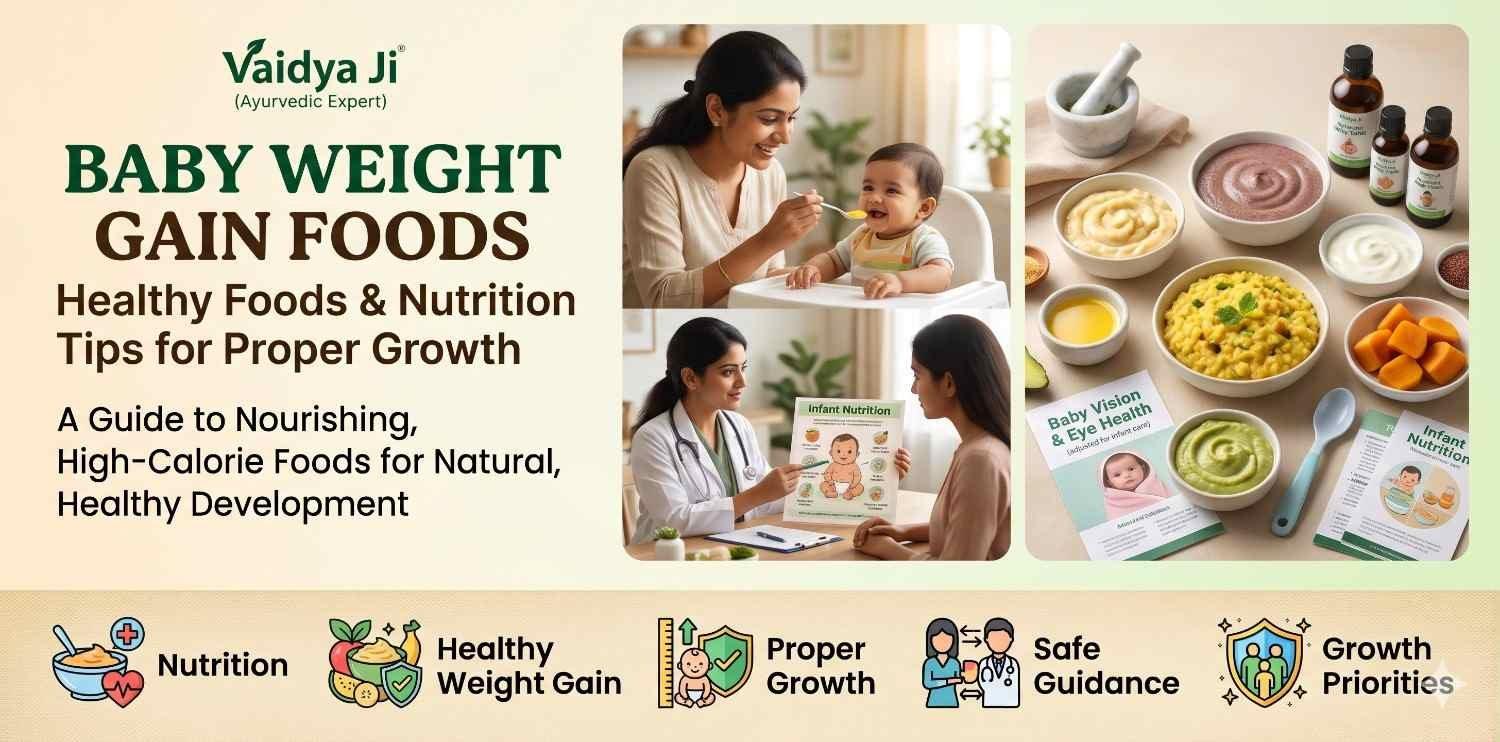
Watching your little one hit every growth milestone brings immense joy—and naturally, every parent wonders whether their baby is eating enough to gain steady weight. For the first six months, exclusive breastfeeding or infant formula provides complete nutrition. Once your baby crosses the six-month mark and shows readiness for solids, introducing nutrient-dense baby weight gain foods becomes essential to fuel their rapid physical and brain development.
Instead of relying on packaged cereals or sugary snacks, offering wholesome, calorie-rich Indian home foods ensures your baby gains healthy weight while developing lifelong eating habits.
Best Healthy Foods for Babies to Support Weight Gain
When choosing foods for baby weight gain, focus on ingredients packed with healthy fats, quality proteins, complex carbohydrates, and iron:
1. Ripe Bananas
Bananas are one of the easiest and most nutritious first foods. Rich in natural carbohydrates, potassium, vitamin B6, and fibre, a ripe banana can be mashed smoothly for 6-month-olds or served as soft finger pieces for older babies.
2. Sweet Potatoes
Naturally sweet and easy to digest, sweet potatoes are loaded with complex carbs, fibre, and beta-carotene (vitamin A). Steam or boil them until soft and mash with a drop of ghee or breast milk.
3. Homemade Ghee and Unsalted Butter
Healthy fats are vital for brain growth and concentrated calories in tiny tummies. Adding ½ to 1 teaspoon of pure homemade ghee to dal, khichdi, or vegetable purees boosts calorie density effortlessly.
4. Avocado
Creamy and mild in flavour, avocado is rich in heart-healthy monounsaturated fats and vitamin E. Simply mash ripe avocado with a fork for a no-cook, nutrient-packed meal.
5. Moong Dal and Lentils
Split yellow moong dal is gentle on delicate digestive systems and packed with plant protein and iron. Pressure-cook until mushy and serve as thick dal soup or combined with rice in khichdi.
6. Ragi (Finger Millet)
A classic Indian weaning superfood, ragi is exceptionally rich in calcium, iron, and dietary fibre. Sprouted ragi flour cooked into a smooth porridge with water or milk supports strong bones and steady weight gain.
7. Eggs (After 8–9 Months, or as Advised by Paediatrician)
Egg yolks and whole eggs provide complete protein, choline for brain development, and healthy fats. Introduce well-cooked, mashed egg yolk first and watch for any sensitivity.
8. Full-Fat Curd (Dahi) and Homemade Paneer
Once your baby is 7–8 months old, fresh homemade curd offers gut-friendly probiotics, calcium, and protein, while soft grated paneer adds concentrated nutrition to khichdi or vegetable mashes.
9. Oats and Dalia (Broken Wheat)
Wholesome whole grains like oats and dalia provide sustained energy and fibre. Cook them soft and blend with mashed banana, stewed apple, or pureed carrots.
10. Finely Ground Nut Powders (Almond, Walnut, Cashew)
Dry-roasted and finely powdered nuts stirred into porridge add healthy omega fatty acids, protein, and calories. Introduce one nut at a time in tiny amounts after consulting your paediatrician.
Read more blog : How to Clean Infant Ears: Safe and Easy Ear Care Tips
| Age Stage | Ideal Texture | Recommended Weight Gain Foods |
| 6 – 7 Months | Smooth, lump-free purees | Mashed banana, sweet potato puree, moong dal water/mash, ragi porridge, avocado |
| 8 – 9 Months | Thick mashes & soft lumps | Dal-rice khichdi with ghee, mashed paneer, full-fat curd, oats porridge, egg yolk |
| 10 – 12 Months | Soft finger foods & family meals | Soft idli with ghee, vegetable dalia, mashed potato/paneer parathas, nut-powder kheer |
Practical Tips for Baby Growth and Nutrition
Building healthy eating routines matters just as much as choosing the right ingredients for baby growth and nutrition:
- Follow the 3-Day Rule: Introduce one new food at a time and wait 2 to 3 days before adding another so you can easily identify any food allergies or digestive discomfort.
- Prioritise Calorie Density Over Volume: Babies have tiny stomachs and fill up quickly. Instead of watery soups, offer thick mashes enriched with dal, ghee, or mashed paneer.
- Offer Small, Frequent Meals: Along with regular breast milk or formula feeds, offer 2 to 3 small solid meals and 1 to 2 healthy snacks daily as your baby nears 9–12 months.
- Avoid Added Salt and Refined Sugar: Keep meals completely free of salt and sugar during the first year to protect your baby’s developing kidneys and prevent preference for overly sweet or salty foods.
- Never Force-Feed: Respect your baby’s hunger and fullness cues—turning their head away or closing their mouth means they are full. Stress-free mealtimes encourage better appetite.
- Track Growth Holistically: Every child grows at a unique pace. As long as your baby is active, alert, passing adequate wet diapers, and following their own growth curve, steady progress is a positive sign.
Read more blog : How to Soothe a Baby’s Cold: Safe Home Care Tips for Infants
Conclusion
Supporting healthy weight gain in infants is about consistency, nutrient density, and patience rather than rushing portion sizes. By introducing wholesome, home-cooked baby weight gain foods gradually alongside regular milk feeds, you give your little one the balanced nourishment required for strong immunity, brain growth, and joyful milestones.
Frequently Asked Questions (FAQs)
- When should I start giving weight gain foods to my baby?
You should start introducing solid foods at 6 months of age alongside continued breastfeeding or formula, once your baby can sit with minimal support and shows interest in food.
- Can I add ghee to my 6-month-old baby’s food?
Yes, adding a few drops up to ½ teaspoon of pure homemade ghee to khichdi, dal, or mashed vegetables from 6–7 months is safe and provides healthy fats for brain and physical growth.
- Why is my baby not gaining weight even after starting solids?
Common reasons include feeding watery, low-calorie purees, frequent minor colds or teething phases, or reducing milk feeds too quickly; consult your paediatrician to evaluate your baby’s growth chart.
- Should I give cow’s milk to my baby before 1 year for weight gain?
No, plain cow’s milk should not replace breast milk or infant formula as a main drink before 12 months, as it is harder to digest and low in iron, though small amounts of curd or paneer can be given after 7–8 months.