
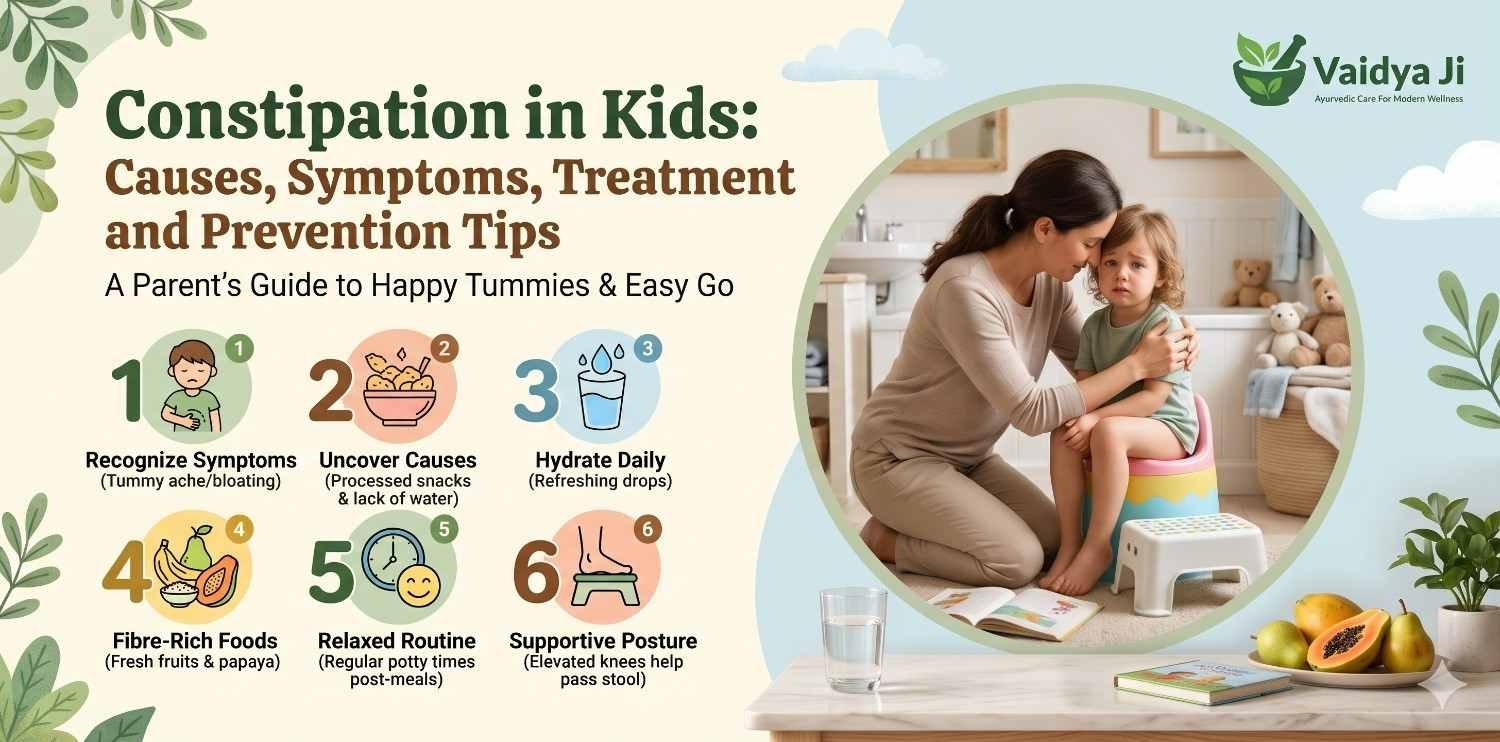
Seeing your child uncomfortable, bloated, or reluctant to use the washroom can be stressful for any parent. Constipation in kids is one of the most common digestive concerns in childhood, accounting for a large share of paediatric visits. Fortunately, in the vast majority of children, constipation is functional—meaning it is linked to diet, hydration, or toilet habits rather than a serious medical condition—and responds well to simple daily adjustments.
Recognizing the early warning signs, addressing root triggers, and knowing safe home remedies can restore comfortable bowel habits before the issue becomes chronic.
Recognizing Symptoms of Constipation in Children
Normal bowel frequency varies from child to child—some go once or twice a day, while others go every alternate day without discomfort. Look for these symptoms of constipation in children:
- Infrequent Bowel Movements: Fewer than three bowel movements per week.
- Hard, Dry, or Pellet-Like Stools: Stools that are difficult, painful, or unusually large to pass.
- Straining or Crying on the Toilet: Visible discomfort, grimacing, or taking a long time to pass stool.
- Stool-Withholding Behaviour: Crossing legs, clenching buttocks, hiding in corners, or dancing on tiptoes to avoid passing a painful stool.
- Abdominal Pain and Bloating: Dull tummy aches that often improve after a bowel movement, accompanied by gas or a firm belly.
- Reduced Appetite or Irritability: Feeling full quickly or becoming cranky due to trapped stool.
- Stool Soiling (Encopresis): Liquid stool leaking around impacted hard stool in the rectum, often mistaken for diarrhoea.
Common Causes of Constipation in Kids
Understanding causes of constipation in kids makes it much easier to prevent recurring episodes:
1. Low-Fibre Diet and Excess Processed Foods
A diet heavy in refined flour (maida), white rice, biscuits, cheese, and packaged snacks—with limited fruits, vegetables, and whole grains—slows stool movement through the intestines.
2. Inadequate Fluid Intake
When children do not drink enough water, the colon absorbs extra fluid from waste, leaving stools dry, hard, and difficult to pass.
3. Withholding Stool
Children often delay going to the toilet because they are engrossed in play, uncomfortable using school washrooms, or afraid of experiencing pain from a previous hard stool. Holding stool in causes it to become larger and harder, creating a painful cycle.
4. Routine Transitions
Key milestones—such as starting solid foods, toilet training, beginning preschool, or travelling—frequently trigger temporary bowel slowdowns.
5. Lack of Physical Activity
Extended screen time and sedentary indoor routines reduce natural gut motility, whereas active play stimulates healthy bowel contractions.
6. Underlying Medical Causes (Rare)
Occasionally, persistent constipation may stem from cow’s milk protein intolerance, hypothyroidism, coeliac disease, or certain medications such as iron supplements.
Safe Constipation Remedies for Children and Medical Treatment
For mild, occasional constipation, gentle constipation remedies for children at home often bring relief within a few days:
- Offer “P” Fruits Daily: Prunes, pears, plums, peaches, and papaya contain natural sorbitol and soluble fibre that soften stools gently.
- Increase Water and Warm Fluids: Encourage regular sips of plain water throughout the day; a glass of lukewarm water or diluted prune juice in the morning helps stimulate bowel reflex.
- Boost Dietary Fibre Gradually: Swap refined snacks for oats, daliya (broken wheat), whole-wheat rotis, moong dal, soaked raisins, and leafy vegetables.
- Support Proper Toilet Posture: Place a small footstool under your child’s feet while sitting on a Western toilet so their knees sit slightly higher than their hips, relaxing pelvic floor muscles.
- Encourage Active Play: Daily running, cycling, or outdoor games naturally stimulate intestinal movement.
Medical Treatment (When Needed)
If dietary changes are not enough, a paediatrician may prescribe child-safe osmotic stool softeners (such as polyethylene glycol or lactulose). Never give adult laxatives, herbal purgatives, suppositories, or enemas to a child without a doctor’s advice.
| Home Care Strategy | How It Helps | Practical Examples |
| High-Fibre Foods | Adds bulk and retains moisture in stool | Papaya, pears, prunes, oats, daliya, soaked raisins |
| Hydration | Prevents dry, hard stools | Plain water, coconut water, clear dal/vegetable soups |
| Toilet Routine | Builds predictable bowel habits | 5–10 minutes on the toilet 20 minutes after meals |
| Footstool Support | Relaxes pelvic muscles for easier passage | Small step stool under feet on Western toilets |
When to Consult a Paediatrician
Seek prompt medical advice if constipation lasts longer than two weeks or is accompanied by any red-flag signs:
- Fever, persistent vomiting, or severe abdominal swelling
- Blood on the stool or toilet paper (often caused by a small anal fissure)
- Unexplained weight loss or poor growth
- Constipation starting in early infancy (under 6 months of age)
Prevention Tips for Long-Term Gut Health
- Establish a Post-Meal Toilet Habit: Have your child sit on the toilet for 5–10 minutes after breakfast or dinner, taking advantage of the body’s natural gastrocolic reflex.
- Keep Washroom Time Stress-Free: Never scold a child for accidents or withholding; praise effort rather than results.
- Pack Fibre-Rich School Tiffins: Include sliced fruit, cucumber sticks, or whole-grain wraps instead of ultra-processed snacks.
- Limit Excess Dairy: Too much cow’s milk (more than 400–500 ml daily in toddlers) can displace fibre-rich foods and contribute to harder stools.
Read more blog : When Do Babies Start Teething? Signs, Timeline and What Parents Should Expect
Conclusion
Although constipation in kids can be frustrating for both children and parents, most cases improve steadily with fibre-rich foods, adequate water intake, active play, and relaxed toilet routines. Addressing early symptoms promptly breaks the cycle of painful stools and keeps your child’s digestion healthy and comfortable.
Frequently Asked Questions (FAQs)
- What foods relieve constipation quickly in children?
Fruits rich in sorbitol and fibre—such as ripe papaya, pears, prunes, plums, and soaked black raisins—along with lukewarm water help soften stools naturally.
- How many days without a bowel movement is considered constipation in kids?
Fewer than three bowel movements in a week, or passing hard, dry, painful stools even if they go every couple of days, indicates constipation in children.
- Can milk cause constipation in toddlers?
Yes, drinking excessive cow’s milk (typically over 500 ml a day) can reduce appetite for high-fibre solid foods and lead to harder stools in some toddlers.
- Is it safe to give laxatives to children?
Only under a paediatrician’s supervision. Doctors may recommend gentle osmotic stool softeners when needed, while adult laxatives or stimulant remedies should be strictly avoided.