
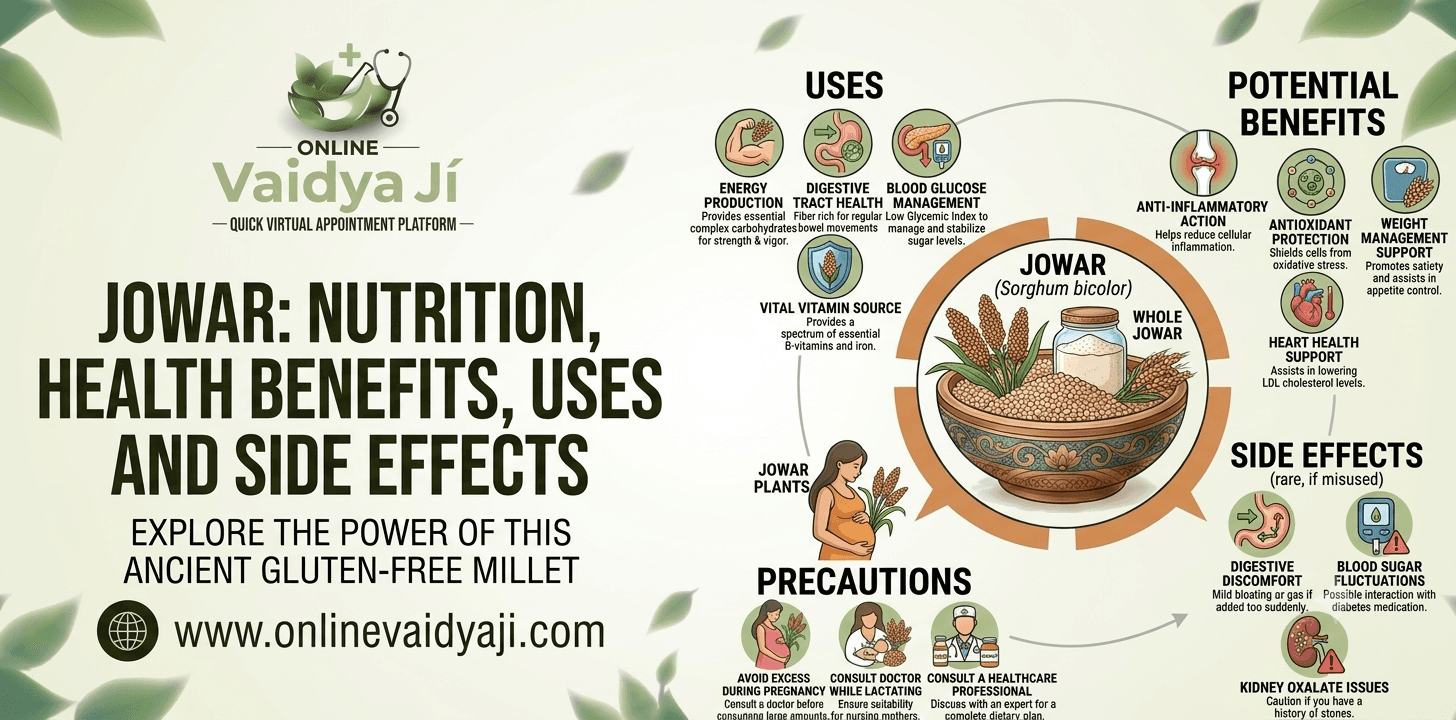
Jowar, scientifically known as Sorghum bicolor and commonly referred to as great millet, sorghum, or jowari, has been a staple in traditional diets for centuries. As modern nutrition rediscovers ancestral grains, jowar benefits have taken center stage for those seeking a gluten-free, nutrient-dense lifestyle. From managing blood sugar levels to supporting heart health, this humble grain is a nutritional powerhouse.
What is Jowar and What is the Jowar Nutritional Value?
Jowar is a gluten-free ancient grain packed with complex carbohydrates, plant-based proteins, dietary fiber, essential vitamins (B-complex, Vitamin E), and vital minerals like iron, magnesium, and phosphorus.
Jowar ranks among the top cereal crops globally, cultivated extensively in semi-arid regions of India, Africa, and the United States. Understanding the jowar nutritional value reveals why this cereal is celebrated as a vital superfood for daily wellness.
Per 100 grams of whole grain jowar, you receive:
- Calories: ~329 kcal
- Carbohydrates: 72.1 g
- Dietary Fiber: 6.7 g
- Protein: 10.6 g
- Healthy Fats: 3.46 g
- Magnesium: 165 mg
- Phosphorus: 289 mg
- Potassium: 363 mg
- Iron: 3.36 mg
- Zinc: 1.67 mg
Additionally, jowar contains an abundance of B-complex vitamins such as thiamin (B1), riboflavin (B2), niacin (B3), and pyridoxine (B6), alongside powerful phenolic antioxidants that protect cellular health against daily environmental stressors.
Key Health Benefits of Sorghum (Jowar)
The regular consumption of sorghum helps regulate blood glucose, promotes sustainable weight management, lowers bad cholesterol, and combats oxidative stress thanks to its high concentration of bioactive phenolic compounds.
Exploring the diverse health benefits of sorghum highlights why nutritionists recommend incorporating this cereal into your weekly meal plan:
1. Blood Sugar Regulation and Diabetes Management
One of the most researched jowar benefits is its low glycemic index (GI). Jowar is digested slowly by the human body due to its complex carbohydrate matrix and condensed tannins. This slow digestion prevents sudden insulin spikes, making it an exceptional dietary choice for individuals managing type-2 diabetes or insulin resistance.
2. Weight Management and Satiety
Because whole grain sorghum digests gradually and forms a fibrous bulk in the digestive tract, it triggers prolonged feelings of fullness. This enhanced satiety naturally curbs calorie intake between meals, helping individuals adhere to sustainable weight loss or weight maintenance goals without experiencing constant hunger pangs.
3. Heart Health and Cholesterol Control
Sorghum is naturally rich in phytosterols and policosanols—lipids that actively help regulate the synthesis and absorption of cholesterol in the bloodstream. By reducing low-density lipoprotein (LDL) cholesterol levels, incorporating jowar into your diet supports arterial health and reduces cardiovascular risks.
4. Powerful Antioxidant and Anti-Inflammatory Action
Oxidative stress is a primary driver behind chronic conditions like arthritis, heart disease, and premature aging. Jowar is exceptionally rich in phenolic compounds and 3-deoxyanthocyanidins, which neutralize harmful free radicals and suppress inflammatory markers in the human body.
Unlocking Jowar Flour Benefits for Daily Cooking
Switching to jowar flour provides a naturally gluten-free alternative to wheat flour that is easier on digestion, rich in dietary fiber, and versatile enough for traditional rotis, flatbreads, and baked goods.
While whole grains are fantastic, jowar flour benefits make it exceptionally popular in modern kitchens, especially for people dealing with celiac disease, gluten sensitivities, or wheat allergies.
- Gluten-Free Digestion: Unlike wheat, jowar lacks gluten, eliminating the bloating, gas, and intestinal discomfort often experienced by gluten-sensitive individuals.
- Improved Gut Health: The high insoluble and soluble fiber content in jowar flour promotes regular bowel movements, prevents constipation, and nurtures a thriving gut microbiome.
- Sustained Energy Release: Because the complex carbohydrates break down steadily, jowar flour provides an even release of energy throughout the day, preventing afternoon energy crashes and fatigue.
Jowar vs. Whole Wheat: Nutritional Comparison
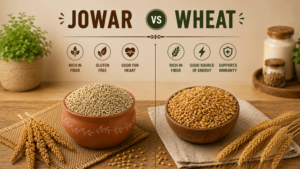
To understand how jowar stacks up against standard wheat flour, consider the following side-by-side comparison:
| Nutrient (per 100g) | Jowar (Sorghum) | Whole Wheat Flour |
| Calories | 329 kcal | 340 kcal |
| Dietary Fiber | 6.7 g | 10.7 g (varies by bran) |
| Protein | 10.6 g | 13.2 g |
| Magnesium | 165 mg | 126 mg |
| Iron | 3.36 mg | 3.19 mg |
| Gluten Status | 100% Gluten-Free | Contains Gluten |
While wheat contains slightly more protein, jowar triumphs in magnesium content, is completely gluten-free, and offers a gentler nutritional profile for sensitive digestive systems.
Practical Ways to Include Jowar in Your Diet
Integrating jowar into your daily meals is simple and delicious. Here are some popular culinary applications:
- Traditional Rotis & Bhakris: Knead jowar flour with warm water to create soft, pliable flatbreads that pair wonderfully with dal, curries, and sabzi.
- Porridge & Upma: Use cracked jowar or sorghum flakes for a warm, comforting morning breakfast bowl rich in dietary fiber.
- Soups and Grain Bowls: Whole jowar grains can be boiled and added to hearty vegetable soups or Buddha bowls as a healthy, nutrient-dense rice substitute.
- Gluten-Free Baking: Blend jowar flour with other gluten-free flours like ragi or almond flour for homemade cookies, crackers, and artisanal flatbreads.
Potential Jowar Side Effects and Precautions
Jowar is exceptionally safe for daily consumption when eaten in moderate, food-grade quantities, though individuals with specific digestive disorders or severe grain sensitivities should introduce it gradually.
While the grain is remarkably beneficial, it is important to be aware of potential jowar side effects and necessary precautions:
- Digestive Adjustment: If your diet has historically been low in fiber, abruptly introducing high amounts of jowar can cause mild bloating or gas as your gut microbiome adapts. Increase your intake gradually and drink plenty of water.
- Goitrogen Concerns in Excess: Like many millets, sorghum contains trace goitrogenic compounds. Individuals with pre-existing thyroid conditions should consume it in balanced amounts and ensure their overall iodine intake is sufficient.
- Special Populations: Pregnant and breastfeeding women, as well as young children, can safely enjoy jowar as part of a balanced diet, but consulting a pediatrician or healthcare professional is always recommended for specific dietary changes.

Conclusion
The wide-ranging jowar benefits make this ancient grain a standout addition to any modern, health-conscious diet. From supporting healthy blood sugar levels and promoting sustainable weight management to protecting cardiovascular health with potent antioxidants, jowar delivers dense nutrition without the digestive discomfort of gluten.
Whether you swap refined wheat for soft jowar rotis or add whole sorghum grains to hearty bowls, incorporating this versatile millet is an easy, sustainable step toward long-term wellness. Start with moderate portions, stay well-hydrated, and consult a healthcare professional if you have specific dietary or thyroid conditions—allowing you to enjoy all the jowar benefits safely and deliciously.
Frequently Asked Questions (FAQs)
1. Is jowar better than wheat for weight loss?
Yes, jowar is often preferred for weight loss because it has a lower glycemic index, digests slowly, and keeps you full for longer periods. Its dense fiber content helps manage appetite and reduces overall calorie consumption compared to refined wheat.
2. Can diabetics eat jowar every day?
Yes, diabetics can safely incorporate jowar into their daily diet. Its slow-digesting carbohydrates and rich tannin content prevent sudden blood sugar spikes, making it an excellent alternative to refined grains.
3. Does jowar contain gluten?
No, jowar is a 100% naturally gluten-free grain. It is a fantastic dietary staple for individuals with celiac disease or non-celiac gluten sensitivity who want nutritious baked goods and rotis.
4. How can I make soft jowar rotis?
To make soft jowar flatbreads, use warm or boiling water to knead the dough. The hot water gelatinizes the starches, making the dough pliable and preventing the rotis from cracking when rolled out.