
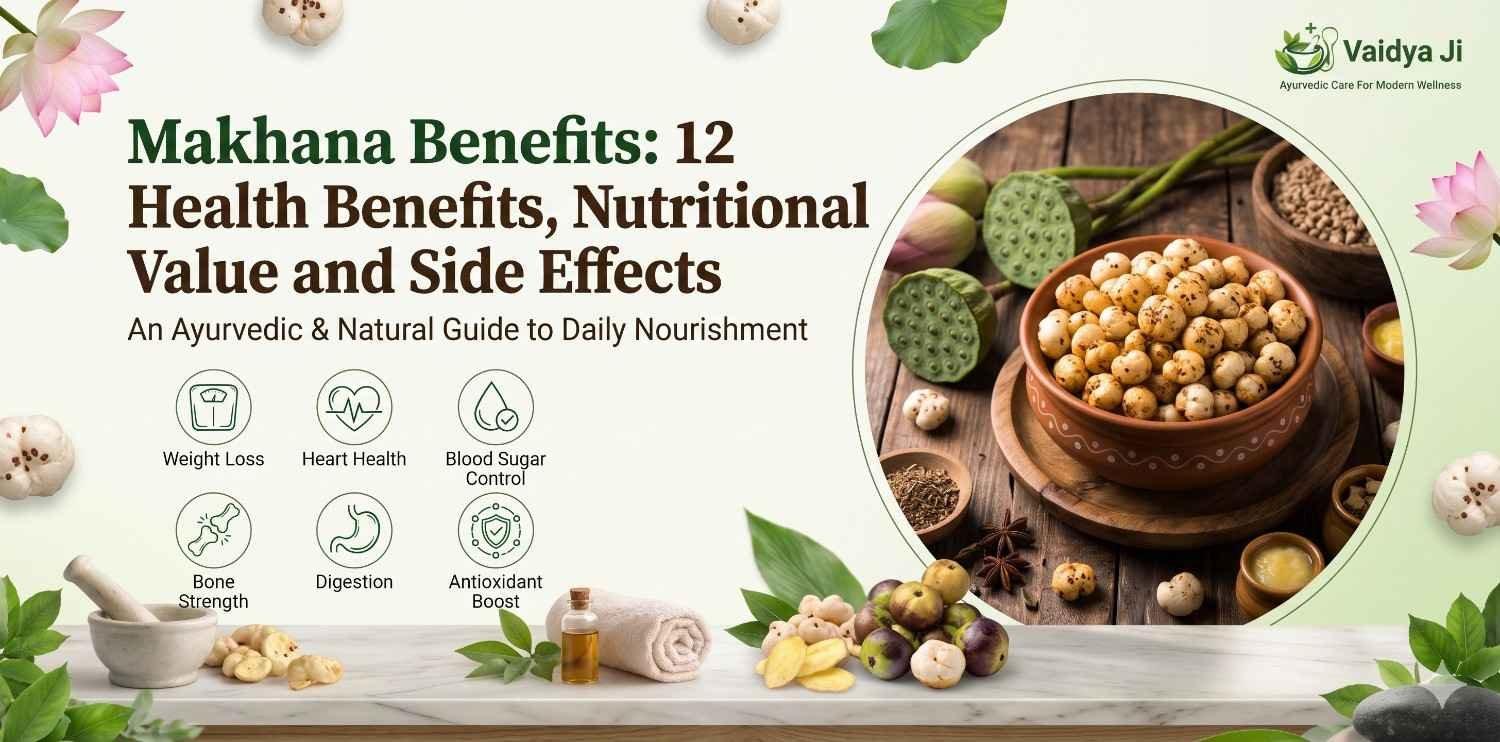
Makhana, widely known as fox nuts or lotus seeds, has been an essential part of Indian kitchens and Ayurvedic wellness for centuries. Whether roasted as a crunchy evening tea-time snack or cooked into festive dishes, these puffed white seeds offer impressive nutrition without extra fat. Exploring the full spectrum of makhana benefits shows why this humble seed is celebrated as a modern superfood for everyday health.
Makhana Nutritional Value and Calories
Before diving into fox nuts benefits, understanding their nutrient profile helps you manage portion sizes effectively. A 100-gram serving of plain, dry-roasted makhana contains approximately:
- Makhana Calories: ~347 kcal
- Protein: 9.7 g
- Carbohydrates: 76.9 g
- Dietary Fibre: 14.5 g
- Total Fat: 0.1 g
- Essential Minerals: Calcium, magnesium, potassium, iron, and phosphorus.
12 Health Benefits of Makhana

- Supports Healthy Weight Loss: High fibre and plant protein keep you full for hours, curbing mid-meal hunger pangs while keeping fat intake negligible.
- Packed with Antioxidants: Rich in flavonoids like kaempferol, fox nuts neutralise harmful free radicals and protect cells from oxidative damage.
- Promotes Heart Health: High magnesium and potassium combined with low sodium help regulate blood pressure and support healthy blood circulation.
- Helps Control Blood Sugar Levels: Having a low glycaemic index, makhana releases glucose gradually, preventing sudden sugar spikes in people with diabetes.
- Strengthens Bones and Teeth: Being a good plant-based source of calcium, regular consumption helps maintain bone density and joint strength.
- Improves Digestive Health: Its rich dietary fibre adds bulk to stool, prevents constipation, and supports smooth gut motility.
- Supports Kidney Wellness: Traditionally valued in Ayurveda, lotus seeds help flush out toxins and support healthy urinary and kidney function.
- Slows Signs of Ageing: Specific amino acids such as glutamine, cystine, and arginine support tissue repair and maintain skin elasticity.
- Supports Reproductive and Hormonal Health: Nutrient-dense fox nuts nourish bodily tissues and help maintain hormonal balance in both men and women.
- Ideal Gluten-Free Energy Source: Complex carbohydrates provide steady stamina without gluten, making it safe for people with gluten sensitivity.
- Calms the Nervous System: Magnesium and thiamine support nerve signalling and help reduce mild stress and restlessness.
- Wholesome Snack During Pregnancy: Iron, protein, and calcium make roasted makhana a nourishing snack for expectant mothers when eaten in moderation.
Makhana Side Effects and Precautions
While safe for most people, overeating can cause mild makhana side effects:
- Bloating and Constipation: Eating large amounts of dry, high-fibre fox nuts without adequate water can cause gas or hard stools.
- Allergic Reactions: Rarely, individuals allergic to seeds or lotus products may notice mild itching or stomach discomfort.
- Blood Sugar Dip: People taking anti-diabetic drugs should monitor portions so blood sugar does not fall too low.
Read more blog : Does Moringa Help with Weight Loss? Benefits, Uses and Research
Jowar Benefits: Nutrition, Health Benefits, Uses and Side Effects
Conclusion
Adding a handful of dry-roasted fox nuts to your daily routine is one of the easiest ways to upgrade your snacking habits. From supporting heart and bone health to keeping blood sugar and weight in check, makhana benefits fit seamlessly into a balanced Indian diet—just remember to eat them in moderate portions and stay well-hydrated.
Frequently Asked Questions (FAQs)
- How many makhana should I eat in a day?
A daily serving of about 25 to 30 grams (roughly one small bowl or a handful of roasted makhana) is ideal to enjoy its nutritional benefits without excess calories.
- Is makhana good for weight loss?
Yes, makhana is low in fat and calories while being rich in fibre and protein, which promotes satiety and reduces unnecessary snacking.
- Can diabetic patients eat makhana daily?
Yes, because makhana has a low glycaemic index and high fibre content, it helps prevent sharp blood sugar spikes when roasted without excess oil or sugar.
- What is the best time to eat makhana?
You can eat roasted makhana as a mid-morning snack, an evening tea-time snack, or an hour before bedtime to curb late-night cravings.