
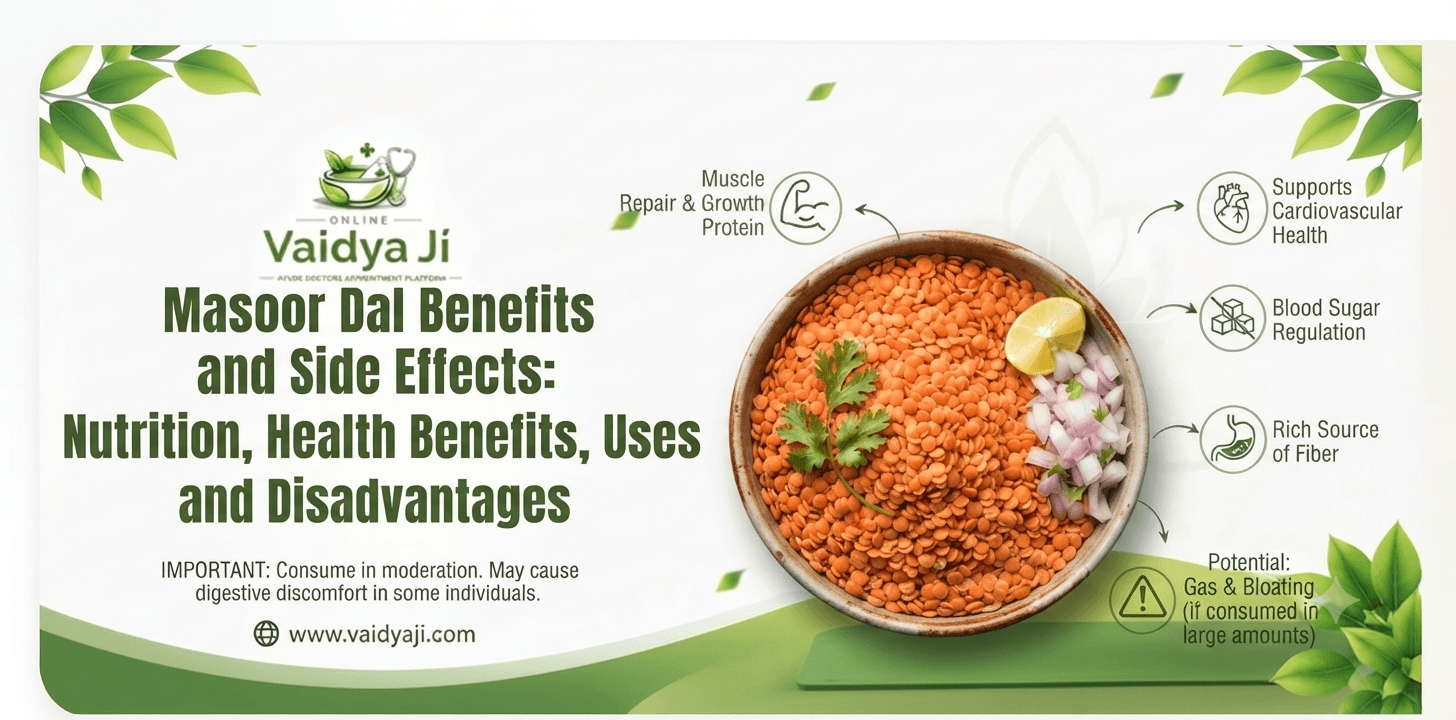
Masoor dal (Lens culinaris), commonly known as red lentil, is a staple pulse in kitchens across the globe. Valued for its rich earthiness and quick cooking time, it has formed the backbone of vegetarian diets for centuries. Beyond its comforting taste, understanding masoor dal benefits and side effects is essential for anyone looking to optimize their daily nutrition. Whether you are aiming to manage your weight, control blood sugar levels, or simply include a wholesome plant-based protein in your meals, red lentils offer a remarkable nutritional profile.
Nutritional Value of Masoor Dal
Per 100 grams of cooked split masoor dal provides approximately 129 calories, 14.3 grams of carbohydrates, 7.14 grams of protein, and 4.3 grams of dietary fiber with zero cholesterol. It is also packed with micronutrients like iron, folate, and essential bioactive phytochemicals such as flavonoids and tannins.
To truly understand masoor dal nutrition, looking at its macronutrient and micronutrient breakdown reveals why dietitians recommend it so frequently.
Masoor Dal Nutritional Profile (Per 100g)
| Nutrient | Amount per 100g |
| Calories | 129 kcal |
| Carbohydrates | 14.3 g |
| Protein | 7.14 g |
| Dietary Fiber | 4.3 g |
| Fats | 0 g |
| Cholesterol | 0 mg |
| Iron | 0.9 mg |
| Sodium | 14 µg |
In addition to these core nutrients, masoor dal contains valuable bioactive compounds like campesterol, stigmasterol, catechins, and beta-sitosterol, which act as powerful antioxidants inside the body.
Read More Blog :Drumstick (Sahjan): Health Benefits, Uses, Side Effects and More
Properties of Masoor Dal
The therapeutic and health-promoting properties of masoor dal stem from its dense concentration of phytonutrients and plant proteins. Scientific evaluations attribute several key properties to red lentils:
- Antioxidant Activity: Rich in polyphenols and flavonoids that combat oxidative stress and neutralize harmful free radicals.
- Hypolipidemic Properties: Helps in regulating and reducing lipid and cholesterol concentrations in the blood.
- Antidiabetic Activity: Features a low glycemic index, making it ideal for steady blood glucose management.
- Anti-inflammatory Effects: Contains bioactive peptides that assist in lowering chronic low-grade systemic inflammation.
Potential Uses and Health Benefits of Masoor Dal
Regular incorporation of masoor dal benefits cardiovascular health, helps regulate type 2 diabetes, supports healthy weight management by promoting satiety, and serves as an exceptional plant-based protein source for muscle maintenance.
1. Management of Blood Sugar Levels
Because of its complex carbohydrates and high soluble dietary fiber, masoor dal benefits individuals dealing with pre-diabetes or type 2 diabetes. The slow breakdown of sugars prevents sudden glucose spikes after meals, ensuring steady energy levels throughout the day.
2. Weight Control and Obesity Reduction
For those looking to shed extra pounds, integrating masoor dal uses in a calorie-controlled diet works wonders. The high fiber and protein content triggers satiety hormones, making you feel full for longer periods and naturally curbing unnecessary snacking.
3. Promoting Cardiovascular Health
Heart health is significantly supported by regular lentil consumption. The potassium, folate, and magnesium found in red lentils help maintain healthy blood pressure levels, while soluble fibers actively assist in managing LDL (bad) cholesterol.
4. Excellent Plant-Based Protein Source
For vegetarians and vegans, masoor dal nutrition provides a high-quality amino acid profile. It helps repair body tissues, supports muscle growth, and builds immunity without the saturated fats associated with animal protein sources.
How to Use Masoor Dal in Daily Cooking
Masoor dal is one of the most versatile pulses because it does not require prior soaking. Here is how you can use it effectively:
- Traditional Dal & Soup: Boil split red lentils with turmeric, salt, and water until soft, then temper with cumin, garlic, and ghee.
- Salads & Bowls: Whole brown masoor can be sprouted or boiled and added to grain bowls for an extra crunch and nutrient boost.
- Flour Blends: Ground masoor dal flour is sometimes used in traditional baking or flatbreads to enrich protein content.
Side Effects, Disadvantages, and Risks of Masoor Dal
While generally safe, potential masoor dal side effects include gas, bloating, and abdominal discomfort when consumed in excess or introduced too quickly into a low-fiber diet. Individuals with specific medical conditions should exercise caution.
Even though it is packed with health advantages, knowing the masoor dal disadvantages ensures safe consumption:
- Digestive Discomfort: High levels of dietary fiber and complex sugars (oligosaccharides) can lead to intestinal gas, bloating, and cramps if your digestive system isn’t used to it.
- Purine Content: Though lower than some other legumes, individuals prone to gout or high uric acid should monitor their portion sizes.
- Antinutrients (Lectins & Phytates): These compounds can temporarily bind to minerals like iron and zinc, reducing their absorption. Proper boiling and cooking effectively neutralize most antinutrients.
Conclusion
Incorporating red lentils into your daily diet is a simple yet powerful way to elevate your overall well-being. By understanding the full spectrum of masoor dal benefits and side effects, you can harness its rich profile of plant-based protein, complex carbohydrates, dietary fiber, and essential micronutrients. Whether your wellness goals focus on stabilizing blood sugar, supporting cardiovascular health, or managing your weight, this versatile pulse delivers exceptional nutritional value.
Frequently Asked Questions (FAQs)
1. Can we eat masoor dal every day?
Yes, consuming masoor dal daily is generally safe and healthy for most people as part of a balanced diet. It provides steady protein, fiber, and iron. However, if you experience chronic bloating or digestive sensitivities, you may want to consume it a few times a week rather than every single day.
2. Is masoor dal good for weight loss?
Absolutely. Masoor dal is rich in dietary fiber and lean plant protein, both of which prolong the feeling of fullness. This helps reduce overall calorie intake throughout the day, supporting healthy and sustainable weight management.
3. Does masoor dal increase uric acid?
No, masoor dal does not significantly increase uric acid levels when eaten in moderate portions. In fact, compared to many heavy animal proteins, it is a much safer option for individuals keeping track of their purine intake.
4. What are the main side effects of eating too much masoor dal?
Overconsumption of masoor dal can lead to common legume-related side effects such as abdominal bloating, flatulence, and indigestion due to its high fiber and oligosaccharide content. Gradual inclusion and thorough cooking can minimize these effects.