
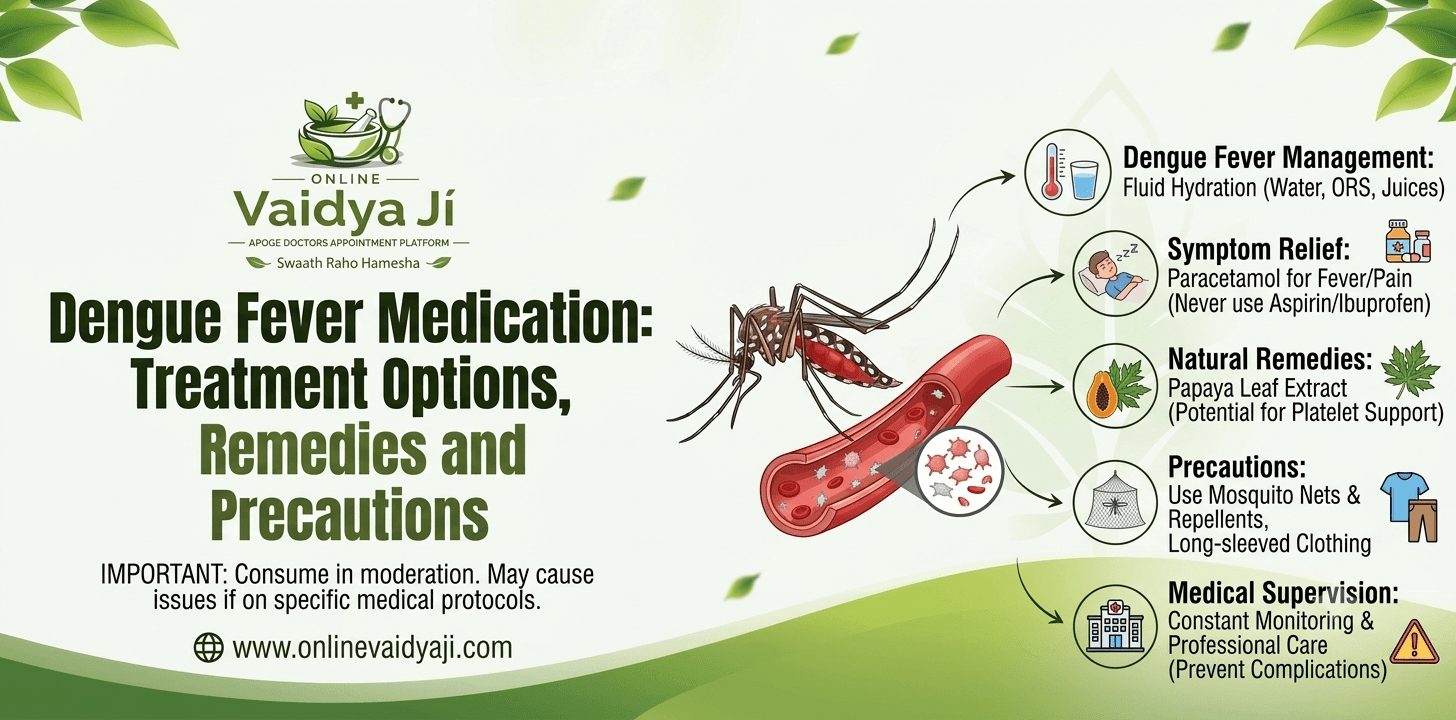
Dengue fever is a mosquito-borne viral infection transmitted primarily by the Aedes mosquito (specifically Aedes aegypti). Characterized by sudden high fever, severe headache, pain behind the eyes, joint and muscle pain, and skin rashes, it affects millions of people globally each year, particularly in tropical and subtropical regions.
While there is no specific antiviral cure for dengue, understanding how to manage symptoms safely, knowing what medication for dengue fever is appropriate, and exploring supportive dengue fever remedies can significantly aid recovery. This comprehensive guide outlines medical management protocols, helpful supportive care options, critical warning signs, and practical preventive strategies.
Understanding Dengue Fever and Its Causes

Dengue is caused by any of the four distinct serotypes of the dengue virus (DNV-1, DNV-2, DNV-3, and DNV-4). When an infected Aedes mosquito bites a human, the virus enters the bloodstream and multiplies.
Common Symptoms to Watch For
- Sudden high fever (often reaching 104°F)
- Intense headache and retro-orbital (behind the eyes) pain
- Severe muscle, bone, and joint pain (often called “breakbone fever”)
- Nausea and vomiting
- Skin rash appearing a few days after symptom onset
- Mild bleeding manifestations (such as nose or gum bleeds)
Medical Treatment Options and Medication for Dengue Fever
What is the standard medical approach when managing dengue?
There is no specific pharmaceutical cure or targeted antiviral drug for dengue fever. Medical treatment focuses entirely on supportive care—relieving symptoms, maintaining proper hydration, and monitoring for complications like severe plasma leakage or dropping platelet counts.
Safe vs. Unsafe Pain Relievers
Managing pain and fever requires extreme caution because certain common over-the-counter medications can cause dangerous complications:
| Medication Type | Status in Dengue | Medical Reasoning |
| Paracetamol (Acetaminophen) | Safe (When used as prescribed) | Helps control high fever and mild body ache. Must be taken strictly under medical dosage limits to avoid liver strain. |
| Aspirin | Strictly Prohibited | Increases the risk of severe bleeding and can trigger Reye’s syndrome in children. |
| Ibuprofen & NSAIDs | Strictly Prohibited | Non-steroidal anti-inflammatory drugs thin the blood and elevate the risk of internal bleeding and gastric complications. |
Hospitalization may become necessary if the patient experiences persistent vomiting, severe abdominal pain, sudden drops in blood pressure, or extreme lethargy. Intravenous (IV) fluid therapy is administered in clinical settings to restore lost fluids and prevent shock.
Natural and Supportive Home Remedies for Dengue
While medical supervision is mandatory, several traditional herbs and dengue fever remedies can be used adjunctly to support general wellness, ease discomfort, and help speed up recovery.
Note: These home remedies are supportive measures only and do not replace professional medical diagnosis or prescribed clinical treatment.
1. Papaya Leaf Juice
Papaya leaves are widely recognized in traditional practices for supporting recovery. Preliminary studies indicate that bioactive compounds in papaya leaf extract may help support a faster recovery in platelet counts and white blood cells, reducing bleeding risks.
- How to use: Grind fresh, clean papaya leaves with a small cup of water, strain the liquid, and consume fresh in recommended small quantities.
2. Guduchi (Giloy)
Guduchi is a potent medicinal herb known for its immune-boosting properties. Traditional and experimental studies suggest it helps support the body’s natural defense mechanism against viral infections.
- How to use: Freshly chopped Guduchi stems can be blended with water and strained into a juice, or consumed as an herbal decoction.
3. Neem Leaves
Neem has well-documented antimicrobial and immune-modulating properties. Laboratory evaluations suggest neem extracts can exhibit inhibitory actions against viral proliferation, supporting general health during recovery.
- How to use: Fresh neem leaves can be boiled in water to create a mild herbal drink or ground into a fresh juice.
4. Tulsi (Holy Basil)
Tulsi tea is soothing, aromatic, and packed with antioxidant and antimicrobial properties that help relieve respiratory discomfort and lower fever-induced stress.
- How to use: Boil fresh Tulsi leaves in water, simmer, strain, and add a dash of honey or lemon for taste.
Effective Home Remedy for Dengue Fever: Hydration and Nutrition
Proper hydration is the single most critical element of home-based recovery. Fever, vomiting, and plasma leakage can quickly lead to dehydration and dangerously low blood pressure.
- Oral Rehydration Solutions (ORS): Essential for replenishing lost electrolytes and salts.
- Coconut Water and Fresh Fruit Juices: Excellent sources of natural minerals and fluids that help maintain electrolyte balance.
- Nutritious, Easily Digestible Foods: Soups, khichdi, and soft fruits provide sustained energy without straining the digestive system.
Understanding Platelet Count in Dengue
Platelets are specialized blood cells responsible for clotting. During dengue, bone marrow suppression and immune responses can cause platelet counts to drop (thrombocytopenia).
- Normal Range: 150,000 to 410,000 platelets per microlitre.
- Above 100,000: Usually requires routine outpatient monitoring.
- 50,000 to 100,000: Calls for close clinical observation and regular blood tests.
- Below 50,000: Elevated bleeding risk; requires vigilant medical oversight.
- Below 20,000: Often warrants hospital admission for safety and supportive interventions.
Warning Signs of Severe Dengue (When to Seek Emergency Care)
Severe dengue (formerly known as dengue hemorrhagic fever) can develop rapidly, often just as the fever begins to subside. Go to the nearest hospital immediately if any of the following red-flag symptoms appear:
- Severe and persistent abdominal pain or tenderness
- Persistent vomiting or inability to keep fluids down
- Bleeding from the gums, nose, or blood in vomit and stool
- Extreme lethargy, restlessness, or confusion
- Rapid breathing or difficulty catching breath
- Cold, clammy, or pale skin
- Marked decrease in urination (a primary sign of dangerous dehydration)
Conclusion
Managing dengue effectively requires a balanced approach combining timely care, symptom management, and preventative steps. Understanding dengue fever medication: treatment options, remedies and precautions empowers you to take control of recovery, reduce discomfort, and avoid severe complications. While proper hydration, adequate rest, and safe fever relievers like paracetamol form the core treatment, supportive natural remedies such as papaya leaf extract can help maintain health during recovery.
However, precautions should never be overlooked—avoiding NSAIDs like aspirin or ibuprofen is critical to prevent bleeding risks. Always monitor symptoms closely, track platelet counts under proper medical supervision, and consult a doctor immediately if any warning signs arise.
Frequently Asked Questions (FAQs)
Can home remedies completely cure dengue fever?
No. Home remedies and herbal infusions can help relieve symptoms, support hydration, and boost overall comfort, but they cannot cure the underlying viral infection. Dengue requires professional medical oversight, and relying solely on home remedies without a doctor’s care can be dangerous.
How can I cure dengue quickly at home?
There is no overnight cure for dengue. Recovery relies on complete bed rest, adequate hydration (drinking plenty of water, ORS, and coconut water), taking paracetamol for fever under medical guidance, and avoiding blood-thinning painkillers like aspirin or ibuprofen.
What is the best diet for a dengue patient?
A dengue patient should consume light, easily digestible, and nutrient-dense foods. This includes vegetable soups, moong dal khichdi, boiled vegetables, citrus fruits rich in Vitamin C, coconut water, and herbal teas to maintain strength and hydration.
Which painkillers should be completely avoided during dengue?
You must strictly avoid aspirin, ibuprofen, and other non-steroidal anti-inflammatory drugs (NSAIDs) when dealing with dengue fever. Because dengue can cause a sharp drop in platelet counts and increase bleeding tendencies, these medications act as blood thinners and can trigger severe internal hemorrhage or gastrointestinal bleeding. Always consult a doctor before taking any medication, and rely solely on prescribed doses of paracetamol for fever control.
How long does it typically take to fully recover from dengue fever?
Most people begin to feel better within a week to ten days after symptom onset. However, complete recovery from the severe fatigue, weakness, and joint stiffness associated with “breakbone fever” can take anywhere from two to four weeks. Gradual resumption of physical activity, continuous hydration, and a nutrient-rich diet are essential during this convalescent period.