
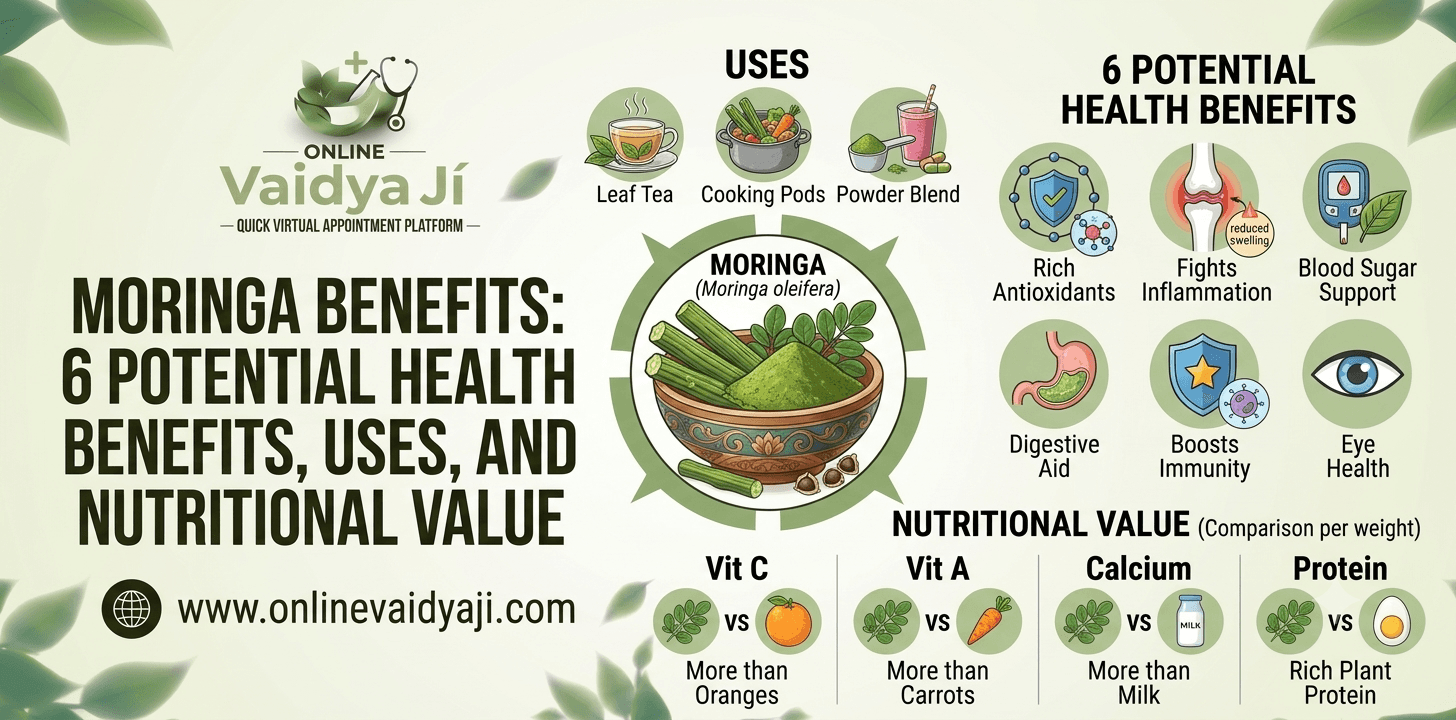
Often celebrated as the “miracle tree” or the drumstick tree, Moringa oleifera has captured global attention as a powerhouse of wellness. Across both traditional systems like Ayurveda (where it is known as Shigeru) and modern nutritional science, almost every part of the plant—from its nutrient-dense leaves to its seeds—is valued for promoting vitality.
If you are looking to understand the core moringa health benefits, moringa nutritional value, common moringa uses, and potential moringa side effects, this comprehensive, evidence-based guide breaks down everything you need to know.
What is Moringa?

Moringa is a fast-growing, drought-resistant tree native to the Indian subcontinent. For centuries, its leaves, pods, and flowers have been utilized in traditional cooking and natural remedies. Today, it is widely consumed as a dietary supplement, usually in the form of vibrant green leaf powder, capsules, or teas.
Moringa Nutritional Value: What’s Inside?
Moringa leaves are exceptionally nutrient-dense. Gram for gram, they pack significant amounts of plant-based protein, essential vitamins, and minerals that support overall health.
Without proper micronutrients, daily fatigue and low immunity can take a heavy toll. Incorporating moringa into a balanced diet helps bridge nutritional gaps. Below is an overview of its key nutritional components:
| Nutrient | Primary Role in the Body |
| Protein | Essential for building and repairing cells, tissues, and muscles. |
| Iron | Vital for hemoglobin production and transporting oxygen-rich blood throughout the body. |
| Vitamin C | Strengthens immune defense and acts as a powerful antioxidant. |
| Vitamin A (Beta-Carotene) | Supports good vision, skin health, and immune function. |
| Magnesium | Assists in energy metabolism, muscle relaxation, and regulating blood sugar. |
| Vitamin B6 | Aids in antibody production and neurological health. |
6 Potential Health Benefits of Moringa
Scientific research is increasingly validating why traditional wellness systems value this plant. Here are six potential health benefits backed by current insights.
1. Rich in Natural Antioxidants
Antioxidants neutralize unstable molecules called free radicals, protecting your cells from oxidative stress and reducing the risk of chronic illnesses.
Oxidative stress is linked to numerous health concerns, from premature aging to heart complications. Moringa leaves are rich in bioactive plant compounds such as quercetin (which supports heart health) and chlorogenic acid, which helps moderate blood sugar levels after meals.
2. Supports Normal Inflammatory Responses
While acute inflammation is the body’s natural defense against injury, chronic inflammation can pave the way for conditions like arthritis and cardiovascular disease.
Compounds called isothiocyanates found in moringa leaves and pods exhibit anti-inflammatory properties. Regular, moderate consumption may help modulate the body’s inflammatory pathways, easing joint discomfort and stiffness.
3. Helps Maintain Healthy Blood Sugar Levels
Emerging studies suggest that moringa compounds may assist in optimizing carbohydrate metabolism and improving insulin sensitivity.
For individuals striving to maintain balanced energy and stable blood glucose, early research indicates that moringa leaf powder may help lower fasting blood sugar levels. However, it should complement—not replace—prescribed medical treatments for diabetes.
4. Protects Cardiovascular Health
By helping regulate blood lipid profiles and protecting against arterial inflammation, moringa supports long-term heart health.
Studies point out that moringa’s high antioxidant profile can prevent cholesterol oxidation and reduce plaque formation in blood vessels. Additionally, its mild hypotensive properties may assist in managing high blood pressure levels.
5. Boosts Immunity and Energy
Free of caffeine, moringa provides a natural vitality boost driven entirely by its dense matrix of vitamins A, C, and iron.
Instead of relying on temporary energy spikes from caffeine, the synergistic blend of micronutrients in moringa supports cellular energy production and optimizes normal immune function.
6. Promotes Healthy Skin and Hair
Vitamins A and E present in moringa guard cells against environmental stressors, promoting clear skin and a nourished scalp.
Moringa seed oil and leaf extracts are frequent ingredients in modern cosmetics because they help minimize skin dryness, support collagen synthesis, and reinforce hair strength from the roots.
Practical Moringa Uses: How to Incorporate It Daily
Moringa is remarkably versatile. Here are some popular ways to integrate it into your routine:
- Moringa Tea or Latte: Brew moringa powder with warm water, or mix it with plant-based milk, a dash of cinnamon, and honey for a caffeine-free morning tonic.
- Smoothie Boost: Stir ¼ to ½ teaspoon of moringa powder into your daily green smoothie or protein shake.
- Soup and Stew Enhancer: Fresh moringa leaves can be tossed into broths, soups, and curries much like spinach or kale.
Potential Moringa Side Effects and Precautions
While generally safe for most people when consumed in moderate food or supplement quantities, excessive intake can lead to mild digestive upset.
- Digestive Discomfort: Consuming too much moringa powder at once may cause mild bloating, gas, or a laxative effect.
- Medication Interactions: If you take medications for diabetes, high blood pressure, or thyroid conditions, consult your doctor before using moringa, as it may amplify their effects.
- Pregnancy Warning: While moringa leaves are generally safe, parts of the tree—particularly the roots, bark, and flowers—contain compounds that may stimulate uterine contractions and should be avoided during pregnancy.
Frequently Asked Questions (FAQs)
Can I consume moringa powder every day?
Yes, incorporating ¼ to ½ teaspoon of high-quality organic moringa powder into your daily diet is generally considered safe and beneficial for most healthy adults. Always listen to your body and start with smaller amounts.
Does moringa help with weight loss?
Moringa is rich in dietary fiber, which promotes satiety and supports healthy digestion. While it can support an active weight management plan, it is not a standalone solution for shedding pounds without proper diet and exercise.
Can moringa replace my daily multivitamin?
While moringa is exceptionally nutritious, it shouldn’t entirely replace a varied diet or tailored medical supplementation if you have severe nutritional deficiencies. Think of it as a nutrient-dense whole-food booster.
Who should avoid taking moringa?
Pregnant women (especially avoiding root and bark extracts), individuals with chronic low blood pressure, and those managing specific medical conditions or taking prescription blood thinners or diabetes drugs should consult a healthcare provider first.