
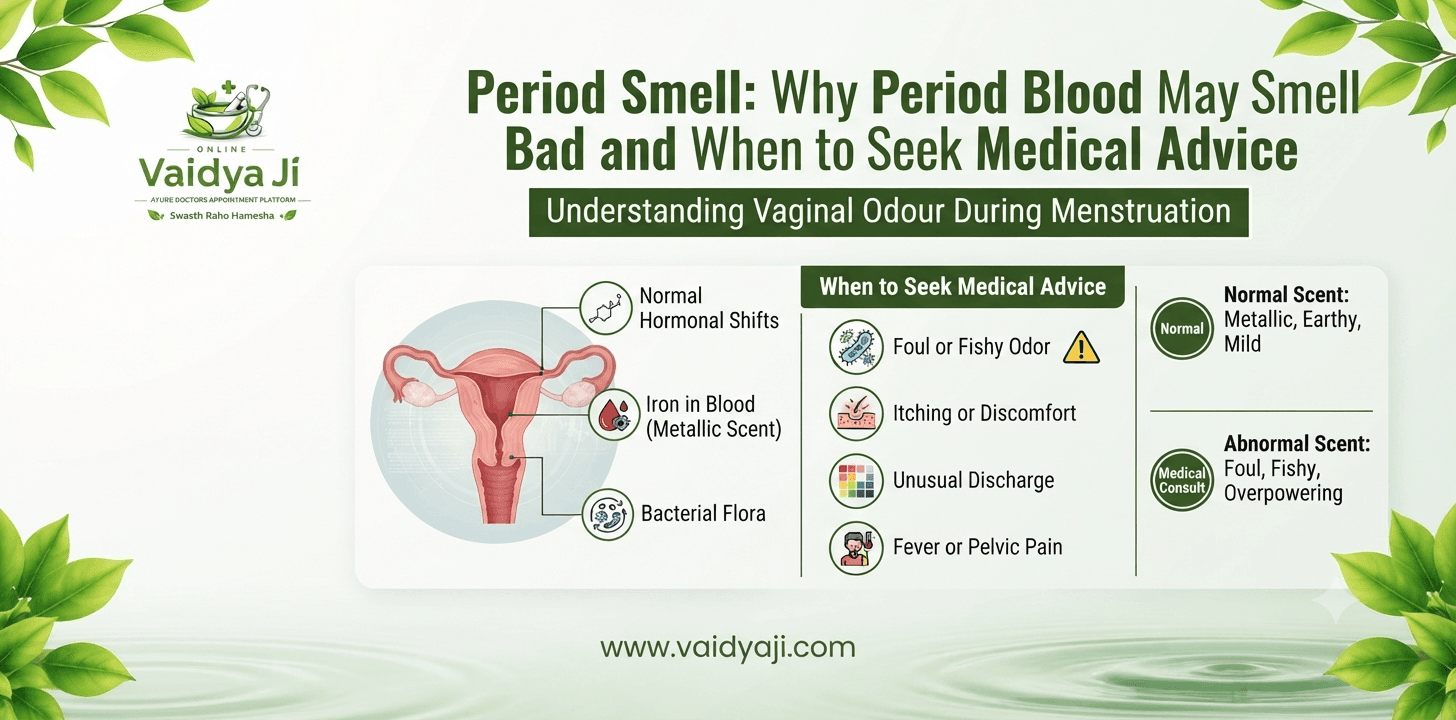
Menstruation is a completely natural part of the reproductive cycle, yet it often comes with a range of physical changes and questions. If you have ever wondered why your scent shifts during your cycle, you are not alone. A mild, metallic, or earthy scent is entirely normal. However, if you notice a pungent, sharp, or unusually period smell, it is completely understandable to feel concerned.
Understanding the root cause behind these shifts can give you peace of mind and help you take proactive steps for your reproductive health. This guide explores why period blood smells bad, common scent types, effective hygiene practices, and when it is time to consult a medical professional.
Understanding Period Odour: Why Does It Happen?

A noticeable period scent typically occurs due to hormonal shifts altering vaginal pH, the natural breakdown of iron-rich menstrual blood, and how bacteria interact with sweat and dead skin cells in the external genital area.
Your body goes through intricate biological transformations during each cycle. When menstrual blood leaves the body, it mixes with natural vaginal bacteria, sweat, and air. This interaction is the primary driver behind any noticeable scent.
Several key factors influence this process:
- Hormonal Fluctuations: Shifts in estrogen and progesterone levels alter the vaginal environment’s acidity. A less acidic environment encourages bacterial growth, which changes your overall scent profile.
- The Breakdown of Blood: Menstrual blood contains iron and other cellular components. As these elements interact with oxygen and air over time, they naturally produce a distinct iron-like or metallic aroma.
- External Sweat and Hygiene: Sweat glands in the groin area produce perspiration that mixes with bacteria on the skin. Without regular cleansing, this accumulation worsens perceived odours.
Read More Blog : Stomach Pain: Causes, Symptoms, Home Remedies & Prevention
Common Types of Period Odours
Not all menstrual scents point to a health problem. However, recognizing different types of aromas can help you determine whether your body is experiencing normal physiological processes or an infection.
| Scent Type | Potential Cause | What It Usually Means |
| Metallic | Iron content in menstrual blood | Completely normal; caused by the natural presence of iron and red blood cells. |
| Fish-like | Bacterial Vaginosis (BV) or other infections | Often signals an imbalance in vaginal flora that requires medical evaluation. |
| Sweet or Yeast-like | Fungal overgrowth (Yeast infection) | Can indicate a mild disruption in microbial balance, sometimes accompanied by itching. |
| Foul or Rotting | Forgotten tampon or severe infection | Requires immediate attention; frequently caused by a trapped foreign object. |
If you notice a sudden, intensely pungent, or smelly discharge before period cycles begin, it is often an early indicator that your vaginal microbiome is experiencing an imbalance.
Research-Based Tips and Home Remedies
Managing unwanted scents does not require harsh chemicals or disruptive products. Simple, evidence-based lifestyle changes can help restore natural balance.
1. Maintain Gentle External Hygiene
Shower regularly during your menstruation cycle to remove accumulated sweat and bacteria. Always wash the vulva (the outer genital area) externally with warm water and mild, unscented cleansers. Avoid internal douching, as the vagina is self-cleaning and douching only washes away protective bacteria.
2. Stay Well Hydrated
Drinking adequate water supports your body’s natural detoxification processes, flushes the urinary tract, and prevents concentrated bodily fluids that can worsen strong aromas. Proper hydration also helps reduce dehydration-induced ammonia-like scents.
3. Choose the Right Menstrual Products
Change your pads, tampons, or menstrual cups frequently. Never leave a single tampon in for more than 8 hours to avoid bacterial accumulation and minimize health risks. Opting for unbleached, natural cotton products can also prevent unnecessary irritation.
4. Adjust Your Daily Diet
Dietary patterns directly impact your systemic and vaginal microbiome. Research suggests that incorporating specific nutrient-dense foods supports optimal vaginal health:
- Favorable Foods: Fresh fruits, high-fiber vegetables, whole grains, eggs, yogurt, and foods rich in vitamin D.
- Foods to Limit: Excessively sugary items, processed foods, refined grains, and high-fat red meats, which can negatively alter your body’s chemical balance.
Why Does My Period Smell Bad? Common Culprits
When individuals search for why period blood smell bad, they are often dealing with specific underlying triggers. While normal menstrual fluid has a subtle earthy or metallic scent, a sharp change usually points to microbial shifts.
- Bacterial Vaginosis (BV): This occurs when “bad” bacteria outnumber the protective lactobacilli in the vagina. It often triggers a distinct, strong fishy odour, particularly noticeable during or right after menstruation.
- Trichomoniasis or STIs: Sexually transmitted infections can alter vaginal discharge characteristics, introducing abnormal textures, colors, and foul scents.
- A Retained Foreign Object: Forgetting to remove a tampon can lead to a severe, highly unpleasant, and foul-smelling discharge. This requires immediate removal and medical assistance if symptoms persist.
Essential Vaginal Health and Best Practices
Protecting your reproductive health relies on consistent, gentle habits.
- Wear Breathable Clothing: Tight synthetic clothing, pantyhose, and non-breathable underwear trap heat and moisture, encouraging bacterial proliferation. Opt for loose-fitting cotton underwear to keep the area dry.
- Avoid Fragranced Products: Perfumed pads, scented tampons, and chemical deodorants disrupt the natural vaginal pH balance, increasing the risk of irritation, inflammation, and worse odours.
- Wipe Correctly: Always wipe from front to back after using the restroom to prevent rectal bacteria from spreading to the vaginal opening.
Read More Blog : 9 Best Home Remedies for Wart Removal Naturally
When to Seek Medical Help?
While minor scent variations are a normal part of the menstrual cycle, certain red flags require professional medical attention from a gynecologist. Consult a healthcare provider if you experience:
- A strong, foul, or fish-like odour that persists long after your period ends.
- Persistent vaginal itching, burning, or discomfort.
- Abnormal discharge that is gray, green, or thick and curdy.
- Pelvic pain, lower abdominal cramping, or unexplained fever.
- Sores, blisters, or unusual swelling around the vulva.
Conclusion
Experiencing changes in your period smell is a common occurrence influenced by natural hormonal fluctuations, the chemical breakdown of menstrual blood, and everyday hygiene habits. While a subtle metallic or earthy scent is entirely normal, a sharp, foul, or fish-like aroma often signals that your vaginal microbiome needs attention. By prioritizing breathable clothing, proper hydration, gentle external hygiene, and a balanced diet, you can support long-term reproductive wellness. Always listen to your body, and do not hesitate to consult a healthcare professional if you notice persistent, unusual symptoms.
Frequently Asked Questions (FAQs)
What is considered a “bad” or abnormal period smell?
A normal period scent is subtle, metallic, or earthy. A bad or abnormal smell is typically sharp, foul, rotting, or intensely fish-like. If the scent is overpowering or accompanied by irritation, it often signals an underlying infection like bacterial vaginosis.
Why do I experience smelly discharge before period cycles start?
Hormonal fluctuations right before menstruation change the vaginal pH levels, creating an environment where certain bacteria can multiply more easily. This shift can produce a noticeable change in discharge texture and aroma before bleeding actually begins.
Can diet really affect my period and vaginal odour?
Yes. Eating a balanced diet rich in fiber, probiotics (like yogurt), fresh fruits, and vegetables helps maintain a healthy vaginal microbiome. Conversely, diets high in refined sugars and processed fats can promote microbial imbalances, intensifying body odours.
How can I get rid of period odours safely at home?
You can manage minor odours naturally by practicing good external hygiene, changing your sanitary products every 4 to 8 hours, staying well-hydrated, wearing breathable cotton clothing, and avoiding douching or scented feminine products.