
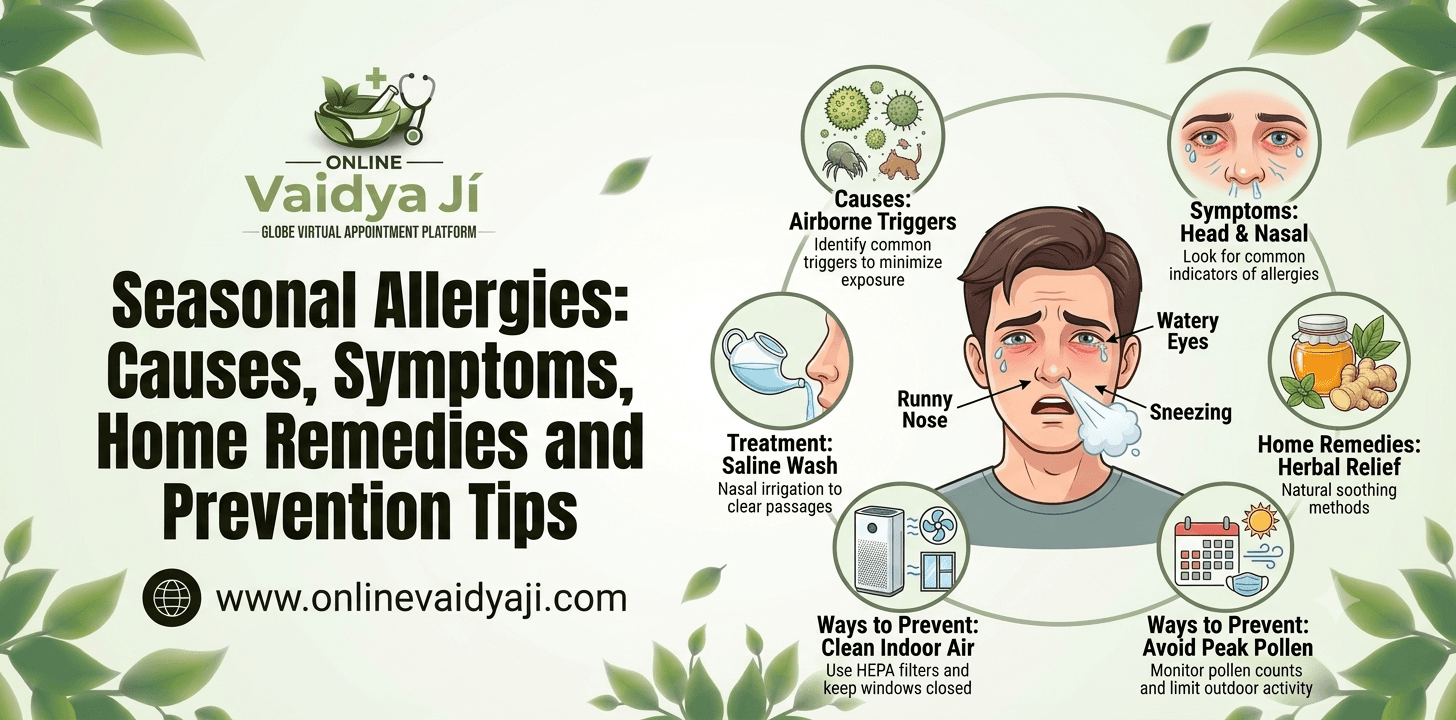
When the seasons shift, seasonal allergy millions of people look forward to blooming flowers and warmer weather, but for many others, changing weather brings an unwelcome wave of sneezing, congestion, and itchy eyes. Seasonal allergies, commonly known as allergic rhinitis or hay fever, occur when the immune system overreacts to outdoor allergens like pollen from trees, grasses, and weeds.
Understanding what triggers these reactions, recognizing early and utilizing effective home remedies for seasonal allergies can help you manage your discomfort and maintain your daily routine. This comprehensive guide breaks down everything you need to know about seasonal allergy treatment, causes of seasonal allergies, and practical strategies on how to prevent seasonal allergies so you can breathe easier all year round.
What Are Seasonal Allergies?
Seasonal allergies are immune system responses triggered by airborne allergens that appear at specific times of the year. Unlike year-round indoor allergens such as dust mites or pet dander, seasonal triggers fluctuate with the blooming cycles of plants. When an allergic person inhales pollen, their immune system mistakenly identifies the harmless particles as dangerous invaders and releases antibodies called immunoglobulin E (IgE). These antibodies trigger mast cells to release histamine and other chemicals, leading to inflammation and classic allergy symptoms.
Causes of Seasonal Allergies
Identifying the root causes of seasonal allergies is the first step toward effective management. The primary triggers vary depending on the time of year and geographic location:
- Tree Pollen (Spring): Trees such as oak, birch, cedar, and maple release fine, powdery pollen grains into the wind during early spring.
- Grass Pollen (Late Spring to Summer): Grasses like Bermuda, Timothy, and Kentucky bluegrass take over as the primary allergy culprits during the warmer summer months.
- Weed Pollen (Late Summer to Fall): Ragweed, sagebrush, and tumbleweed produce billions of pollen grains that travel miles on autumn breezes, triggering severe late-season flare-ups.
- Mold Spores: Thriving in damp outdoor environments, piles of rotting autumn leaves and wet soil release airborne mold spores that irritate sensitive airways.
Common Seasonal Allergy Symptoms
Recognizing seasonal allergy symptoms early helps differentiate them from common colds or viral infections. Unlike colds, allergies do not cause body aches or fevers, and symptoms persist as long as allergen exposure continues.
| Symptom | Description |
| Nasal Congestion | Blocked or stuffy nose caused by inflamed nasal passages. |
| Sneezing & Runny Nose | Frequent, repetitive sneezing accompanied by clear, watery nasal discharge. |
| Itchy, Watery Eyes | Irritation, redness, and a gritty sensation in the eyes caused by pollen contact. |
| Throat & Ear Irritation | Scratchy throat, post-nasal drip, and mild ear fullness or itching. |
| Fatigue & Brain Fog | Low energy and poor sleep quality driven by chronic nighttime congestion. |
Effective Home Remedies for Seasonal Allergies
While over-the-counter antihistamines and nasal sprays offer relief, many people prefer natural alternatives. Integrating proven home remedies for seasonal allergies into your daily routine can soothe irritated mucous membranes and reduce reliance on medication:
1. Saline Nasal Irrigation (Neti Pot)
Rinsing your nasal passages with a saline solution using a neti pot or squeeze bottle physically flushes out trapped pollen grains and thick mucus. Always use distilled, sterile, or previously boiled and cooled water to ensure safety.
2. Steam Inhalation with Eucalyptus Oil
Inhaling steam infused with a few drops of eucalyptus or peppermint essential oil opens blocked nasal passages, loosens congestion, and calms inflamed respiratory tissues.
3. Local Honey Consumption
Consuming raw, locally sourced honey introduces trace amounts of local flower pollen into your system over time. While scientific evidence varies, many individuals report reduced symptom severity through natural desensitization.
4. Apple Cider Vinegar (ACV) Tonic
Raw, unfiltered apple cider vinegar helps break down mucus and supports lymphatic drainage. Mix one tablespoon of ACV with warm water and a dash of honey to create a soothing daily health tonic.
Read More Blog : Thyroid Precautions: What to Avoid and What to Follow for Better Thyroid Health
Proven Strategies on How to Prevent Seasonal Allergies
Prevention is always better than cure. Implementing proactive lifestyle habits significantly reduces your daily exposure to airborne allergens:
- Monitor Daily Pollen Counts: Check local weather forecasts for daily pollen levels and limit outdoor activities during peak morning and windy hours.
- Keep Windows Closed: Run your air conditioner with a HEPA filter instead of opening windows during high pollen seasons.
- Shower and Change Clothes After Outdoor Trips: Pollen clings tightly to hair, skin, and clothing. Rinsing off before bed prevents transferring allergens onto your pillow.
- Use HEPA Air Purifiers: Place high-efficiency particulate air (HEPA) purifiers in your bedroom and living spaces to capture indoor allergens.
- Wear Wraparound Sunglasses: Protect your eyes from wind-blown pollen when walking outside by wearing large or wraparound sunglasses.
Comprehensive Seasonal Allergy Treatment Options
When natural remedies and lifestyle adjustments are not enough, professional seasonal allergy treatment options can provide long-term relief:
- Antihistamines: Non-drowsy oral medications block histamine receptors to stop sneezing, runny noses, and itching.
- Nasal Corticosteroid Sprays: Prescription or over-the-counter sprays reduce inflammation directly inside nasal passages.
- Decongestants: Short-term oral or spray medications relieve severe nasal swelling (avoid using nasal decongestant sprays for more than 3 consecutive days to prevent rebound congestion).
- Allergy Shots (Immunotherapy): Subcutaneous immunotherapy exposes your body to gradually increasing doses of specific allergens over several years, retraining your immune system to tolerate them permanently.
Conclusion
Managing seasonal allergies effectively requires a balanced approach combining environmental awareness, targeted home remedies for seasonal allergies, and appropriate medical treatments. By understanding the underlying causes of seasonal allergies, recognizing early seasonal allergy symptoms, and implementing proactive prevention strategies, you can minimize disruptive flare-ups and enjoy every season comfortably. Whether through daily saline rinses, HEPA air filtration, or professional seasonal allergy treatment, taking control of your exposure empowers you to breathe easier and live life unhindered by pollen.
Frequently Asked Questions (FAQs)
How can I tell if I have seasonal allergies or a common cold?
Seasonal allergies typically cause itchy eyes, clear nasal discharge, and sneezing without fever or body aches. Colds usually develop gradually, feature thick colored mucus, sore throat, and low-grade fevers, and resolve within 7 to 10 days, whereas allergies persist as long as pollen exposure continues.
Are natural home remedies effective for severe seasonal allergies?
Home remedies like saline rinses and steam inhalation work exceptionally well for mild to moderate symptoms by clearing physical pollen accumulation. However, individuals with severe symptoms or allergic asthma should combine natural methods with medical treatments recommended by a healthcare provider.
When is the peak season for pollen allergies?
Pollen seasons vary by region and trigger type. Tree pollen peaks in early spring, grass pollen dominates late spring and early summer, and weed pollens—especially ragweed—spike from late summer through autumn.
Can seasonal allergies develop suddenly in adulthood?
Yes. Your immune system can become sensitized to environmental allergens at any point in life due to hormonal shifts, prolonged environmental exposure, or moving to a new geographic region with different plant life.