
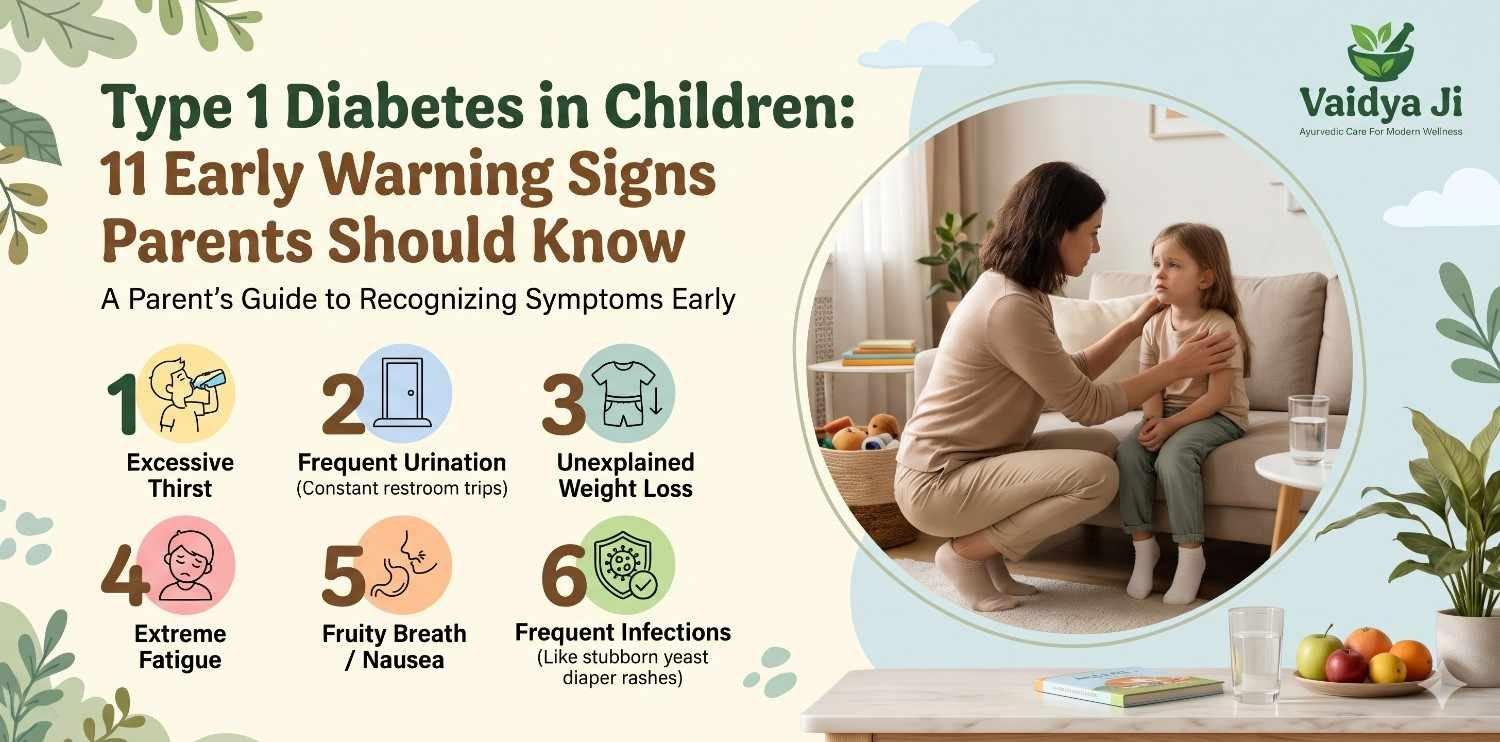
Unlike type 2 diabetes, which often develops gradually over years, type 1 diabetes in children can appear suddenly—sometimes within just a few weeks. It is an autoimmune condition in which the child’s immune system mistakenly attacks and destroys the insulin-producing beta cells in the pancreas. Without insulin, glucose from food cannot enter the body’s cells for energy and instead builds up in the bloodstream.
Because initial symptoms can look like a routine viral infection, growth spurt, or urinary issue, recognizing the early signs of diabetes in children is critical. Early diagnosis prevents a life-threatening complication called Diabetic Ketoacidosis (DKA) and allows children to live full, active, healthy lives with proper insulin management.
11 Early Warning Signs and Symptoms of Type 1 Diabetes in Kids
Parents, caregivers, and school teachers should watch closely for these eleven childhood diabetes symptoms:
1. Excessive Thirst (Polydipsia)
Your child asks for water constantly, finishes entire bottles rapidly, or wakes up multiple times at night desperate for a drink—even in cool weather.
2. Frequent Urination (Polyuria)
Because the kidneys work overtime to flush out excess sugar from the blood, your child visits the washroom far more often than usual, or babies and toddlers have noticeably heavier, soaked diapers.
3. Sudden Bedwetting in a Toilet-Trained Child
A child who has been dry through the night for months or years suddenly starts wetting the bed again is one of the classic symptoms of type 1 diabetes in kids.
4. Unexplained Weight Loss
Despite eating normally—or even eating more than usual—your child loses weight noticeably. Without insulin to unlock glucose for fuel, the body starts breaking down muscle and fat stores for energy.
5. Extreme Hunger (Polyphagia)
Because cells are starved of energy even when blood sugar is high, your child feels constantly hungry shortly after finishing full meals.
6. Persistent Fatigue and Weakness
A normally energetic child becomes unusually tired, sluggish, drowsy after school, or reluctant to participate in outdoor play and sports.
7. Irritability and Sudden Mood Changes
Fluctuating blood sugar levels and poor sleep from nighttime urination can make children unusually cranky, emotional, or unable to concentrate in class.
8. Blurred Vision
High blood glucose levels draw fluid from the lenses of the eyes, temporarily affecting focus and causing your child to complain that the classroom board or book looks blurry.
9. Fruity-Smelling Breath
When the body burns fat instead of glucose, it produces acidic byproducts called ketones, giving your child’s breath a distinct sweet, fruity, or nail-polish-remover odour.
10. Frequent Skin Infections or Yeast Infections
Elevated sugar levels weaken local immune defences and encourage fungal growth, leading to stubborn diaper rashes in infants, genital yeast infections in girls, or slow-healing minor cuts.
11. Nausea, Vomiting, and Abdominal Pain
Often mistaken for a stomach bug or food poisoning, stomach pain accompanied by vomiting and heavy breathing is a serious red flag that ketones are building up in the blood.
Quick Overview: Normal Growth vs. Childhood Diabetes Symptoms
| Daily Behaviour | Typical Childhood Pattern | Warning Sign of Type 1 Diabetes |
| Appetite & Weight | Bigger appetite accompanied by steady weight and height gain | Increased hunger paired with sudden weight loss |
| Thirst & Water Intake | Drinks more after outdoor play or hot weather | Unquenchable thirst throughout the day and night |
| Bathroom Habits | Consistent daytime and nighttime bladder control | Frequent urination, soaked diapers, or sudden bedwetting |
| Energy Levels | Active play with normal bedtime tiredness | Persistent exhaustion, drowsiness, and irritability |
When to Seek Emergency Medical Care (Diabetic Ketoacidosis)
If type 1 diabetes in children goes unrecognized, the buildup of ketones leads to Diabetic Ketoacidosis (DKA)—a medical emergency. Rush your child to a hospital immediately if early symptoms are accompanied by:
- Persistent vomiting or inability to keep fluids down
- Rapid, deep, laboured breathing (Kussmaul breathing)
- Strong fruity breath odour
- Severe abdominal pain
- Confusion, extreme drowsiness, or difficulty waking up
How Type 1 Diabetes Is Diagnosed and Managed
Diagnosing type 1 diabetes is quick and straightforward through simple blood and urine tests:
- Random or Fasting Blood Glucose Test & HbA1c: Measures current blood sugar levels and average blood sugar over the past 2–3 months.
- Urine Glucose and Ketone Test: Checks whether excess sugar and ketones are spilling into the urine.
- Autoantibody Blood Tests: Confirms autoimmune type 1 diabetes rather than type 2 or monogenic diabetes.
Read more blog : Baby Weight Gain Foods: Healthy Foods and Nutrition Tips for Proper Growth
Daily Management Pillars
While there is currently no permanent cure, children with type 1 diabetes thrive with a structured daily care plan guided by a paediatric endocrinologist:
- Daily Insulin Therapy: Administered via insulin pens or an insulin pump to replace the insulin the pancreas no longer makes.
- Regular Blood Glucose Monitoring: Using a glucometer or Continuous Glucose Monitor (CGM) to track blood sugar safely before meals, sports, and bedtime.
- Balanced Carbohydrate Counting: Eating nutritious, balanced meals tailored to insulin doses without banning childhood favourites.
- Active Play and School Support: Encouraging regular physical activity while educating school staff on recognizing low blood sugar (hypoglycaemia).
Conclusion
Spotting the early signs of diabetes in children—especially the classic combination of excessive thirst, frequent urination, sudden bedwetting, and unexplained weight loss—can save your child from severe complications. If something feels off about your child’s thirst, energy, or bathroom habits, trust your parental instinct and request a simple blood sugar check from your paediatrician right away.
Frequently Asked Questions (FAQs)
- What causes type 1 diabetes in children—is it caused by eating too much sugar?
No, type 1 diabetes is not caused by eating sweets or sugar. It is an autoimmune condition triggered by genetic susceptibility and environmental factors where the immune system destroys insulin-producing cells in the pancreas.
- At what age does type 1 diabetes usually appear in kids?
Type 1 diabetes can develop at any age from infancy through adolescence, though diagnosis peaks most commonly between ages 4 to 7 and again between ages 10 to 14.
- Can type 1 diabetes in children be prevented or cured?
Currently, type 1 diabetes cannot be prevented or permanently cured, but with modern insulin therapy, glucose monitoring, and healthy routines, children can live completely normal, active lives.
- What is the difference between type 1 and type 2 diabetes in children?
In type 1 diabetes, the pancreas produces little to no insulin and requires lifelong insulin therapy from diagnosis. In type 2 diabetes, the body still makes insulin but becomes resistant to it, often linked to genetics, excess weight, and lifestyle factors.