
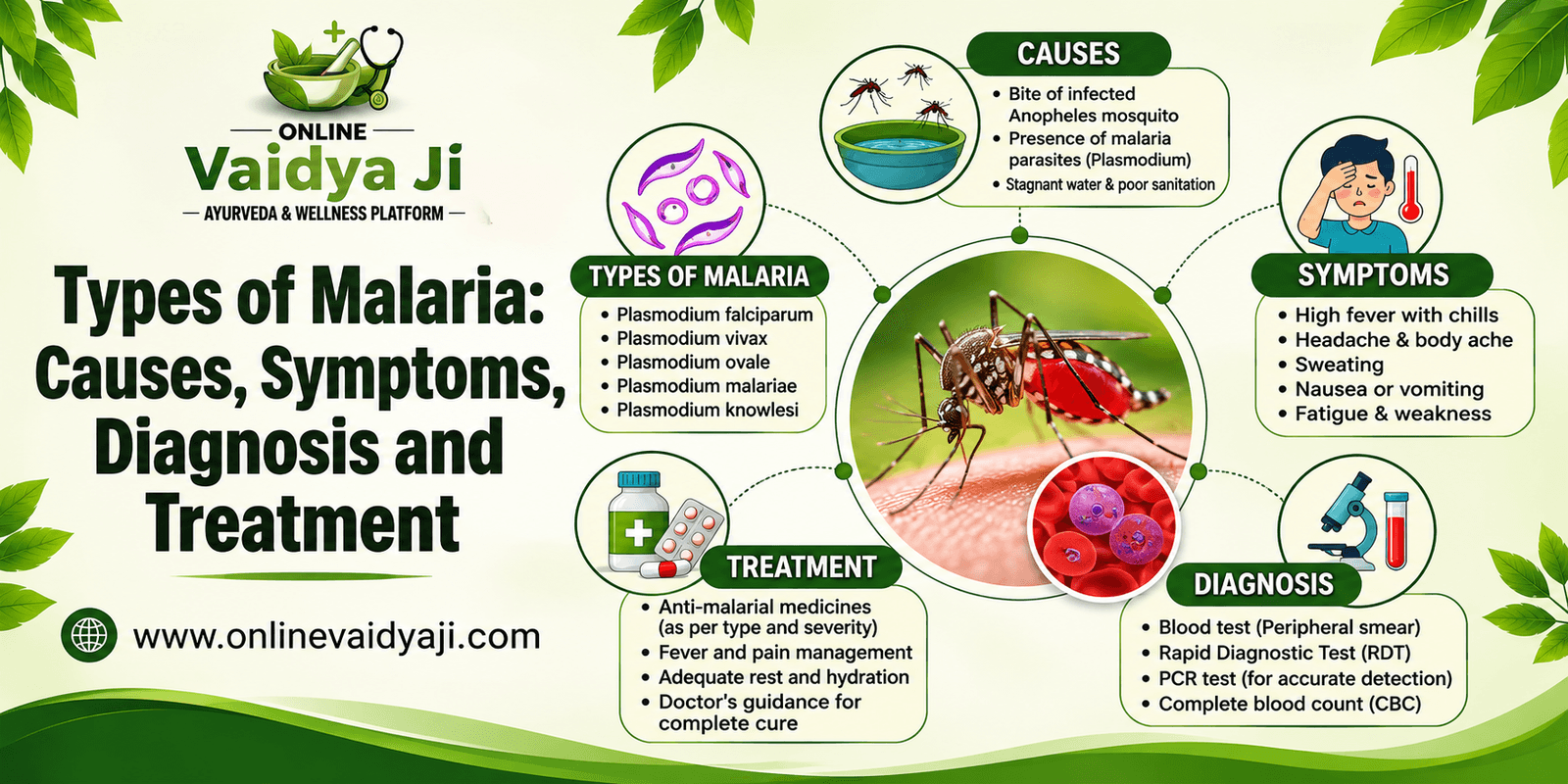
Malaria remains one of the most significant mosquito-borne illnesses worldwide, affecting millions of people each year—particularly in tropical and subtropical regions. Understanding the different types of malaria is essential because each strain behaves differently in the human body, ranges in severity, and requires specific medical intervention.
While some forms of the infection cause mild, flu-like discomfort, others can rapidly escalate into life-threatening complications if left untreated. Recognizing how the disease spreads, identifying early warning signs, and seeking prompt medical care can make all the difference in achieving a full recovery.
What Are the Main Types of Malaria?
There are five primary types of malaria that infect humans, each caused by a distinct species of the Plasmodium parasite: Plasmodium falciparum, Plasmodium vivax, Plasmodium ovale, Plasmodium malariae, and Plasmodium knowlesi. Among these, P. falciparum is the most dangerous and life-threatening, while P. vivax is the most widespread globally.
When healthcare providers classify types of malaria parasites, they look at the specific Plasmodium species responsible for the infection. Each species has a unique life cycle, incubation period, and impact on red blood cells.
1. Plasmodium falciparum
Plasmodium falciparum is the deadliest of all malaria parasites and is predominantly found in sub-Saharan Africa, though it also occurs in parts of South Asia and South America. It multiplies rapidly in the bloodstream, destroying large numbers of red blood cells and causing severe anemia. Furthermore, infected blood cells can stick to the walls of small blood vessels, blocking blood flow to vital organs like the brain (cerebral malaria) or kidneys.
2. Plasmodium vivax
Plasmodium vivax is the most geographically widespread strain, commonly found across Asia, Latin America, and parts of Africa. While generally less fatal than P. falciparum, P. vivax has a unique ability to remain dormant in the liver as “hypnozoites.” These dormant parasites can reactivate months or even years after the initial bite, leading to relapsing episodes of illness if not specifically treated.
3. Plasmodium ovale
Found mainly in West Africa and the islands of the western Pacific, Plasmodium ovale is biologically very similar to P. vivax. It also forms dormant stages in the liver that can trigger relapses long after initial recovery. Infections caused by P. ovale are typically milder, though proper medical clearance is still necessary to prevent recurring fevers.
4. Plasmodium malariae
Plasmodium malariae occurs worldwide in tropical regions and is known for causing a chronic, long-lasting infection. Unlike P. vivax or P. ovale, it does not stay dormant in the liver. Instead, it can persist at very low, undetectable levels in the bloodstream for decades, occasionally causing kidney complications such as nephrotic syndrome if left untreated.
5. Plasmodium knowlesi
Originally recognized as a parasite affecting macaque monkeys in Southeast Asia, Plasmodium knowlesi is now established as the fifth human malaria parasite. It has a remarkably fast 24-hour replication cycle in the blood, meaning parasite levels can surge overnight. Because of this rapid progression, P. knowlesi can quickly become severe and requires urgent clinical management.
Comparison of Different Types of Malaria Parasites
To better understand how these five strains differ in terms of risk, location, and behavior, refer to the overview below:
| Parasite Species | Primary Geographic Region | Disease Severity | Relapse Potential |
| P. falciparum | Sub-Saharan Africa, South Asia | High (Severe / Life-threatening) | No (Can recrudesce if under-treated) |
| P. vivax | Asia, Latin America, parts of Africa | Moderate to Severe | Yes (Dormant liver stage) |
| P. ovale | West Africa, Western Pacific | Mild to Moderate | Yes (Dormant liver stage) |
| P. malariae | Worldwide (Tropical regions) | Mild (Chronic if untreated) | No (Persists in blood) |
| P. knowlesi | Southeast Asia | High (Rapid 24-hour cycle) | No |
Malaria Causes and How It Spreads
Quick Answer: Malaria is caused by single-celled Plasmodium parasites transmitted to humans through the bite of an infected female Anopheles mosquito. Less commonly, it can spread through blood transfusions, organ transplants, shared needles, or from mother to unborn child.
Understanding malaria causes begins with the transmission cycle. Unlike viral infections such as the flu, malaria is not contagious through casual contact like coughing, sneezing, or sitting next to an infected person.
The primary transmission pathway involves the following steps:
- Mosquito Vector: A female Anopheles mosquito feeds on a person who already has malaria, ingesting microscopic parasites along with the blood.
- Parasite Development: Inside the mosquito, the parasites mature and migrate to the insect’s salivary glands.
- Human Infection: When that mosquito bites another person, the parasites enter the human bloodstream and travel directly to the liver.
- Bloodstream Invasion: After maturing and multiplying in the liver, the parasites re-enter the bloodstream and infect red blood cells, causing them to rupture and trigger clinical symptoms.
Common Malaria Symptoms to Watch For
Quick Answer: Early malaria symptoms closely resemble a severe viral flu and typically appear 10 to 15 days after an infective mosquito bite. Key signs include high fever, intense shaking chills, profuse sweating, severe headaches, muscle aches, nausea, and fatigue.
In classic cases, patients experience cyclical “malaria paroxysms”—a sudden cold stage with shivering, followed by a hot stage with spiking fever, and ending with a sweating stage as the body temperature drops. However, many people simply experience persistent fever and body aches without a strict pattern.
Warning Signs of Severe Malaria: If an infection progresses—most commonly with P. falciparum or P. knowlesi—it becomes a medical emergency. Seek immediate hospital care if any of the following red-flag symptoms appear:
- Confusion, extreme drowsiness, seizures, or loss of consciousness
- Difficulty breathing or rapid, shallow respiration
- Yellowing of the skin and eyes (jaundice)
- Dark, tea-colored, or blood-tinged urine
- Severe anemia and extreme physical weakness
Malaria Diagnosis: How Doctors Confirm the Infection
Accurate and rapid malaria diagnosis is critical because different types of malaria require tailored drug regimens. Doctors rely on both clinical history (including recent travel to endemic areas) and laboratory testing:
- Blood Smear Microscopy: A drop of the patient’s blood is spread on a glass slide, stained, and examined under a microscope. This remains the gold standard for identifying the exact Plasmodium species and measuring parasite density.
- Rapid Diagnostic Tests (RDTs): These simple dipstick tests detect specific malaria antigens in a finger-prick blood sample within 15 to 20 minutes, making them invaluable when microscopy is unavailable.
- PCR (Polymerase Chain Reaction) Tests: Molecular testing detects parasite DNA and is used when parasite counts are very low or when confirming mixed infections.
Effective Malaria Treatment Options
Quick Answer: Malaria treatment relies on prescription antimalarial medications chosen based on the specific parasite species, disease severity, geographic drug resistance patterns, and the patient’s health status.
Self-medicating or delaying care can allow the parasite to multiply unchecked. Standard medical protocols include:
- Artemisinin-Based Combination Therapies (ACTs): The frontline treatment for uncomplicated P. falciparum and chloroquine-resistant strains, combining fast-acting artemisinin derivatives with a partner drug to clear parasites thoroughly.
- Chloroquine: Still effective against P. vivax, P. ovale, and P. malariae in regions where the parasites have not developed resistance.
- Primaquine or Tafenoquine: Added specifically for P. vivax and P. ovale infections to eliminate dormant liver parasites and prevent future relapses (after screening the patient for G6PD enzyme deficiency).
- Intravenous (IV) Artesunate: Administered in a hospital setting for severe malaria cases requiring immediate, intensive care.
Practical Tips for Malaria Prevention
Consistent malaria prevention combines vector control with personal protective habits, especially during monsoon seasons or when traveling to high-risk regions:
- Use Insecticide-Treated Nets (ITNs): Sleep under long-lasting permethrin-treated bed nets, as Anopheles mosquitoes primarily bite between dusk and dawn.
- Apply EPA-Approved Repellents: Use skin repellents containing DEET, picaridin, or oil of lemon eucalyptus on exposed skin.
- Wear Protective Clothing: Opt for light-colored, long-sleeved shirts and full-length trousers during evening hours.
- Eliminate Standing Water: Regularly empty flowerpots, buckets, coolers, and stagnant puddles around your home where mosquitoes breed.
- Take Preventive Medication (Chemoprophylaxis): If traveling to an endemic zone, consult a doctor beforehand about taking preventive antimalarial pills.
Conclusion
Understanding the various types of malaria is crucial for recognizing early symptoms, seeking prompt medical evaluation, and securing the right treatment before complications arise. Whether dealing with the fast-moving, severe threat of Plasmodium falciparum or the relapsing nature of Plasmodium vivax, early diagnosis and targeted antimalarial medications are vital for achieving a full and safe recovery. By combining effective vector control measures—such as using insecticide-treated nets, applying insect repellents, and eliminating standing water around your home—with professional healthcare guidance, you can protect yourself and your community from the burden of this preventable disease.
FAQs: Your Questions Answered
Which is the most dangerous among all types of malaria?
Plasmodium falciparum is the most dangerous and life-threatening strain. It multiplies rapidly in the blood and can cause severe complications such as cerebral malaria, acute kidney failure, respiratory distress, and fatal anemia if not treated promptly.
Can malaria come back after treatment?
Yes, infections caused by Plasmodium vivax and Plasmodium ovale can relapse months or even years later because these parasites leave dormant stages inside the liver. Completing a full course of liver-stage medication (like primaquine) prevents these relapses.
How soon do malaria symptoms start after a mosquito bite?
For most types of malaria, symptoms begin 10 to 15 days after a bite from an infected mosquito. However, depending on the parasite species and whether preventive medications were taken, symptoms can occasionally appear as early as 7 days or be delayed for several months.
Is there a vaccine available for malaria?
Yes, the World Health Organization (WHO) has recommended malaria vaccines (such as RTS,S/AS01 and R21/Matrix-M) for children living in regions with moderate to high P. falciparum transmission. While vaccines significantly reduce severe illness, combining them with bed nets and mosquito control remains essential.