

A fever is not a disease in itself; rather, it is a healthy defense mechanism and a sign that your body’s immune system is actively fighting off an infection or underlying illness. The internal thermostat in the brain, known as the hypothalamus, raises body temperature above the normal baseline (typically around 98.6°F or 37°C) to create a hostile environment for pathogens like viruses and bacteria.
Understanding the types of fever, recognizing fever symptoms, identifying stages of fever, and knowing proper fever management strategies can help you handle health episodes safely and effectively.
What is a Fever? (Understanding Temperature Ranges)
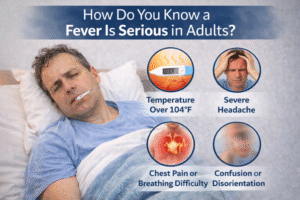
A fever is medically defined as a body temperature of 100.4°F (38°C) or higher. Healthcare providers categorize fevers by severity to determine the urgency of medical evaluation:
| Fever Classification | Temperature Range (Celsius & Fahrenheit) | General Clinical Implications |
| Low-Grade Fever | 37.3°C – 38.0°C (99.1°F – 100.4°F) | Often follows mild viral infections, physical exertion, or routine vaccinations. |
| Moderate Fever | 38.1°C – 39.0°C (100.6°F – 102.2°F) | Common with influenza, COVID-19, and urinary tract infections. |
| High-Grade Fever | 39.1°C – 41.0°C (102.4°F – 105.8°F) | Indicates intense immune response, potential bacterial infection, or severe flu. |
| Hyperpyrexia | Above 41.0°C (105.8°F) | A critical medical emergency requiring immediate intervention. |
Different Types of Fever
Fevers manifest in several distinct patterns and durations. Recognizing these patterns helps doctors diagnose specific medical conditions.
1. Classification by Temperature Patterns
- Intermittent Fever: The body temperature spikes high for several hours, then drops back down to normal levels within a 24-hour cycle. This pattern is characteristic of malaria and certain localized bacterial infections.
- Remittent Fever: The temperature fluctuates throughout the day, rising and falling significantly, but never returns to the normal baseline. This is frequently observed in infective endocarditis or typhoid fever.
- Continuous (Sustained) Fever: The temperature stays persistently high with minimal daily fluctuation (less than 1°C variation over 24 hours). This pattern is typical of severe lobar pneumonia or advanced typhoid.
- Relapsing Fever: A unique pattern where a high temperature persists for days, disappears completely for a period of normal readings, and then suddenly returns. It is often tied to tick-borne or vector-borne illnesses.
- Hectic / Septic Fever: Characterized by massive daily temperature swings with a difference of over 1.4°C between peak and trough values, usually signaling a severe systemic bloodstream infection.
Read More : How to Remove Blood Clot in Brain Naturally: Expert Guide & Home Treatments
2. Classification by Duration
- Acute Fever: Lasts less than 7 days. Most commonly triggered by routine viral upper respiratory infections like the common cold or flu.
- Subacute Fever: Persists between 7 to 14 days, occasionally pointing toward bacterial illnesses like typhoid or prolonged viral recovery.
- Chronic or Persistent Fever: Lasts more than 14 to 21 days. This requires comprehensive diagnostic testing as it can indicate deep-seated infections (such as tuberculosis) or autoimmune conditions.
Common Causes of Fever
A fever is fundamentally a symptom rather than an independent illness. Understanding the root causes of fever ensures accurate treatment:
- Infectious Diseases: Viral infections (influenza, dengue, COVID-19) and bacterial infections (strep throat, urinary tract infections, pneumonia) are the leading triggers.
- Inflammatory and Autoimmune Disorders: Conditions like rheumatoid arthritis, lupus, and inflammatory bowel disease (IBD) cause the body to generate internal inflammatory pyrogens.
- Environmental Factors: Extreme heat exposure, severe sunburn, and heatstroke can elevate core body temperature.
- Medications and Immunizations: Drug-induced fevers can happen as hypersensitivity reactions to certain antibiotics or seizure medications. Mild low-grade fevers are also expected post-vaccination.
Primary Fever Symptoms
While elevated temperature is the hallmark sign, a cluster of secondary fever symptoms often accompanies the rise in body heat:
- Chills, shivering, and cold sensations
- Drenching sweats and flushed skin
- Throbbing headaches and generalized body aches/myalgia
- Physical fatigue, weakness, and low energy
- Temporary loss of appetite
- Restlessness or mild dehydration symptoms
The Three Distinct Stages of a Fever
Fever progression follows a biological sequence orchestrated by the hypothalamus:
- The Chill Stage (Onset): The hypothalamus increases the body’s thermal set point. To generate and trap heat quickly, blood vessels constrict near the skin, and muscles contract rapidly, causing shivering and chills.
- The Plateau Stage (Hot Stage): The body successfully reaches its new, higher temperature set point. During this phase, you feel consistently hot, flushed, and fatigued while your immune system fights the invader.
- The Defervescence Stage (Flush / Recovery): As the infection resolves or medication takes effect, the thermostat resets back to normal. The body eliminates excess heat through heavy sweating and skin vasodilation.
Effective Fever Management and Care Tips
Most mild to moderate fevers resolve safely at home with proper supportive care and fever management:
- Prioritize Hydration: Fever accelerates fluid loss through sweating and accelerated breathing. Drink plenty of water, electrolyte solutions (ORS), coconut water, or clear broths.
- Use Over-the-Counter Medications: Antipyretics like paracetamol (acetaminophen) or ibuprofen help lower temperature and relieve discomfort. Always follow dosage instructions carefully.
- Apply Cool Compresses: Placing a damp, lukewarm cloth on the forehead can provide localized comfort. Avoid ice-cold baths or alcohol rubs, as they cause shivering and raise core temperature.
- Rest and Wear Light Clothing: Dress in breathable, lightweight layers and maintain a comfortable room temperature to allow natural heat dissipation.
When to Seek Immediate Medical Attention
While many fevers clear up independently, certain “red flag” signs require urgent professional care, especially for types of fever in adults:
- A persistent temperature exceeding 103°F (39.4°C) that does not drop with medication
- Severe headache accompanied by a stiff neck
- Confusion, hallucinations, or altered mental state
- Difficulty breathing or persistent chest pain
- Uncontrollable vomiting or signs of severe dehydration
- A fever lasting longer than 3 to 5 days without improvement
Conclusion: Understanding the Types of Fever for Better Health
Recognizing the types of fever, their distinct stages, and their underlying causes empowers you to respond effectively whenever your body’s immune system raises its internal temperature. Whether you are dealing with an acute low-grade temperature or managing recurring types of fever in adults, knowing how to track temperature patterns and apply proper fever management techniques ensures a smoother, safer recovery. Always monitor secondary fever symptoms closely, prioritize rest and hydration, and never hesitate to consult a medical professional if high temperatures persist.
Frequently Asked Questions (FAQs)
What is the difference between a viral fever and a bacterial fever?
Viral fevers are caused by viruses (such as the flu or common cold) and typically resolve on their own within 3 to 5 days with supportive care. Bacterial fevers stem from bacterial pathogens, tend to worsen progressively over time, and usually require a prescription course of targeted antibiotics.
Why do chills happen when you have a fever?
Chills occur during the onset stage of a fever when your brain artificially raises your internal thermostat. Because your core temperature is set higher than your actual current temperature, your body feels cold and induces rapid muscle contractions (shivering) to generate internal heat quickly.
When should I take medicine for a fever?
You do not necessarily need to medicate every mild fever, as it is a natural healing response. However, if a fever causes significant physical discomfort, body aches, exhaustion, or climbs above 102°F (38.9°C), over-the-counter fever reducers like paracetamol can help manage symptoms safely.
What is hyperpyrexia, and how is it different from a high fever?
Hyperpyrexia is an extreme, life-threatening elevation in core body temperature above 105.8°F (41.0°C). While a standard high fever is an intentional immune response to an infection managed by the brain’s thermostat, hyperpyrexia often involves a breakdown in the body’s heat regulation system (such as in severe heatstroke or central nervous system trauma) and requires immediate emergency medical care.
Can severe stress or anxiety cause a fever?
Yes, severe emotional stress or chronic anxiety can trigger a legitimate physical rise in body temperature known as a psychogenic fever. Under acute mental strain, the body releases stress hormones like adrenaline and cortisol, which alter thermal regulation. This type of fever usually presents as a low-grade temperature or persistent warm sensations without any underlying viral or bacterial infection.