
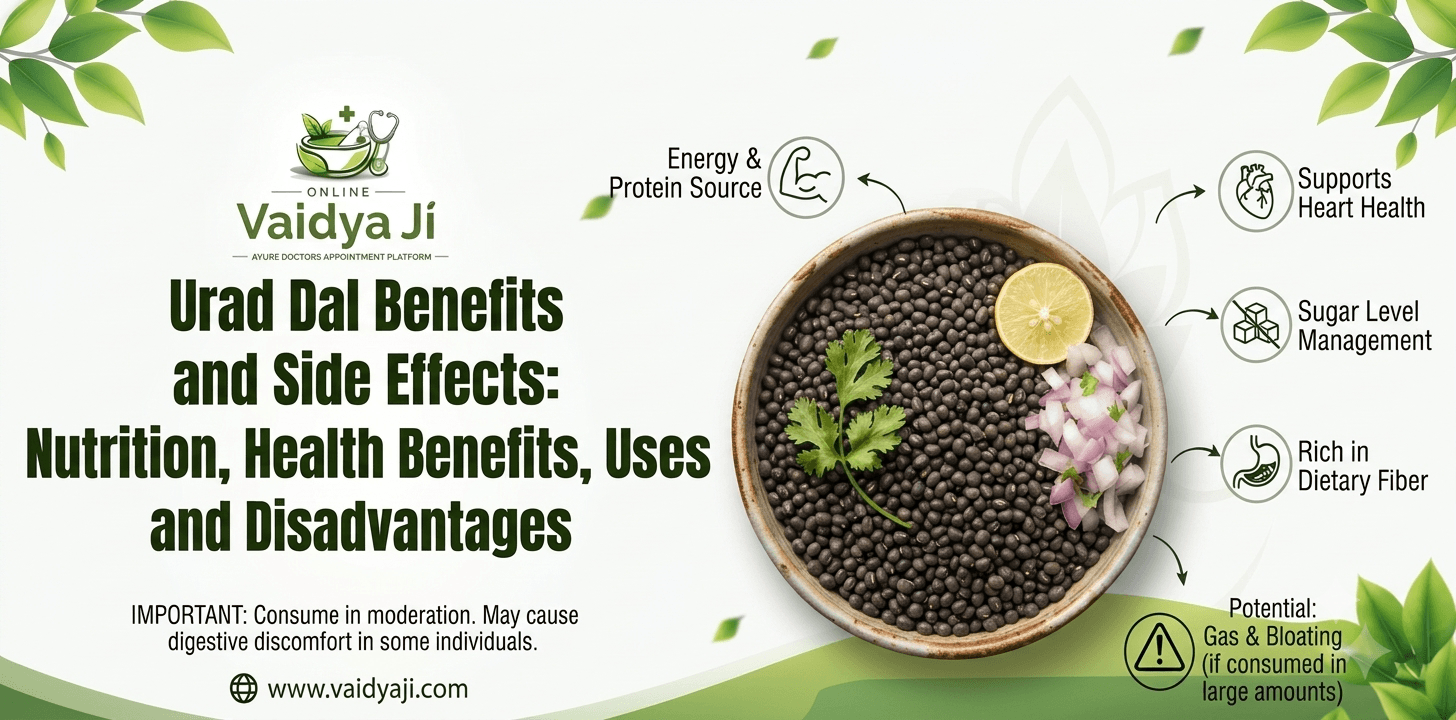
Urad dal benefits span from steady energy and digestive support to heart-friendly nutrients and versatile everyday cooking. Known in English as black gram (Vigna mungo), this staple legume has anchored South Asian kitchens and traditional wellness systems for centuries. Whether you eat it whole with its dark skin, split with the skin on, or split and skinned (white/dhuli urad), it brings dense plant nutrition to everyday meals.
Urad Dal Nutritional Value and Protein Content
Raw urad dal provides roughly 23–25 g of protein per 100 g, while one cooked katori (~150 g) delivers about 8–9 g of protein alongside dietary fiber, iron, magnesium, potassium, and B vitamins. Because dry lentils absorb water and expand when boiled, looking at both dry-weight and cooked-serving numbers helps you plan realistic daily portions.
Evaluating urad dal nutritional value and urad dal protein content requires keeping two practical details in mind:
- Dry vs. cooked portions: Dry urad dal is protein-dense, making it one of the stronger everyday legumes in plant-forward diets. Once cooked, a single katori contributes a modest share of daily protein needs, so pairing it with grains, dairy, nuts, or seeds builds a fuller amino acid profile.
- Skin vs. peeled processing: Whole or skin-on black urad retains more insoluble fiber and minerals like iron, magnesium, and calcium in its outer coat. Skinned and split white urad cooks faster and feels lighter on sensitive stomachs, though it has less fiber.
- Glycemic balance: Combining complex carbohydrates with protein and fiber helps slow digestion and supports steadier post-meal blood sugar responses than refined starches alone.
| Feature / Nutrient | Whole / Skin-On Black Urad | Skinned & Split White Urad |
| Dry Protein (per 100 g) | ~23–25 g (typical reference range) | ~23–25 g (typical reference range) |
| Dietary Fiber | Higher (retained in outer hull) | Lower (hull removed during dehulling) |
| Key Minerals | Richer in iron, calcium, magnesium, potassium | Moderate mineral levels; smoother texture |
| Best Culinary Role | Hearty dals, whole-legume gravies, traditional dishes | Idli, dosa, vada batters, lighter everyday meals |
Key Health and Black Gram Benefits
Regularly including urad dal in balanced meals supports digestion, cardiovascular wellness, steady blood sugar, and sustained fullness. Many black gram benefits come from the synergy of fermentable fibers, plant protein, and protective polyphenols present in the seed and its hull.
Digestive and Gut Health
Whole urad dal acts as a source of dietary fiber and fermentable prebiotics that feed beneficial gut microbes. Soaking, sprouting, or fermenting urad dal—as happens in traditional South Indian batters—further improves digestibility and reduces compounds that can cause sluggishness.
Heart Health and Blood Sugar Support
Soluble and insoluble fibers, phytosterols, and minerals such as potassium and magnesium help support healthy cholesterol profiles, blood pressure, and metabolic balance as part of an overall low-saturated-fat diet. Because its carbs are paired with protein and fiber, urad dal benefits meal stability without sharp glucose spikes.
Weight Management and Everyday Strength
High-fiber, protein-containing legumes increase satiety, helping you stay satisfied longer between meals. Meanwhile, iron and B vitamins contribute to normal oxygen transport and energy metabolism, supporting daily stamina when paired with vitamin C-rich foods like lemon or tomatoes to aid iron absorption.
Culinary and Traditional Uses of Urad Dal
Urad dal is used across savory mains, fermented batters, snacks, and traditional wellness preparations. Its naturally creamy, slightly mucilaginous texture when ground or cooked gives dishes body without needing heavy cream.
- Fermented breakfast staples: Ground white urad dal mixed with rice creates the fermentation base for soft idlis, crisp dosas, and fluffy appams.
- Savory snacks and gravies: Soaked and ground urad dal makes crisp medu vada, while whole or split dal is simmered with ginger, garlic, cumin, and spices for rich dals.
- Traditional dietary routines: In Ayurveda and household nutrition, urad dal is traditionally treated as nourishing and grounding, often prepared with warming spices like ginger, asafoetida (hing), or cumin to ease digestion.
Potential Urad Dal Side Effects and Precautions
For most healthy people, moderate servings of well-cooked urad dal are safe, though excess portions or undercooked lentils can trigger gas, bloating, or fullness. Paying attention to urad dal side effects helps you enjoy the legume comfortably:
- Gas, bloating, or heaviness: Like other legumes, urad dal contains fermentable oligosaccharides and fiber. Starting with smaller portions, soaking beans thoroughly, discarding soaking water, and cooking with ginger or hing can ease discomfort.
- Kidney or uric acid considerations: Legumes contain purines, potassium, and phosphorus, and whole varieties provide notable fiber and minerals. Anyone with chronic kidney disease, gout, or strict mineral restrictions should check portion sizes with a doctor or dietitian.
- Food allergies or sensitivities: Legume allergies are less common than peanut or soy allergies, but any rash, swelling, or breathing trouble after eating urad dal warrants prompt medical care.
Conclusion
Urad dal benefits make this everyday legume a practical, nutrient-dense addition to balanced meals—delivering plant protein, gut-friendly fiber, and essential minerals in everything from simple comforting dals to fermented batters. Choosing whole or skin-on black gram maximizes fiber and micronutrient intake, while split white urad offers a lighter, versatile option for daily cooking. By soaking it properly, cooking it thoroughly with digestive spices, and keeping portions balanced, you can enjoy the full nutritional value of urad dal while keeping side effects to a minimum.
Frequently Asked Questions About Urad Dal
Is urad dal good for weight loss?
Yes, when cooked simply with minimal oil or heavy cream, urad dal supports weight management because its protein and fiber promote fullness. Portion control still matters—rich preparations like buttery dal makhani or fried vadas add significant calories quickly.
Which is healthier: black urad dal or white urad dal?
Black (skin-on) urad dal generally offers more dietary fiber and higher levels of minerals like iron, magnesium, and calcium. White (skinned) urad dal is easier to digest for some people and works better for smooth fermented batters, making both useful depending on your meal and tolerance.
Can people with diabetes eat urad dal?
Plain, portion-controlled urad dal fits well into a balanced diabetes-friendly meal plan thanks to its fiber, protein, and relatively slow glycemic response. Pairing it with non-starchy vegetables and whole grains rather than large portions of refined rice helps keep blood sugar steady.
How can I make urad dal easier to digest?
Soak the dal for several hours before cooking, rinse it well, and cook it thoroughly until tender. Adding digestive spices such as ginger, cumin, or hing and building up your intake gradually also helps reduce bloating.