

What is smog Smog is a severe form of air pollution resulting from a hazardous mixture of smoke, fog, and chemical pollutants—primarily nitrogen oxides, sulfur oxides, volatile organic compounds (VOCs), and fine particulate matter like PM2.5. The word itself is a portmanteau of “smoke” and “fog,” historically originating from industrial coal smoke mixing with natural fog. Today, smog is a major environmental and public health crisis affecting urban centers globally, particularly during winter inversions or hot, sunny days.
Understanding how smog forms, the primary triggers behind smog pollution, and practical steps to shield yourself is essential for minimizing its impact on your respiratory and cardiovascular well-being.
What Are the Main Types of Smog?
Before looking into individual triggers, it helps to recognize that smog generally manifests in two distinct forms based on chemical composition and atmospheric conditions:
- Sulphurous (London) Smog: Characterized by high levels of sulfur dioxide and smoke particles resulting from the combustion of coal and heavy fossil fuels. It typically occurs in colder, damp climates.
- Photochemical (Los Angeles) Smog: Formed when sunlight reacts chemically with nitrogen oxides (NOxNO_xNOx) and VOCs released from vehicle exhausts and industrial facilities. This creates a brownish haze dominated by ground-level ozone.
Primary Causes of Smog
What causes smog? Smog is driven by a combination of heavy industrial emissions, meteorological phenomena, and human activities. The principal causes of smog include:
- Vehicular Exhaust: Millions of cars, trucks, and two-wheelers release nitrogen oxides and unburnt hydrocarbons daily. When exposed to ultraviolet sunlight, these compounds react to generate secondary pollutants.
PharmEasy - Industrial and Power Plant Emissions: Factories, refineries, and coal-fired power stations continuously pump large quantities of sulfur dioxide, carbon monoxide, and particulate matter into the atmosphere.
- Agricultural Burning: In many regions, stubble burning and crop residue clearing release massive plumes of smoke that travel across cities, heavily aggravating regional air quality.
- Unfavorable Weather and Geography: Geographical bowls (valleys) coupled with meteorological conditions like temperature inversions trap cold, polluted air near the surface, preventing it from dispersing into the upper atmosphere.
Max Healthcare
Adverse Effects of Smog on Health
The effects of smog on health are far-reaching, damaging both short-term comfort and long-term organ function. Because fine particulate matter (PM2.5) bypasses the nasal hairs and mucus membranes to penetrate deep into the pulmonary alveoli, exposure carries profound risks.
Short-Term Health Impacts
- Severe irritation of the eyes, nose, and throat.
SSB-Hospital - Acute coughing, wheezing, and shortness of breath.
- Immediate flare-ups for individuals diagnosed with asthma, bronchitis, or Chronic Obstructive Pulmonary Disease (COPD).
Max Healthcare - Chest tightness, headaches, and unusual fatigue after outdoor exposure.
Long-Term Health Consequences
- Progressive decline in overall lung capacity and respiratory efficiency.
- Heightened susceptibility to chronic respiratory infections.
Max Healthcare - Increased incidence of cardiovascular stress, heart attacks, and systemic inflammation.
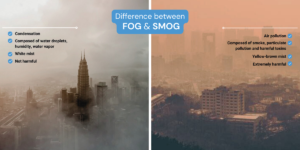
Smog vs. Fog: Key Differences
To better understand environmental safety bulletins, it is helpful to distinguish clean natural fog from toxic smog.
| Feature | Natural Fog | Smog |
| Composition | Tiny water droplets suspended in the air. | Water droplets mixed with toxic chemicals, smoke, ozone, and PM2.5. |
| Color & Appearance | White, translucent, or light grey. | Yellowish-brown, greyish, or dense murky haze. |
| Health Impact | Generally safe; may cause minor dampness discomfort. | Highly toxic; causes respiratory, eye, and cardiac complications. |
| Origin | Formed by natural condensation under high humidity. | Triggered by anthropogenic activities, combustion, and photochemical reactions. |
Practical Ways to Protect Yourself From Smog
Implementing targeted smog prevention tips can drastically reduce your personal inhalation dose and protect your family during high-pollution episodes.
- Monitor Daily Air Quality Indices (AQI): Check local air quality reports before planning any outdoor schedule. Limit outdoor exertion when pollution levels peak, typically from late morning to early evening.
Max Healthcare - Wear Certified Protective Masks: When stepping outside during severe pollution days, wear an N95 or N99 respirator mask designed to filter out microscopic particulate matter. Standard cloth masks offer very limited protection against fine nanoparticles.
Felix Hospital - Keep Indoor Air Clean: Stay indoors on high-smog days with doors and windows tightly closed to minimize infiltration. Run a high-efficiency particulate air (HEPA) purifier indoors, and avoid indoor activities that generate smoke, such as burning incense, lighting candles, or frying food.
- Optimize Hydration and Nutrition: Drink adequate amounts of water to maintain moisture in your upper respiratory tract, helping your body naturally manage irritants. Incorporate antioxidant-rich foods into your diet to combat oxidative stress caused by pollutants.
Felix Hospital - Modify Exercise Routines: Avoid heavy cardiovascular workouts near heavy traffic corridors where exhaust fumes concentrate. Shift physical training indoors to controlled gym environments equipped with air purification systems.
Community Actions for Smog Prevention
Mitigating smog pollution requires collective accountability alongside individual defense strategies:
- Transition toward public transport, carpooling, bicycling, or walking for short commutes.
PharmEasy - Refrain from burning yard waste, trash, or organic biomass.
PharmEasy - Support regulatory shifts toward electric vehicles, clean renewable energy grids, and stricter industrial emission standards.
Conclusion
In summary, understanding what is smog is the first critical step toward mitigating its severe environmental and health consequences. Driven by vehicular emissions, industrial pollutants, and unfavorable weather patterns, this toxic mixture of smoke, fog, and chemical particles poses serious risks to our respiratory and cardiovascular systems. By actively monitoring daily air quality indices, wearing certified N95 respirators, utilizing HEPA air purifiers indoors, and supporting sustainable community practices, you can effectively minimize exposure to smog pollution. Staying informed and adopting these proactive smog prevention tips ensures that you and your family can safeguard your health even during peak pollution seasons.
Frequently Asked Questions (FAQs)
What is the primary difference between London smog and Los Angeles smog?
London smog is a sulphurous smog caused primarily by burning coal and fossil fuels in cold, damp weather, whereas Los Angeles smog is a photochemical smog produced when ultraviolet sunlight reacts with vehicle exhaust and industrial emissions in warm climates.
Can indoor air keep you completely safe from smog?
While indoor air is generally cleaner, outdoor smog can still seep inside through gaps and ventilation. Additionally, indoor activities like burning incense, using unvented gas stoves, or smoking can compound indoor pollution, making the use of HEPA air purifiers beneficial.
Who is most vulnerable to the health effects of smog?
Children, older adults, pregnant individuals, and people with pre-existing conditions like asthma, bronchitis, or cardiovascular disease are significantly more sensitive to the adverse health impacts of smog.
How do N95 masks protect against smog?
N95 respirators feature specialized electrostatic filter layers capable of trapping at least 95% of airborne particles, including ultrafine PM2.5 pollutants, preventing them from entering your respiratory tract.