
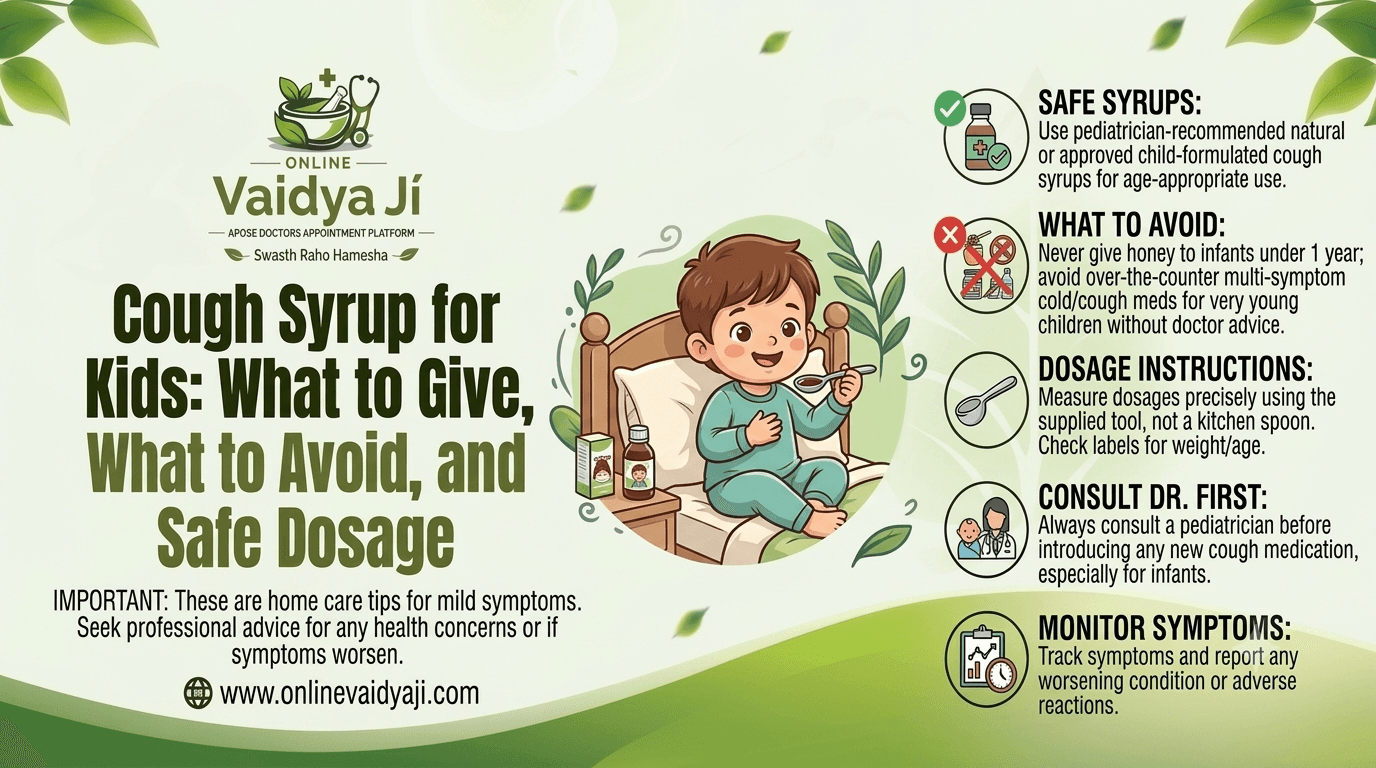
When your child starts coughing, finding fast and effective relief is top priority. However, selecting a safe cough syrup for kids can be confusing for parents. With various over-the-counter (OTC) formulas, pediatric advisories, and age restrictions, knowing what works—and what is unsafe—is critical for your child’s well-being.
Quick Takeaway: Pediatricians and regulatory agencies, including the US FDA and the American Academy of Pediatrics (AAP), strictly advise against giving OTC cough and cold syrups to infants and children under 4 years old due to potential side effects like rapid heart rate, sedation, and accidental overdose. For toddlers and older children, treatment depends on whether the cough is dry or wet.
Understanding Coughs in Children: Types and Causes
Before reaching for a bottle of cold and cough syrup for kids, it helps to identify the underlying type of cough. A cough is a protective reflex designed to clear airways of mucus, irritants, or foreign particles.
- Wet (Productive) Cough: Characterized by a wet, rattling sound. It occurs when the body produces excess phlegm due to chest infections, bronchitis, or viral colds.
- Dry (Non-Productive) Cough: Produces a tickling, hacking sound without phlegm. Often caused by viral throat irritation, dry air, allergies, or early-stage upper respiratory infections.
- Barking Cough: A harsh, seal-like sound typical of croup, caused by upper airway inflammation.
- Wheezing Cough: Accompanied by a high-pitched whistling noise during exhalation, often linked to asthma or bronchiolitis.
Understanding the specific sound and pattern helps ensure you select the appropriate treatment rather than suppressing a cough that is serving a functional purpose.
Cough Syrup for Infants: Is It Safe for Babies?
If you are searching for a cough syrup for infants under 1 year of age, the medical advice is uniform: Do not give OTC medicated cough syrup to infants.
An infant’s metabolic and nervous systems are immature, making them sensitive to active pharmaceutical ingredients like decongestants, antihistamines, and cough suppressants. Using medicated baby cough syrup in infants increases the risk of severe adverse reactions, including respiratory depression, seizures, and accidental toxicity.
Safe Alternatives for Infants (Under 12 Months)
Instead of medicated syrups, pediatricians recommend supportive natural care:
- Nasal Saline Drops: Soften thick nasal mucus so it can be cleared with a soft bulb aspirator.
- Cool-Mist Humidifiers: Keep room air moist to ease bronchial irritation and night coughing.
- Hydration: Frequent breast milk or formula feeds keep mucus thin and maintain hydration.
Safety Warning: Never give honey to a baby under 12 months old. Honey carries a risk of infant botulism, a severe form of food poisoning caused by bacterial spores.
What to Give: Safe Options by Age Group
Choosing the right cough syrup for kids depends on age, weight, and the precise nature of the symptoms.
| Age Group | Recommended Options | Safe Dosages / Treatments | Key Cautions |
| 0 – 12 Months | • Saline nasal drops
• Cool-mist humidifier |
• 1–2 saline drops per nostril
• Hydration via milk/formula |
NO medicated syrups
NO honey |
| 1 – 2 Years | • Natural honey
• Saline sprays • Warm fluids |
• ½ to 1 tsp natural honey directly or mixed in warm water | Avoid OTC medicated cough/cold syrups |
| 2 – 6 Years | • Honey-based natural syrups
• Expectorants (only if prescribed) |
• 1 tsp honey or natural child syrup
• Doctor-guided dosing |
Avoid multi-symptom cold combinations |
| 6+ Years | • Single-ingredient OTC syrups
• Expectorants (Guaifenesin) • Honey / Lozenges |
• Follow age/weight chart on package
• Use calibrated dosing syringe |
Do not exceed recommended frequency |
Active Ingredients to Look For (Children 6+)
- Expectorants (e.g., Guaifenesin): Helps thin bronchial secretions, making wet coughs easier to clear.
- Demulcents (e.g., Glycerin or Honey): Coats and soothes sore throat tissues to reduce dry tickling sensations.
What to Avoid: Dangerous Ingredients and Common Errors
When shopping for cold and cough syrup for kids, reading the active ingredient list is essential. Many over-the-counter options contain combinations that can be harmful if misused
Ingredients to Exclude
- Codeine and Opioids: Prohibited in pediatric cough formulations due to risk of dangerous breathing suppression.
- Dextromethorphan (DXM): A chemical cough suppressant that should not be given to young children without medical supervision.
- Decongestants (Phenylephrine/Pseudoephedrine): Can cause restlessness, elevated blood pressure, and increased heart rate.
- Multi-Symptom Formulations: Often combine fever reducers (acetaminophen/paracetamol) with cough suppressants. If you give a separate fever medication alongside a multi-symptom baby cough syrup, you risk accidental liver-damaging double dosage.
Common Dosing Mistakes
- Using Kitchen Spoons: Household spoons vary in size and can deliver up to twice the intended dose. Always use the oral syringe or calibrated measuring cup provided.
- Dosing by Age Instead of Weight: Children grow at different rates. Dosing based on body weight is more accurate than relying on age categories alone.
- Re-dosing Too Early: Giving another dose because the cough hasn’t stopped can lead to toxicity.
Natural Home Remedies That Really Work
For most viral coughs, non-pharmacological treatments provide safer relief with fewer side effects.
1. Pure Honey (Ages 1 Year and Older)
Studies show that 0.5 to 1 teaspoon of natural honey before bed coats the mucous membranes, soothing airway irritation and reducing nighttime coughing as effectively as mild OTC suppressants.
2. Warm Liquids and Broths
Lukewarm water, clear chicken broth, or decaffeinated chamomile tea helps break down mucus, soothe raw throats, and prevent dehydration.
3. Steam and Humidity
Sitting with your child in a steamy bathroom for 10–15 minutes helps open constricted airways and thin nasal secretions, making it easier to rest.
Read More Blog : Croup in Children: Nighttime Symptoms, Breathing Signs and Care Tips
When to Stop Syrups and See a Pediatrician
While most childhood coughs clear up within 7 to 10 days, certain symptoms require immediate medical evaluation.
Red Flag Symptoms: Seek urgent medical care if your child exhibits any of the following:
- Breathing Difficulties: Rapid breathing, flaring nostrils, or chest ribs pulling inward with each breath (retractions).
- Color Changes: Blue, grey, or pale lips, tongue, or face.
- High Fever: Sustained fever over 102°F (38.9°C), or any fever in an infant under 3 months.
- Inability to Drink: Refusing fluids, lethargy, or showing signs of dehydration (no wet diapers for 6+ hours).
- Persistent Duration: A cough lasting longer than 10 to 14 days without improvement.

Conclusion
Finding the right cough syrup for kids requires balancing quick symptom relief with strict pediatric safety guidelines. Remember that infants and toddlers under 4 years old should avoid medicated over-the-counter cough and cold products entirely due to the risk of serious side effects. Instead, natural remedies like pure honey (for children over 1 year), saline nasal drops, and cool-mist humidifiers provide safe and effective relief.
Frequently Asked Questions (FAQs)
Can I give my 6-month-old infant cough syrup?
No. Health agencies like the FDA advise against giving any OTC medicated cough syrup for infants under 2 years (and AAP recommends against it under age 4). Stick to saline nasal drops, a cool-mist humidifier, and adequate hydration.
Why is honey dangerous for infants under 1 year?
Honey can contain spores of Clostridium botulinum bacteria. While harmless to older children and adults, an infant’s undeveloped digestive system allows these spores to grow and produce dangerous toxins, leading to infant botulism.
What is the difference between a wet and dry cough syrup for kids?
Wet cough syrups contain expectorants (like guaifenesin) to help thin mucus so your child can cough it up. Dry cough syrups contain demulcents or suppressants to coat the throat and calm irritation. Always confirm with your pediatrician before using suppressants in young children.
What should I do if I accidentally give my child too much cough medicine?
If you suspect an accidental double-dose or overdose, contact your local Poison Control Center or emergency services immediately. Have the medicine bottle handy so you can read the active ingredients and exact concentration to the specialist.