
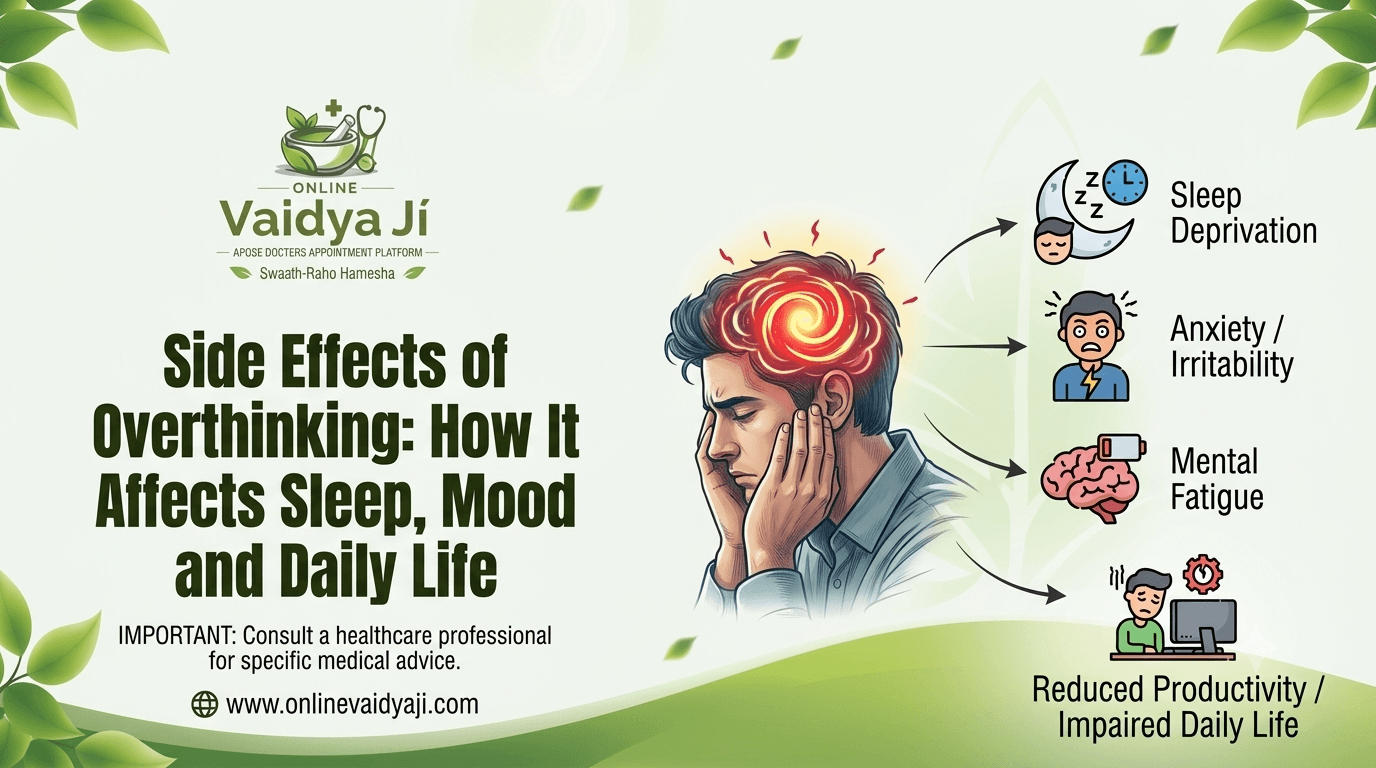
Have you ever found yourself replaying an awkward conversation from three days ago, or lying awake at night worrying about a scenario that hasn’t even happened yet? You are not alone. While a degree of reflection helps us plan and grow, chronic rumination can quickly spiral out of control.
Understanding the true side effects of overthinking is critical because mental exhaustion eventually manifests physically. From shattered sleep cycles to impaired decision-making, excessive cognitive looping takes a severe toll on your overall quality of life.
What Is Overthinking? (Good vs. Bad)
Quick Answer: Overthinking involves continuously analyzing, worrying, or replaying past events and future scenarios without taking productive action. While constructive reflection helps solve problems, chronic overthinking leads to cognitive fatigue and distress.
A common question people ask is: overthinking is good or bad?
- Constructive Thinking (Good): Analyzing a past mistake to learn a lesson or planning carefully for an upcoming project keeps us proactive and prepared.
- Destructive Rumination (Bad): Fixating endlessly on things outside your control creates artificial stress, drains your mental energy, and paralyzes your ability to act.
- Major Effects of Overthinking on Mind and Body When your brain stays stuck in high gear, it releases continuous streams of stress hormones like cortisol and adrenaline. Over time, these chemicals damage your emotional stability and physical wellness.
Read More Blog : Chandipura Virus Symptoms: Early Warning Signs and When to Seek Medical Care
1. Triggers Mental Health Concerns and Anxiety
The most significant among the effects of overthinking is its direct link to psychological distress. Constantly magnifying minor flaws or imagining worst-case scenarios sets off a vicious cycle. This persistent mental strain can escalate into clinical anxiety, chronic dread, and depressive symptoms, robbing you of inner peace.
2. Impairs Decision-Making and Problem-Solving
Many people believe that analyzing every minute detail leads to better choices. In reality, overthinking severely hampers cognitive efficiency. Instead of finding solutions, you get trapped in analysis paralysis. Everyday choices—such as selecting an outfit, planning meals, or managing work priorities—begin to feel overwhelming and stressful.
3. Disrupts Restful Sleep and Recovery
Physical exhaustion often follows mental fatigue. When you climb into bed with a racing mind, your nervous system remains hyper-alert, preventing your body from entering deep, restorative sleep. Poor sleep hygiene directly impacts your mood, making you irritable, foggy, and prone to even more anxious thoughts the next day.
When Does Overthinking Become an Overthinking Disorder or Disease?
While “overthinking” is a behavioral habit rather than a standalone clinical diagnosis in medical manuals, severe chronic rumination often overlaps with recognized mental health conditions.
When people search for terms like overthinking disorder or refer to it informally as an overthinking disease, they are typically describing clinical conditions where excessive worry becomes uncontrollable:
- Generalized Anxiety Disorder (GAD): Characterized by persistent, uncontrollable worry about various aspects of daily life.
- Obsessive-Compulsive Tendencies: Getting trapped in repetitive, intrusive mental loops that cause significant distress.
- Clinical Depression: Heavy, unrelenting rumination centered on past failures, guilt, and hopelessness.
If your mental loops interfere with your job, relationships, or ability to function normally for weeks or months, it is time to look beyond self-help and consult a qualified mental health professional.
Comparison: Constructive Reflection vs. Destructive Overthinking
| Feature | Constructive Reflection | Destructive Overthinking |
| Focus | Finding actionable solutions or lessons. | Fixating on problems, flaws, and “what-ifs.” |
| Emotional Impact | Leaves you calm, prepared, and grounded. | Triggers anxiety, helplessness, and fatigue. |
| Time Spent | Limited, purposeful, and time-bound. | Endless, repetitive loops lasting hours. |
| Outcome | Forward progress and personal growth. | Stagnation, burnout, and mental exhaustion. |
How to Break the Cycle and Stop
Overthinking
Breaking free from chronic mental loops requires conscious effort and daily practice. Implement these expert-backed strategies to regain control of your mind:
- Practice Mindfulness: Ground yourself in the present moment through deep breathing or sensory awareness exercises rather than letting your mind wander into worst-case scenarios.
- Set Worry Timers: Dedicate 10 minutes a day to write down all your anxieties, and actively close the notebook when the time is up.
- Challenge Your Thoughts: Ask yourself whether the scenario you are dreading is a verified fact or merely an ungrounded assumption.
- Engage in Physical Activity: Exercise helps burn off excess cortisol and redirects your focus away from mental stress.
- Seek Professional Guidance: A licensed therapist or counselor can help you identify cognitive distortions and teach structured behavioral tools to quiet your mind.
Conclusion
Overthinking is more than just a quirky personality trait; it is a heavy cognitive burden that damages your sleep, mood, and daily productivity. By recognizing the warning signs, shifting your focus toward mindful action, and seeking support when needed, you can quiet your mental chatter and reclaim your peace of mind.
Frequently Asked Questions (FAQs)
Can overthinking cause physical health problems?
Yes. Chronic overthinking keeps your body in a prolonged state of stress, which can lead to tension headaches, digestive issues, a weakened immune system, high blood pressure, and chronic fatigue.
Is overthinking a sign of anxiety?
Yes, chronic rumination and excessive worry are core symptoms of anxiety disorders. When your brain perceives endless threats, it locks into a hyper-vigilant cycle of overthinking.
How can I stop overthinking at night before bed?
To calm your mind before sleep, try journaling your thoughts to get them out of your head, reading a physical book, practicing 4-7-8 breathing exercises, and avoiding screens at least 60 minutes before bedtime.
What is the primary root cause of the problem of overthinking?
The problem of overthinking usually stems from a psychological need for control, a fear of failure, low self-esteem, or unresolved past trauma. When faced with uncertainty, the brain uses continuous analysis as an ill-fated defense mechanism to try to predict every possible negative outcome and protect itself.
Can overthinking be treated effectively?
Yes. Overthinking is a manageable habit that can be significantly overcome through Cognitive Behavioral Therapy (CBT), daily mindfulness practices, structured journaling, and lifestyle modifications. When overthinking is tied to an underlying anxiety condition or mood disorder, working with a therapist provides personalized strategies to rewrite intrusive thought patterns.