
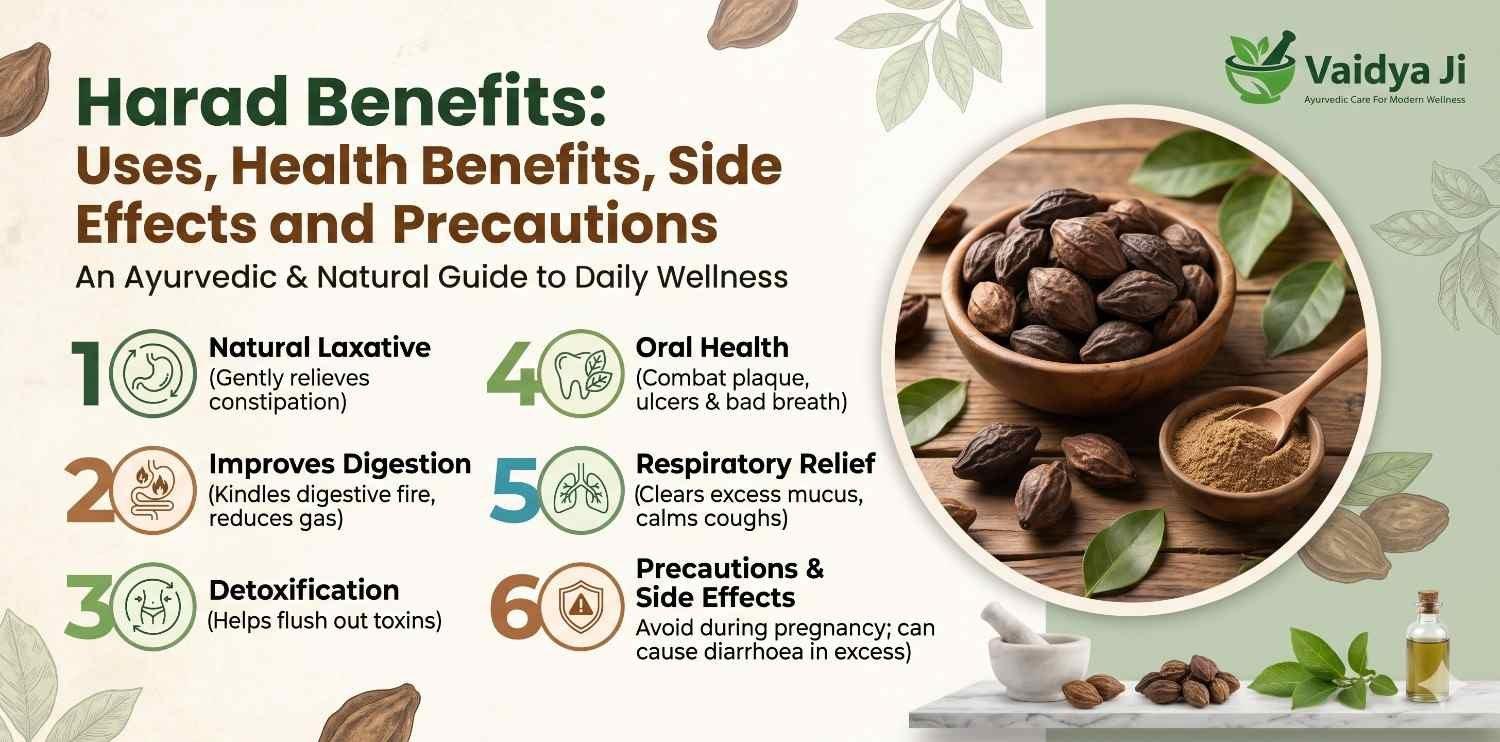
In Ayurveda, Harad (Terminalia chebula), widely known as Haritaki or Kadukkai, holds the revered title of “King of Medicines.” As one of the three core ingredients in the classical formulation Triphala, harad benefits have been trusted across generations to balance aggravated Vata dosha, cleanse the digestive tract, and support overall vitality.
Modern phytochemical research and classical Ayurvedic texts both highlight its broad therapeutic value—from easing stubborn constipation to supporting oral, metabolic, and respiratory health. Understanding how this herb works, along with its proper dosage and potential risks, helps you use it safely and effectively.
Harad Medicinal Properties
Classical Ayurvedic texts describe Harad as having five of the six tastes (Pancharasa—lacking only salty taste), with astringent (Kashaya) being predominant. Modern laboratory studies confirm several key harad medicinal properties:
- Bioactive Phytochemicals: Rich in tannins, gallic acid, chebulagic acid, chebulinic acid, corilagin, and antioxidant flavonoids.
- Therapeutic Actions: Exhibits natural mild laxative, digestive-stimulant, antimicrobial, anti-inflammatory, astringent, and hepatoprotective (liver-supporting) properties.
Potential Health Benefits of Harad (Haritaki Benefits)
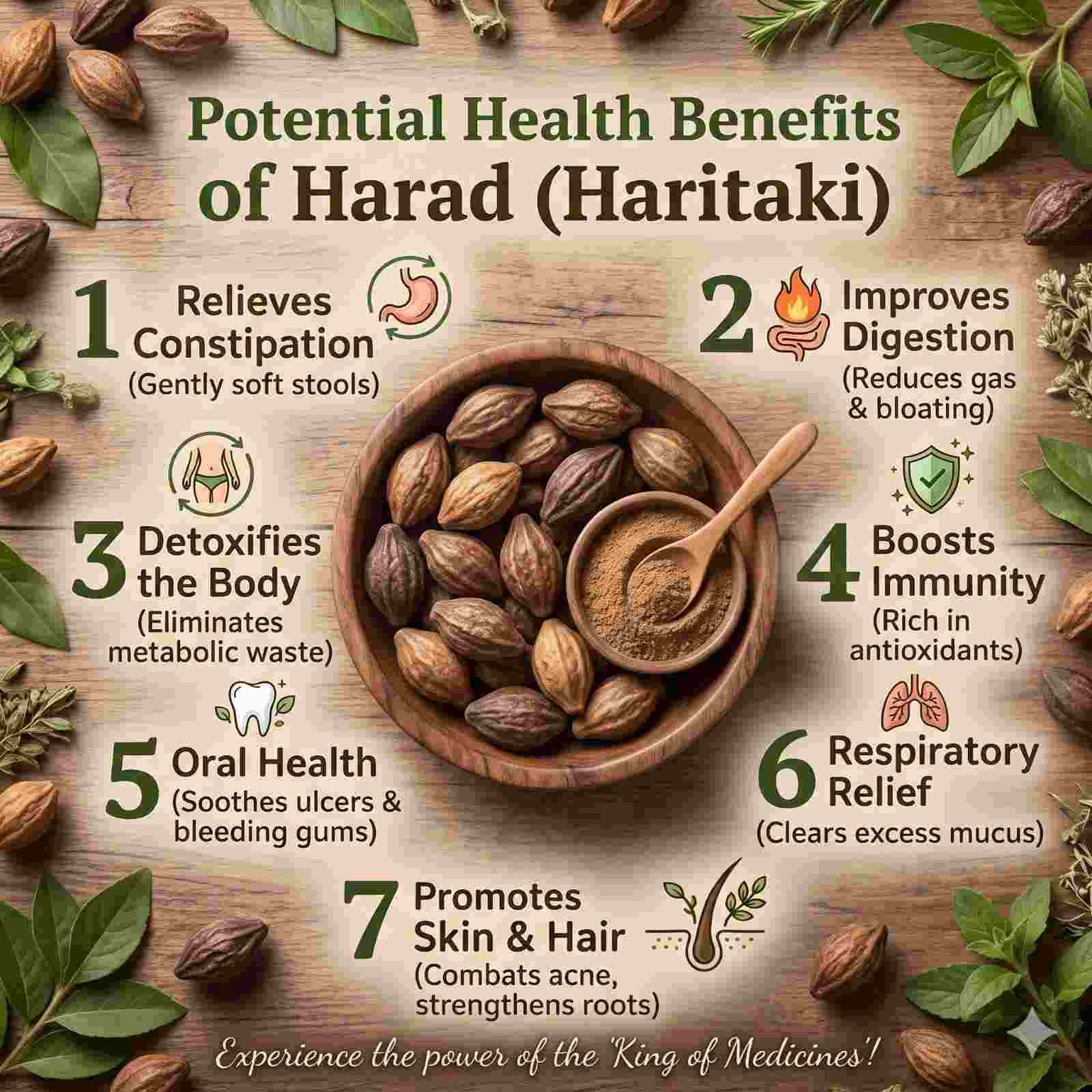
Incorporating this herb under proper guidance offers a wide range of haritaki benefits:
1. Relieves Constipation Naturally
Harad gently stimulates intestinal peristalsis and softens stools without causing harsh dependency when taken in measured amounts, making it a staple remedy for occasional or sluggish bowel movements.
2. Improves Digestion and Gut Health
It kindles digestive fire (Agni), helping reduce gas, bloating, indigestion, and abdominal heaviness while promoting better nutrient absorption.
3. Supports Healthy Weight Management
By aiding the elimination of metabolic waste (Ama) and supporting healthy lipid breakdown, Haritaki assists weight management when paired with a balanced diet and regular physical activity.
4. Promotes Oral and Gum Health
Thanks to its strong astringent and antibacterial compounds, Harad helps reduce dental plaque, soothe bleeding gums, ease mouth ulcers, and combat bad breath.
5. Soothes Respiratory Discomfort
Harad helps clear excess mucus from the respiratory tract, providing natural relief during seasonal coughs, sore throats, and mild throat congestion.
6. Supports Blood Sugar and Cholesterol Balance
Antioxidants present in Haritaki may support healthy insulin sensitivity and help maintain balanced blood lipid and cholesterol levels.
7. Nourishes Skin and Hair
Internal detoxification and antioxidant support help manage minor acne breakouts, promote wound healing, and strengthen hair follicles.
Common Harad Powder Uses
Depending on your wellness goal, traditional harad powder uses include:
- For Constipation Relief: Mix ½ teaspoon of fine Harad powder in a cup of lukewarm water and drink it at bedtime.
- For Cough and Sore Throat: Mix ¼ to ½ teaspoon of Harad powder with 1 teaspoon of raw honey, or slowly chew a small piece of roasted Harad.
- For Oral Hygiene and Gargling: Boil ½ teaspoon of Harad powder in a glass of water, allow it to cool to lukewarm, and use it as an herbal mouthwash or gargle.
- For Minor Skin Blemishes: Prepare a smooth paste using Harad powder and rose water for spot application after performing a patch test on your inner arm.
| Form / Preparation | Common Use | Traditional Method |
| Harad Powder (Churna) | Constipation, gas, sluggish digestion | ½ tsp with lukewarm water at night |
| Roasted Harad Piece | Cough, throat irritation, bad breath | Chew a tiny piece slowly after meals |
| Harad Decoction (Kwath) | Gum care, mouth ulcers, gargling | Boil ½ tsp powder in water, cool, and rinse |
Harad Side Effects and Precautions
Because Harad is a potent medicinal herb, improper dosage or unsupervised use can trigger harad side effects:
- Diarrhoea and Dehydration: Excess intake can overstimulate the bowels, leading to loose stools, abdominal cramps, and fluid or electrolyte loss.
- Strictly Avoid During Pregnancy: Harad can stimulate uterine and pelvic contractions and must be avoided by pregnant women. Breastfeeding mothers should also avoid it unless prescribed by a doctor.
- Risk of Low Blood Sugar: Individuals taking prescription diabetes medications should consult their physician first, as Harad may further lower blood glucose levels.
- Not Suitable in Severe Weakness: People who are severely underweight, dehydrated, fasting, or recovering from acute fever should avoid strong laxative herbs.
- Drug Interactions: Maintain a gap of at least 1–2 hours between Harad and conventional oral medications, as its high tannin content may interfere with drug absorption.
Read More:
Makhana Benefits: 12 Health Benefits, Nutritional Value and Side Effects
Quinoa Benefits: Nutrition, Health Benefits, Uses and Side Effects
Conclusion
From easing stubborn constipation and indigestion to supporting oral, respiratory, and metabolic wellness, harad benefits fully justify its historic reputation in Ayurveda. Using small, measured doses for short durations—and consulting a qualified Ayurvedic practitioner if you have existing health conditions or take regular medication—ensures you gain its therapeutic value without unwanted side effects.
Frequently Asked Questions (FAQs)
- Can I take harad powder daily?
Short-term daily use in small doses (around ½ teaspoon at night) is commonly used for digestive relief, but continuous long-term intake should be guided by an Ayurvedic doctor to prevent bowel dependency or dryness.
- What is the difference between Choti Harad (black) and Badi Harad (yellow)?
Choti Harad is the smaller, unripe dried fruit primarily used to relieve constipation and improve digestion, whereas Badi Harad is the larger, mature yellow-brown fruit commonly used in rejuvenating formulations like Triphala.
- Who should avoid taking harad?
Pregnant women, lactating mothers, severely dehydrated individuals, people with active diarrhoea, and those experiencing extreme physical weakness should avoid taking harad.
- Should harad powder be taken with warm water or cold water?
Harad powder is traditionally taken with lukewarm water at bedtime to activate digestion and support smooth morning bowel movements.