Quinoa Nutritional Value
Looking at the quinoa nutritional value explains why it stands out among everyday staples. A 100-gram serving of cooked quinoa provides approximately:
- Calories: ~120 kcal
- Protein: 4.4 g (a complete plant protein containing all nine essential amino acids)
- Carbohydrates: 21.3 g
- Dietary Fibre: 2.8 g
- Healthy Fats: 1.9 g (primarily unsaturated fats, including small amounts of omega-3 fatty acids)
- Key Vitamins & Minerals: Rich in manganese, magnesium, phosphorus, folate, iron, zinc, potassium, and B-complex vitamins.
Top Quinoa Health Benefits
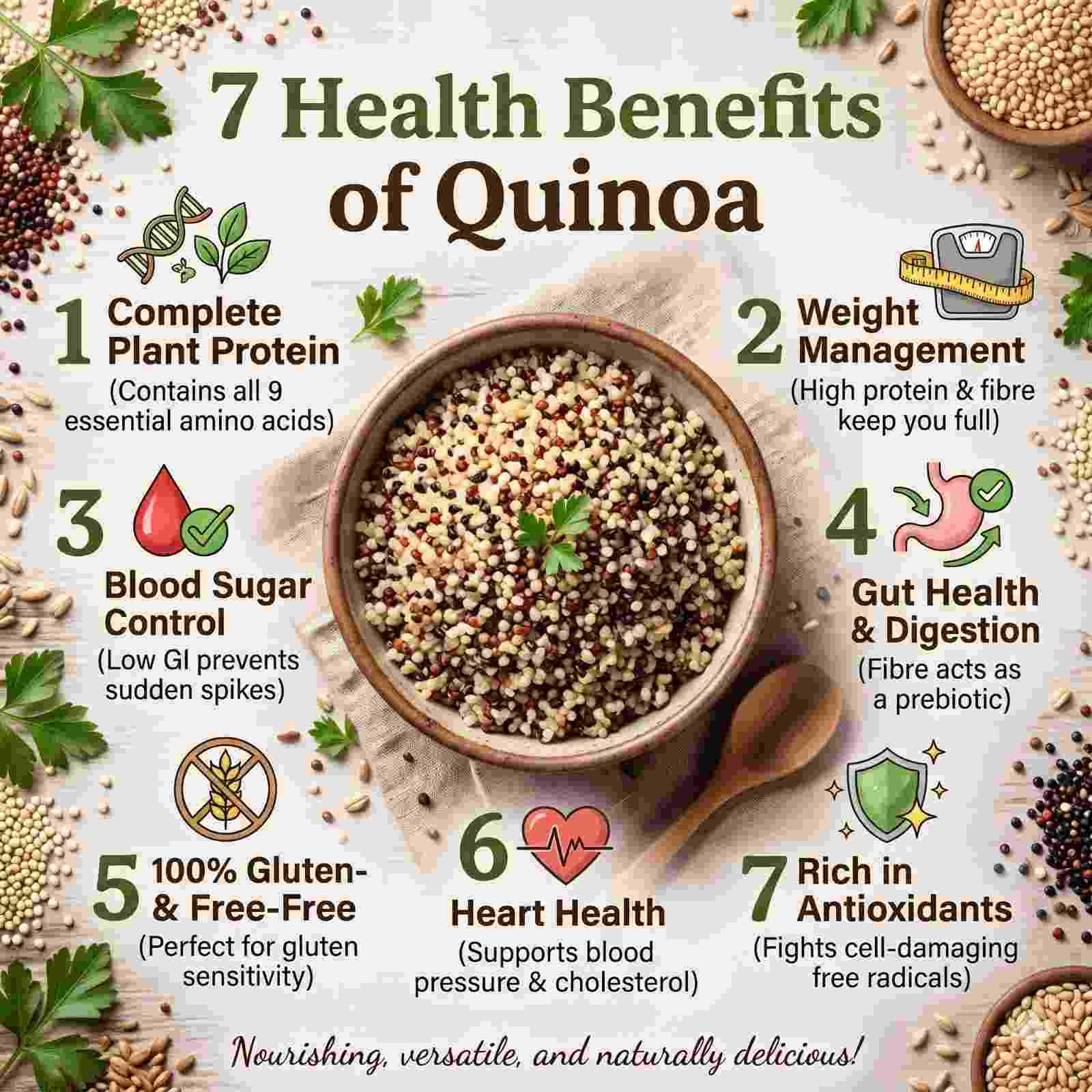
Adding quinoa to your weekly meal plan delivers several research-backed quinoa health benefits:
1. Complete Source of Plant-Based Protein
Unlike rice, wheat, or oats—which lack certain essential amino acids—quinoa contains all nine essential amino acids (including lysine) that the human body cannot make on its own. This makes it an exceptional protein source for vegetarians and vegans.
2. Supports Healthy Weight Management
High protein and soluble fibre work together to slow digestion, promote satiety, and reduce unnecessary mid-meal snacking while keeping calorie intake controlled.
3. Helps Regulate Blood Sugar Levels
With a low glycaemic index (around 53) and rich dietary fibre, quinoa slows down the breakdown and absorption of carbohydrates, preventing sharp post-meal blood glucose spikes.
4. Improves Gut Health and Digestion
Insoluble fibre in quinoa adds bulk to stool, prevents constipation, and acts as a prebiotic that nourishes beneficial gut bacteria.
5. Naturally 100% Gluten-Free
Because quinoa is a seed rather than a grass-family grain, it is completely free of gluten—making it a safe, nutrient-dense staple for people with coeliac disease or non-celiac gluten sensitivity.
6. Promotes Heart Health
Soluble fibre binds to bile acids in the gut to help lower LDL (bad) cholesterol, while magnesium and potassium support healthy blood vessel relaxation and blood pressure control.
7. Rich in Anti-Inflammatory Antioxidants
Quinoa contains potent plant flavonoids such as quercetin and kaempferol, which help neutralise free radicals and protect tissues against chronic inflammation and oxidative stress.
How to Eat Quinoa in Everyday Meals
Learning how to eat quinoa properly starts with one essential step: always rinse raw quinoa thoroughly in a fine-mesh strainer under running water for 1–2 minutes before cooking. This washes away saponins—a natural, bitter-tasting outer coating.
Once rinsed, cook 1 cup of quinoa with 2 cups of water for about 15 minutes until the water is absorbed and the tiny spiral germ separates. Try these easy Indian and global ideas:
- Quinoa Vegetable Upma or Poha: Sauté cooked quinoa with mustard seeds, curry leaves, green chillies, onions, carrots, peas, roasted peanuts, and fresh lemon juice.
- Quinoa Moong Dal Khichdi: Pressure-cook rinsed quinoa with split yellow moong dal, turmeric, cumin, ginger, and seasonal vegetables for a light, protein-rich comfort meal.
- Wholesome Quinoa Salad Bowl: Toss cooled quinoa with diced cucumber, tomatoes, boiled chickpeas, sweet corn, fresh coriander, olive oil, and chaat masala.
- Creamy Breakfast Porridge: Simmer quinoa in milk or almond milk with a pinch of cardamom, chopped almonds, figs, and sliced banana.
- Quinoa Pulao or Curd Quinoa: Pair cooked quinoa with spiced paneer and veggies for pulao, or mix cooled quinoa with fresh curd (dahi) and a tempering of mustard seeds and curry leaves.
| Grain Comparison (Per 100g Cooked) | Quinoa | White Rice |
| Calories | ~120 kcal | ~130 kcal |
| Protein | ~4.4 g (Complete protein) | ~2.7 g |
| Dietary Fibre | ~2.8 g | ~0.4 g |
| Glycaemic Index | Low (~53) | High (~70+) |
Quinoa Side Effects and Precautions
Although wholesome for most people, improper preparation or overconsumption can trigger mild quinoa side effects:
- Stomach Irritation from Unwashed Seeds: Failing to rinse quinoa leaves behind saponins, which taste soapy or bitter and can cause mild stomach upset or nausea in sensitive individuals.
- Gas and Bloating: Suddenly eating large portions of high-fibre grains can cause temporary bloating, flatulence, or abdominal discomfort—increase portion sizes gradually and drink plenty of water.
- Oxalate Content (Kidney Stone Precaution): Quinoa contains natural oxalates, which can bind to calcium in the urine; people prone to calcium-oxalate kidney stones should enjoy it in moderate portions.
- Rare Seed Allergy: Individuals sensitive to chenopod-family seeds (such as spinach or beetroot relatives) may rarely experience mild itching or digestive symptoms.
Read More: Makhana Benefits: 12 Health Benefits, Nutritional Value and Side Effects
Jowar Benefits: Nutrition, Health Benefits, Uses and Side Effects
Conclusion
Swapping refined white rice or maida-based dishes for quinoa a few times a week is a simple, sustainable upgrade for better protein intake, steady blood sugar, and smoother digestion. Once properly rinsed and seasoned with familiar Indian spices, quinoa benefits fit effortlessly into everyday home cooking—giving you long-lasting energy without compromising on taste.
Frequently Asked Questions (FAQs)
- Is quinoa better than white rice for daily meals?
Yes, quinoa provides significantly more complete protein, dietary fibre, magnesium, and iron than white rice, while having a lower glycaemic index that keeps energy and blood sugar steady.
- Why is it necessary to wash quinoa before cooking?
Raw quinoa seeds are coated with natural compounds called saponins that taste bitter and can irritate the stomach lining if not rinsed thoroughly under running water before cooking.
- Can diabetic patients eat quinoa every day?
Yes, because quinoa has a low glycaemic index and high fibre and protein content, it slows carbohydrate absorption and serves as an excellent grain alternative for blood sugar management when eaten in balanced portions.
- Is quinoa safe to eat during pregnancy?
Yes, well-rinsed and thoroughly cooked quinoa is a nutritious pregnancy food rich in folate, iron, plant protein, and fibre that supports fetal development and helps prevent pregnancy constipation.